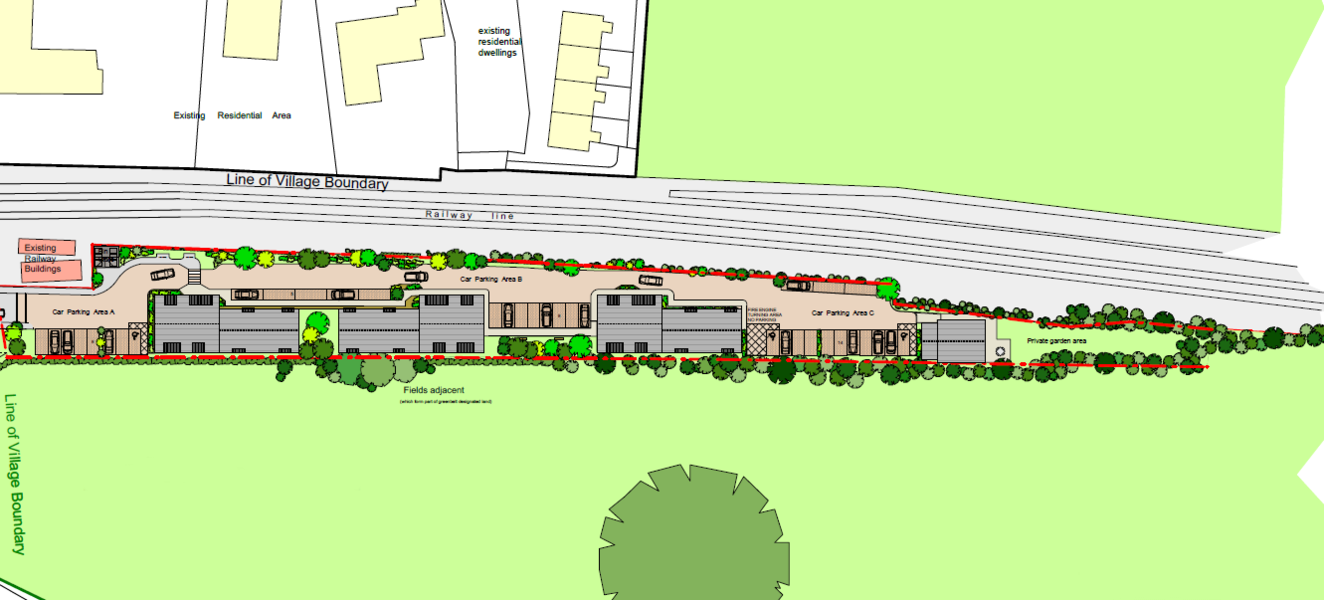
If you’re looking for a change and thinking of having some landscaping work completed on your garden. It can often feel overwhelming when considering all of the different possibilities. Do you choose to have a new lawn or a new patio? What type of paving should you choose? What would look best in your garden, wooden sleeper walls or brick?
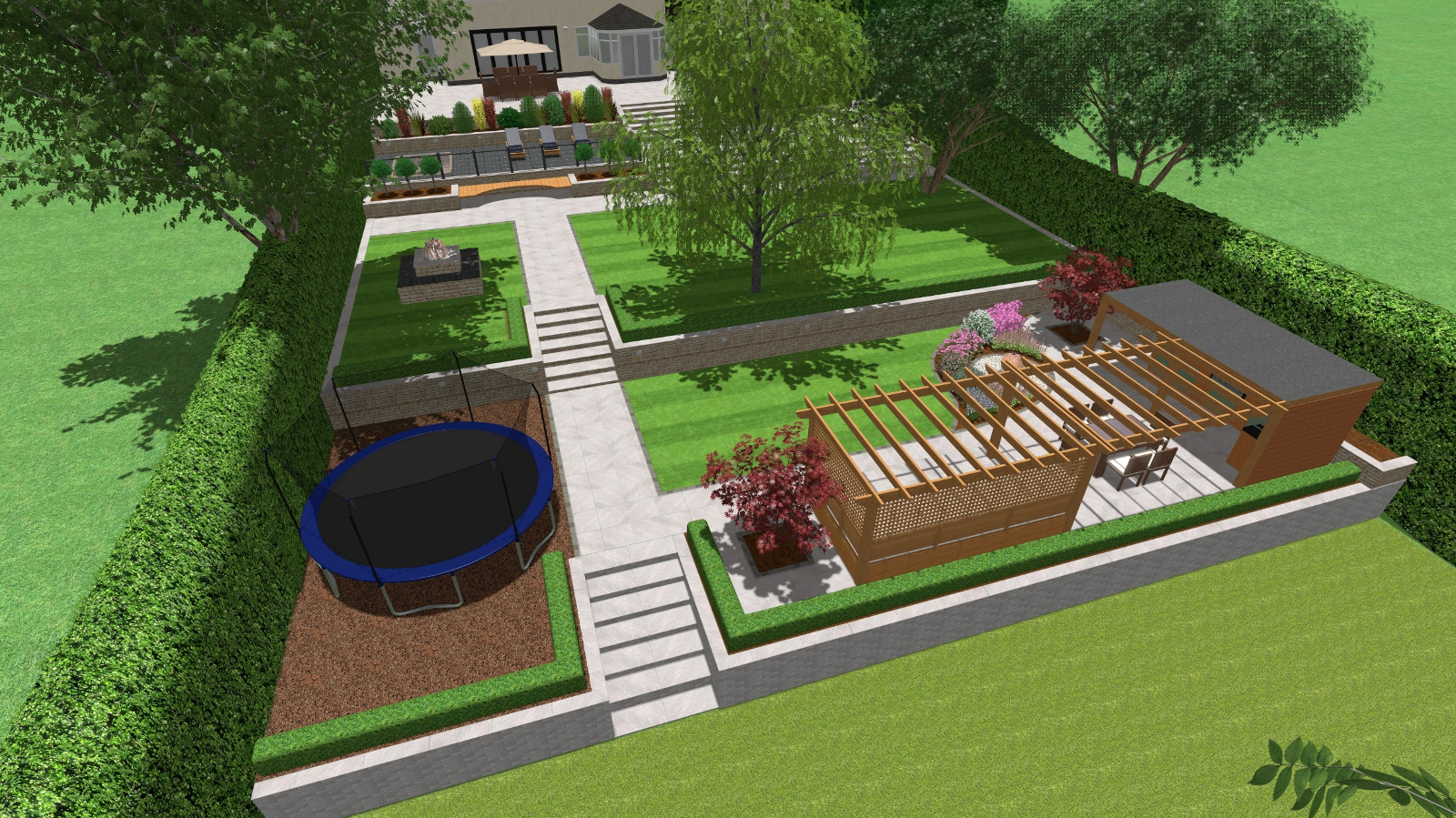
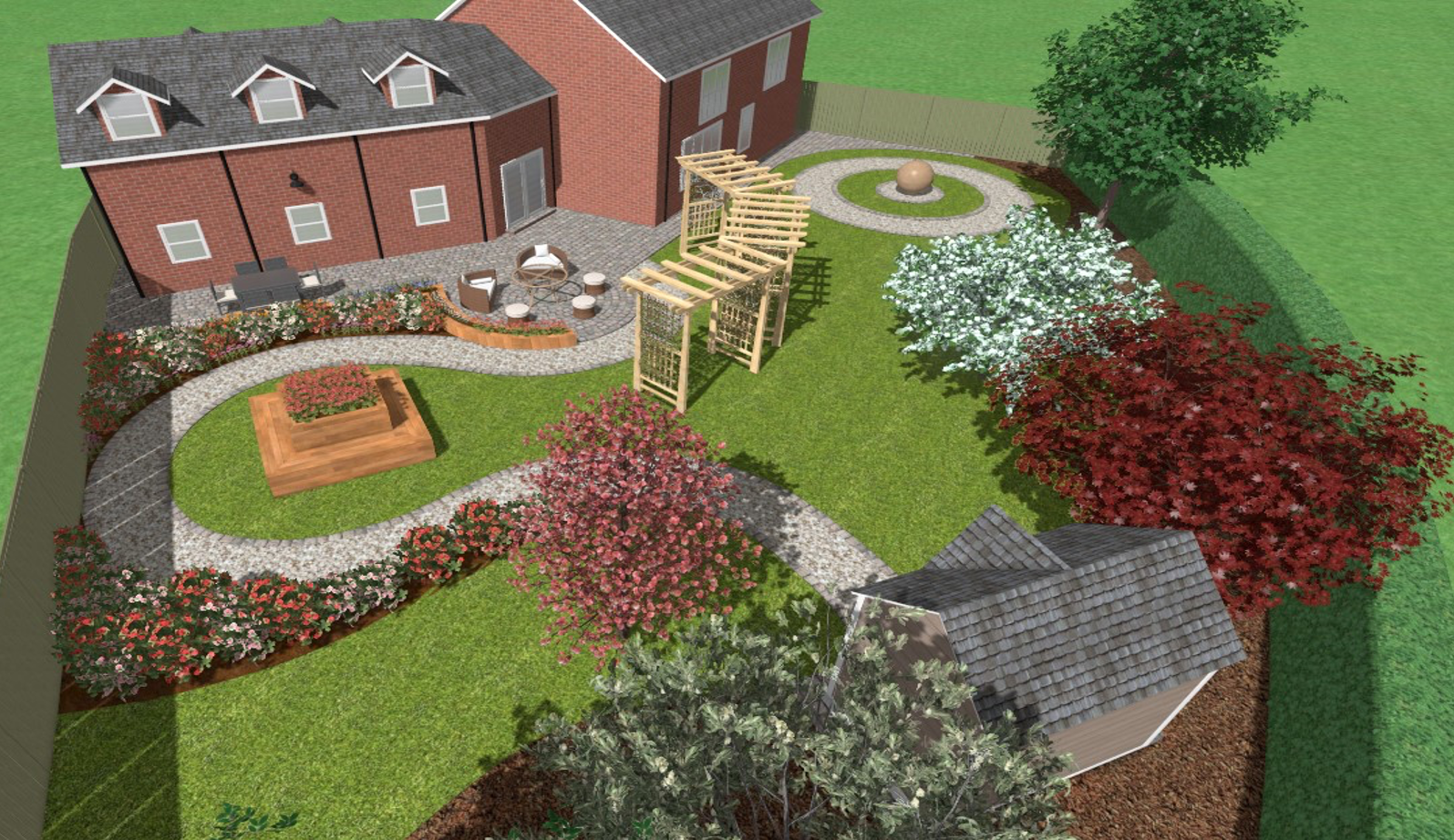
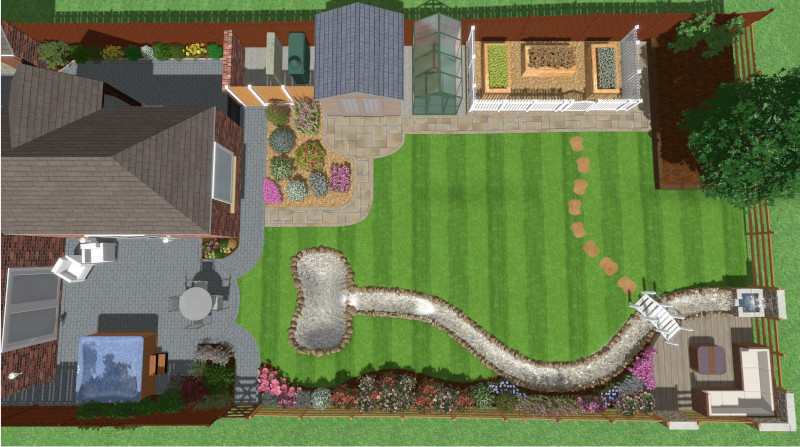
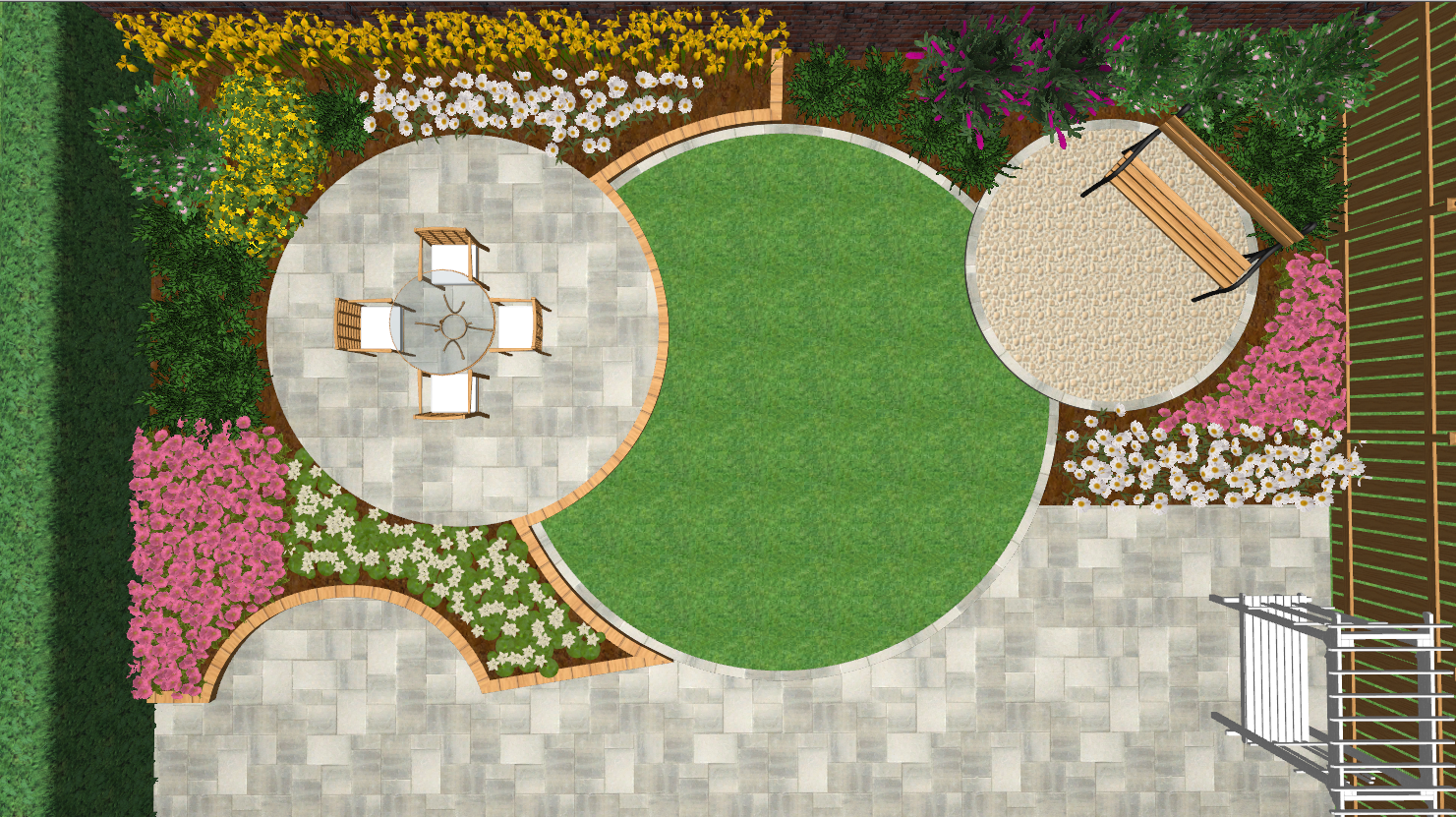
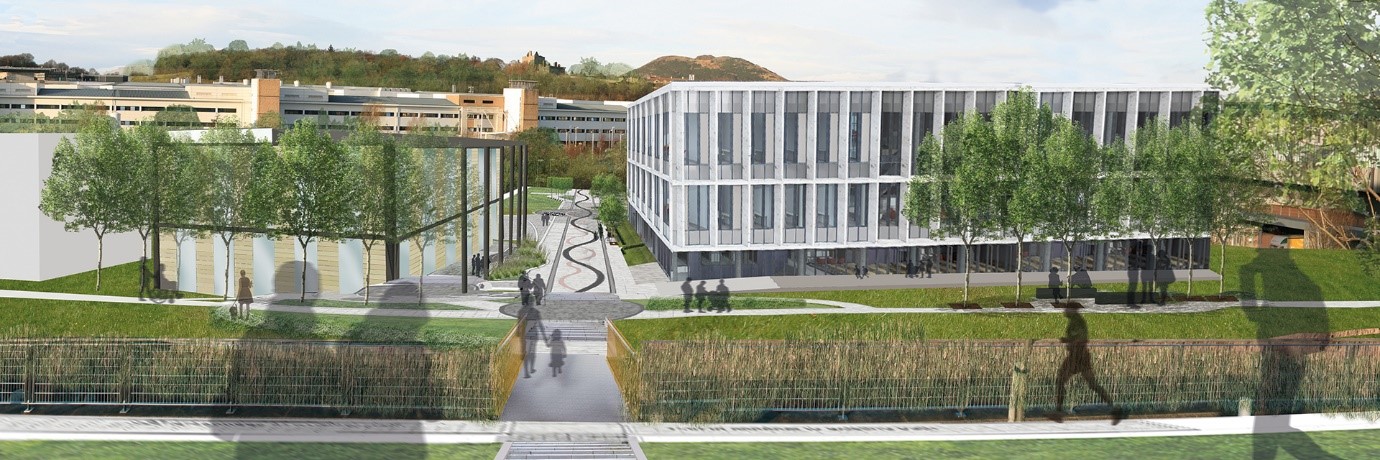
Landscape designs can be the perfect solution in this situation. Providing you with a visual representation of what your
garden would look like upon completion. It will also give you the opportunity to try out different construction materials and design styles, before the work even starts. Landscape designs can come both in three-dimensional or two-dimensional formats, depending upon what you require and what will help you to visualise the end result most effectively.
For those looking for an immersive experience, ProHort’s landscape design service allows you to take a virtual walk through your completed project, using our CAD design software. This provides you with the exciting opportunity to get a really detailed idea of what your garden will look like. As well as allowing you to make live alterations to the design.
Additional Benefits
As well as providing you with an idea of what your garden will look like. Landscape designs have further additional benefits. These benefits can include promoting drainage of the site which is particularly important in gardens that are generally wet or boggy. The design can also be tailored to encourage the presence of local wildlife and flora or to lower the maintenance requirements so that the end result is easy to look after. It all depends on what you want and need from your garden.
Want to find out more about the landscape design service that ProHort can offer you? Alternatively, why not get in touch and one of our designers can walk you through the process.
Bats and birds in your garden are very common, of any shape and size, preferring to live and nest in established trees. Here are why bats and birds are important residents in your garden:
Firstly, bats play a role in successful pollination of over 500 plant species – including but not limited to mango, banana, guava and other tropical fruit, as well as a variety of flowers. While these plants are not indigenous to the UK, many bats will migrate for the colder winter months, and will play a role pollinating these plants elsewhere across Europe.
Birds also play an important role in doing this – around 5% of the plants that humans use for food or medicine are pollinated by birds. Birds also carry the seeds they have ingested and disperse them through their droppings – this helps our forests and marshes thrive.
All UK based bats are insectivores – they eat only insects. Bats can help keep insects away from crops but also enjoy eating gnats and mosquitos, helping to keep these pests at bay in the summer. Many common garden birds will also eat insects and help keep these pests at bay.
Finally, both bats and birds are indicators of good ecological health. Bats and birds are both sensitive to changes in temperature, weather and other environmental factors – having bats and birds present in your garden shows that your garden is healthy and thriving.
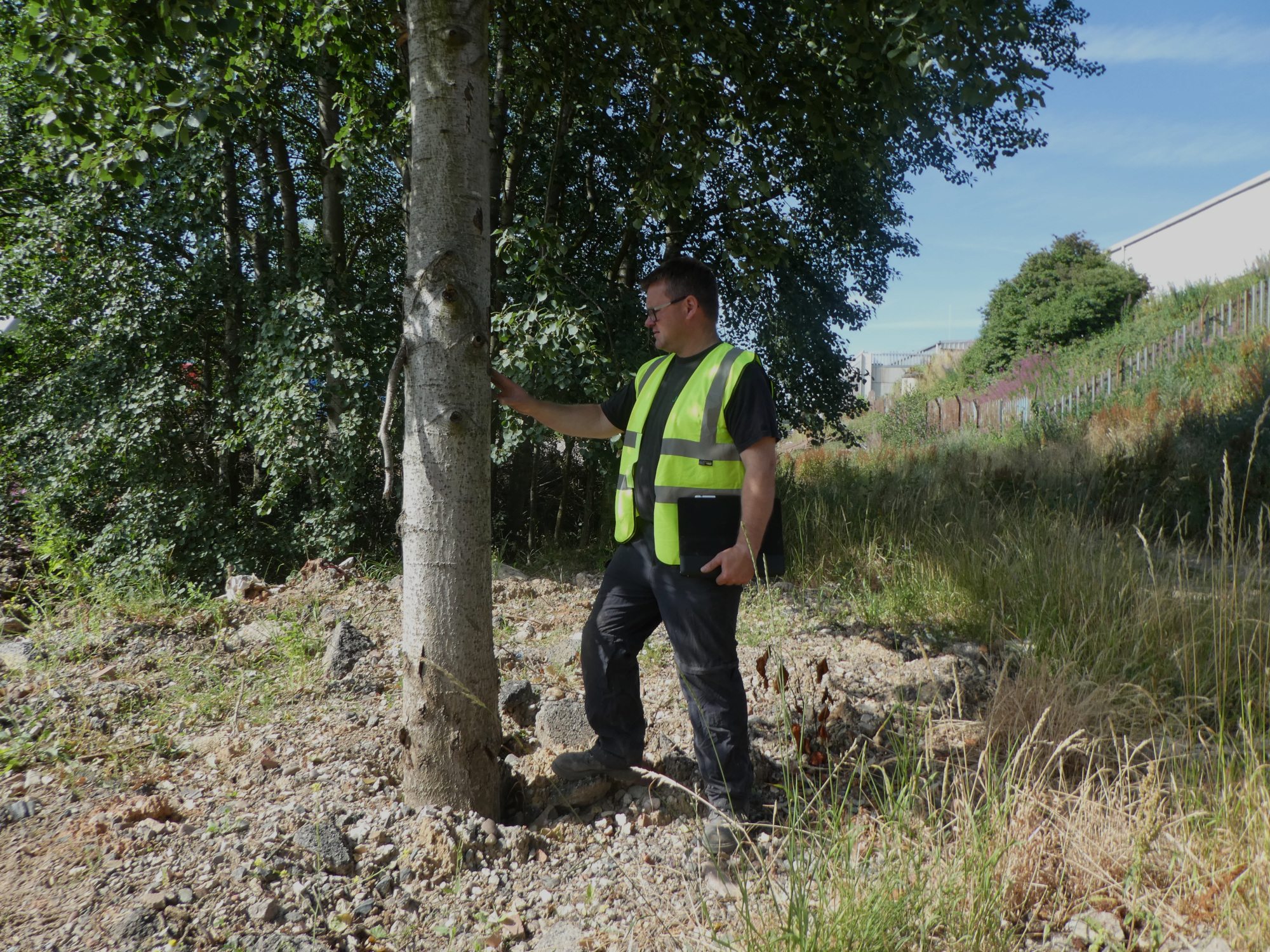
ProHort Ltd, as part of our tree survey service, will identify whether trees or hedgerows on a property have any suitable features for nesting bats and birds. We would recommend completing a tree survey ahead of any building work. It is a criminal offence to intentionally or recklessly disturb roosting bats, destroy a habitat suitable for bat roosting, or obstruct access to a bat roost.
Landscaping plans are a birds-eye view that provide you with a detailed, to scale representation of your intended development. Each plan tailored to your individual requirements, depending on the size, intention and location of the project or development.
ProHort Limited will provide you with a clear representation of your existing site features and spatial qualities. Therefore, enabling you to precisely illustrate your design, including any sight lines, movement and circulation, in addition to tangible hard and soft landscaping features.
Why would you need one?
When completed the 2D plan can be used as an accurate reference for construction, building works or as a supporting document for planning applications.
As well as for property development, landscape plans are also used to assist in residential landscape development. If you are considering revamping your garden, a 2 or 3D plan will assist with planting schemes, tree surveys, landscape strategies, visualisations and impact assessments. In fact, these plans will provide a precise construct of your dream garden that any landscape gardener will be able to bring to life.
How do landscaping plans work?
Our dedicated team deliver pragmatic solutions that will add value to the potential development site. With 25 years plus of experience we can identify and recommend suitable solutions in order to ensure a smooth progression through the planning and development process.
For more information, speak to one of our specialist consultants today on 01782 479479.
Alternatively, you can see more horticultural services provided by Pro Hort Limited here.
Pro Hort Limited work throughout the United Kingdom, therefore whereever you are in the country we can help you!
The Hidden Value of a Landscape Visual Impact Assessment
A Landscape Visual Impact Assessment (LVIA) is a tool that you may not have considered while working towards your current planning application. Below are three key benefits of a Landscape Visual Impact Assessment:
Environmental
LVIA’s are synonymous with wind turbine and solar panel developments – they have often been used to display the placement of these developments, as a superior way of presenting the visual impact to the public. n addition an LVIA will show other environmental factors. Statistically, road developments are ‘the single most destructive element’ as they can potentially cause animals to lose access to water or nesting areas. If you were developing through a wooded or natural area, an LVIA would visually outline the possible impacts on wildlife, which may not appear on a standard traditional plan.
Social
When individuals are opposed to environmental upgrade developments, 50% object solely because of their attitudes towards the ‘perceived unity of the environment or the personal attitude towards the effects of wind turbines on landscape aesthetics.’ An LVIA uses landscape visualisation to show the exact changes that will affect the landscape near to a development. By having a visual representation, it is both easier for individuals to discuss their objections to a development, and, following on from that, for a compromise to be reached.
Economic
An LVIA has the advantage of giving you the chance to explore multiple options or consider multiple options for a development. Would, for example, your development look different with six homes instead of four? How would the spacing be affected? A detailed LVIA lets you explore these multiple options in a visually engaging way.
LVIAs are essential to any development application, If you require any further information phone ProHort Limited on 01782 4769 479.
Soil contamination occurs when the level of pollutants, including chemicals, man-made waste, radioactive materials and salts, is higher than the normally expected level. This then results in the deterioration of the natural properties of the soil, as well as the environment, comfort and health of individuals being adversely affected.
Soil contamination can be caused by a wide range of different factors and events which can all have differing effects on the soil itself. The most common events that result in soil contamination include the introduction of industrial waste into the soil, leaking underground storage tanks or contaminated water seeping into the soil and an excessive use of pesticides or herbicides on the land. Further activities that can contribute to soil contamination include mining, the introduction of asbestos as the result of construction works and the storage of fuel or lead. The presence of Japanese knotweed in an area of soil can also result in that soil being considered as contaminated.
Is Your Soil Contaminated?
If your soil becomes contaminated this can have various residual effects depending upon the environment that the soil is situated in.
In agricultural and rural environments, the fertility of the soil can be reduced resulting in the inability to grow crops and other plants. This reduction in crop yield can then have a further impact on the level of soil erosion and can alter the flora and fauna that can be found in that area. This, ultimately, can result in a change to the entire ecosystem and reduce levels of biodiversity.
Industrial environments will, again, see a decrease in the amount of vegetation found within the area and the release of gases and radioactive rays that could be detrimental to health. Public health may also be at risk in urban areas, as a result of clogged drains, the release of gases and pollution of water sources resulting from soil contamination.
Once soil on your land has been identified as contaminated this can also have detrimental implications for any construction or development plans for that land, as the legal responsibility for that contaminated land lies with the property owner. As a property owner, you will be expected to treat the contamination either before you obtain planning permission for the development, or as part of the development itself. This can result in significant additional costs and delays to development.
If you are planning to develop on your land and suspect that the soils on that land might be contaminated, you should always ensure that the soil is tested and analysed before development begins. This will allow for the correct method of treatment or removal to be actioned and will give you the peace of mind that the costs involved are an absolute necessity to ensure that the development work runs as smoothly as possible.
It is also recommended that a survey for Japanese knotweed is completed by a certified Japanese knotweed surveyor to identify any potential invasive weeds on the site and to ensure an appropriate removal plan is put in to place before development starts.
Contact Us
ProHort can provide you with soil testing and analysis to identify any contaminated soil, whether that be industrial or agricultural. Why not give us a call on 01782 479479 for more information?
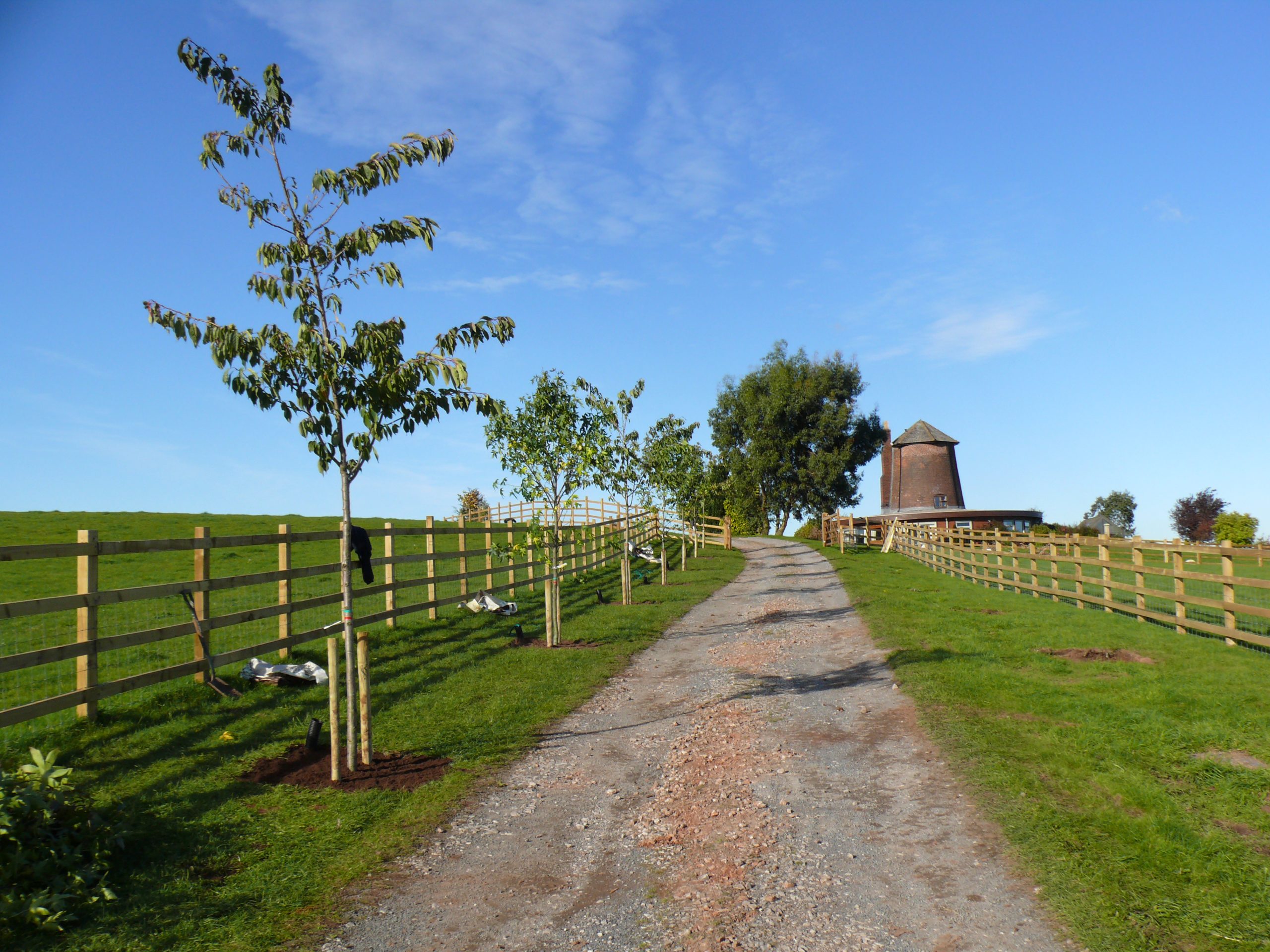
Trees are a natural asset and their benefit to the visual environment can be easily understated. We may think of a typical English countryside view with rolling fields, hedges and specimen Oak trees dotted around. Find out why tree selection is so important below:
But do we ever think of the other benefits trees present to the local fauna and flora?
Trees absorb all sorts of toxins from the air, which is why when you walk around a wood the air always smells and feels that little bit fresher and cleaner. An acre of mature woodland can provide enough oxygen for 18 people and that makes trees pretty important! They also provide significant sources of food and shelter for small woodland animals, birds and insects, all of which are imperative to our ecosystem.
When we pick a tree for a site or our garden, we will want a specimen tree or at least one that will be a real feature as it grows. We should, however, consider a number of things. These include; the size, the spread and height, when and if the tree has visible flowers, the scent, the colour of the leaves in each of the seasons and whether the tree will improve the surrounding environment, perhaps by creating a food source for birds or other small animals.
There are also other types of interest that a tree can bring to its surroundings – bark can be of great interest. Corylus avellana ‘contorta’ has twisted stems and looks great but especially so in the winter when it has no leaves. Whereas, Acer davidii, also known as the “Snake bark Acer”, looks amazing with green and white serpentine stripes on its bark.
Other trees, such as the Tulip tree, Liriodendron tulipifera, is a larger tree which has tulip like flowers when it matures at around the age of 40 years. As can be seen from this tree, sometimes planting a tree is a long-term investment and perhaps even for the benefit of the next generation. This is especially true if you are planting trees that don’t become mature for in excess of 50 years such as the Oak, Beech and Sequoiadendron giganteum that can live for more than 3,000 years!
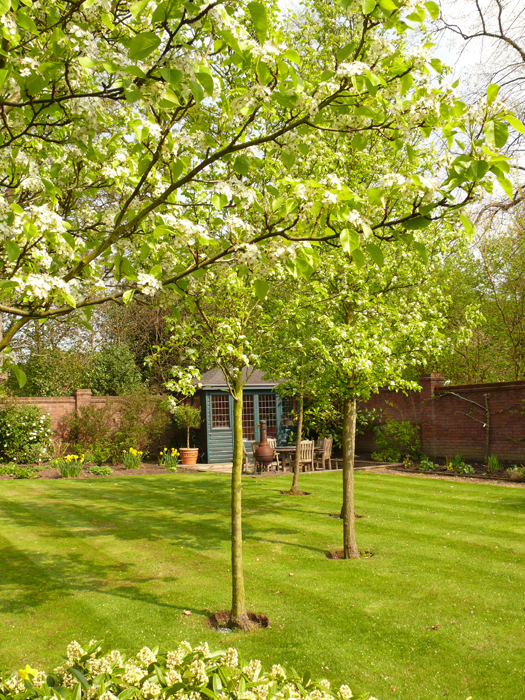
More commonly found trees suited for planting in a normal sized back garden can include the Amelanchier x grandiflora ‘Ballerina’. This is a pretty specimen tree and well worth the space, with lovely blossom in the spring and bright red foliage as it emerges. It also has small dark purple or black fruits in the autumn, which are edible. Another bonus that this tree brings is the fabulous bright red and yellow colours that the leaves turn in the autumn. A truly great tree for a small garden.
An evergreen tree that is another great choice is the Magnolia grandiflora, a lovely tree which has fabulous white or cream flowers. This tree looks great
and gives additional privacy all year round which is especially important when your garden is overlooked by neighbours!
One final tree we couldn’t not mention is the Davidia involucrata, commonly known as the Handkerchief tree. This is a beautiful tree. Discovered in 1869 and introduced to England in 1904, it has large white bracts that are followed by large oval fruits. If you have the space, a sheltered position and fertile soil this tree will prove to a real spectacle within your garden!
If you need any advice on the choice of trees for your site or garden, and especially so if you want the perfect specimen tree, please do contact us and we will be happy to advise.
ProHort also provide other tree related services, including tree surveys and tree preservation order applications and appeals. Why not get in touch to find out more about how we can help you?
Tree related subsidence is defined as the gradual caving in or sinking of an area of land and can be caused by a range of different factors. These can include:
Poor ground quality or an inadequate building foundation,
Historical mining,
The erosion of soil which results in an underground opening,
Excessive levels of water washing soil away from the surrounding area,
Clay soil shrinkage and heave due to the changing weather in summer and winter,
Trees being located within the close proximity of the building.
Have You Got Issues With Tree Related Subsidence?
Trees roots can spread by up to three times the height of the tree which means that, whilst a lot of buildings are not affected by the growth of these roots, those built on shrinkable clay soils and located near to a tree are at significant risk of experiencing subsidence.
Clay soil is highly absorbent, allowing it to take in water and expand during wet weather. The soil then dries out in the warmer weather and shrinks, meaning that there is a constant heave and shrink cycle within areas consisting predominantly of a clay soil type. Trees can then exacerbate the shrinkage of clay soil by drawing the water out of the soil, causing the ground underneath buildings to shrink significantly and resulting in movement within the property foundations. This movement then goes on to cause cracks in both external and internal property walls.
When dealing with a tree that is causing subsidence, it is always necessary to consider the risk of soil heave. This can occur as a result of the clay soil returning to its former moisture level and expanding once the tree has been removed, causing any foundations laid over the soil to lift and potentially cause further damage.
In order to cater for this, each individual occurrence of tree subsidence should be considered based upon a variety of factors including the nature of the surrounding ground, the quality of the buildings foundations, the span and depth of the trees roots in comparison to the building and the typical variations in conditions throughout summer and winter. The potential removal of a tree that is causing subsidence should always be considered on a case by case basis and is highly recommended to be carried out by a professional arboriculturist.
Contact Us
At ProHort, our team have over 20 years of arboricultural experience and are experienced in identifying subsidence resulting from the presence of trees. Find out more about our Tree Subsidence Reports service, or why not get in touch for more information?
The Landscape Institute believes that a no-deal Brexit could be disastrous for the landscape profession in UK and Europe. This would further exacerbate our current skills shortages.
Talent and recognition
Around 40% of employers in our sector are already suffering skills shortages. The impact on future talent is a major concern. 8% of our Landscape Institute members are citizens of EU countries, outside of the UK and the profession cannot afford to lose them.
One of our major concerns is that we may lose recognition of our professional qualification across Europe with a no-deal Brexit. This would hamper UK professionals’ ability to provide services to European markets.
Graduate retention
Restricted movement limits the number of international graduates who will be able to stay in the UK to meet skills shortages and add value to our country.
Long-term, graduate retention is also a major problem. 30% of students who joined UK-based landscape courses in 2018 were international, with 7% being from the EU. Therefore, restrictions on visas and free movement will limit the number of graduates who will be able to stay in the UK, meet skills shortages, and add value to our country.
Trade restrictions
Any restrictions on trade with Europe would make landscape practice much harder, as many of the materials landscape professionals use are sourced from the EU. For example, live plants or stone products from places like Italy.
Just like food, plants can’t afford to be held up in a lorry park in Kent, France or Belgium for days. It would take many years for British nurseries to grow similar trees, and for British quarries to be re-opened, in order to rebuild an adequate supply chain.
Any extra administrative burdens for the supply of landscape products into the UK will make them much less attractive to both public and private sector investors and developers.
Economic effects
If landscape professionals are forced out of work, the long-term effects could take decades to correct.
Less money in the economy means there will be less development, including housing. This is a current government priority and what development does happen will be cheaper, less well designed, and less green.
If landscape professionals are forced out of work by an economic downturn, the long-term effects on public health, air quality, flood risk, and climate change could take decades to correct.
To find out about how ProHort can help you, get in touch now.
Articles Similar to The Landscape Institute and Brexit:
The National Planning Policy Framework (NPPF) sets out government planning policy for England. It was published by the Department for Communities and Local Government (now the Ministry of Housing, Communities and Local Government (MHCLG)) on 27 March 2012 and can be downloaded from the MHCLG website.
The NPPF followed a commitment made in the 2010 Coalition Agreement to ‘publish and present to Parliament a simple and consolidated national planning framework covering all forms of development and setting out national economic, environmental and social priorities’. The then-Minister for Planning and Decentralisation, Greg Clark MP, suggested it introduced a simpler and more accessible approach to planning policy.
The framework replaces a wide range of previous planning policy statements and planning policy guidance (see Planning policy replaced by the NPPF). It is commonly cited as having reduced planning policy from over 1,000 pages to around 50, but in fact, unless specifically revoked by the framework, existing policies remain effective.
In 2012, the coalition government commissioned the Taylor Report, a further review of the remaining planning policy guidance. A complete set of the legislation, policy and guidance that underpins planning in England can be found on the government’s National Planning Practice Guidance website.
Principles
The NPPF dismantles the regional planning apparatus and introduces neighbourhood planning in order to create ‘ … a framework within which local people and their accountable councils can produce their own distinctive local and neighbourhood plans, which reflect the needs and priorities of their communities.’The framework states in no uncertain terms that ‘the purpose of planning is to help achieve sustainable development……Development that is sustainable should go ahead, without delay.’
It defines three mutually dependent dimensions to sustainable development:
Economic
Social
Environmental
The framework sets out 12 core principles that should underpin plan making and decision taking which are presented in summary below.
Plan making and decision making:
Genuinely plan-led.
Should be a creative exercise, not just one of scrutiny.
Proactive in driving and supporting sustainable development.
Should seek and secure high quality.
Take account of the diverse character of different areas.
Should support the transition to a climate-resilient, low-carbon economy.
Contribute to conserving and enhancing the natural environment and reducing pollution.
Should encourage the use of brownfield land.
Encourage mixed-use development.
Should conserve heritage.
Maximise the use of public transport, walking and cycling.
Should support health, social and cultural wellbeing.
The framework then sets out detailed guidance under 13 subheadings that contribute to delivering sustainable development:
Meeting the challenge of climate change, flooding and coastal change.
Conserving and enhancing the natural environment.
Conserving and enhancing the historic environment.
Facilitating the sustainable use of minerals.
Local plans
Local plans should be prepared by each local authority for its area. They should contribute to the achievement of sustainable development and set out over a 15-year time horizon ‘…the opportunities for development and clear policies on what will or will not be permitted and where…’
The framework proposes proactive engagement and collaboration with neighbourhoods, local organisations and businesses as well as co-operation with neighbouring authorities, public, voluntary and private sector organisations. It also proposes improving the efficiency of the application process through pre-application engagement by the applicant with the local authority, other consenting bodies and the local community. This should include discussing what information should be submitted as part of the application.
The framework sets out strategic priorities that should be included in local plans and makes clear that local plans will be examined by an independent inspector. Proposed developments that are in accordance with an up to date local plan should be approved without delay, whilst those that conflict with an up to date local plan should be refused (unless material considerations indicate otherwise).
This puts an emphasis on the local plan being up to date. The framework states that If a plan is absent, silent or out of date, permission should be granted, unless there are significant and demonstrable reasons not to grant permission.Local authorities were given a 12-month transition period to ensure that existing plans conform with the framework. However, when the transition period came to an end in March 2013, just half of the local authorities had adopted local plans in place and the Planning Inspectorate revealed that only 7% of those local plans complied with the requirements of the NPPF (ref. Planning Resource).
Neighbourhood planning
Parishes and neighbourhood forums are given the power to develop a neighbourhood plan for their neighbourhood. Neighbourhood plans must conform with the strategic policies in the local plan but take precedence over non-strategic policies in the local plan where they are in conflict.
Parishes and neighbourhood forums are given the power to grant planning permission for developments through Neighbourhood Development Orders and Community Right to Build Orders. Neighbourhood Development Orders and Community Right to Build Orders require a local referendum. Where a planning application conflicts with a neighbourhood plan planning permission will not normally be granted.
Criticisms
A number of significant concerns have been raised about the framework and its implementation:
There may be unintended consequences resulting from such a significant change being made so quickly.
There is ambiguity about the precise meaning of phrases such as ‘sustainability’.
The framework says little about spatial planning or place making.
It is questionable whether there are adequate resources available to implement the changes that the framework brings about.
There is a lack of guidance for local communities.
It is not clear how the framework tackles the lack of housing.
It is not clear whether local plans will be able to retain control over development.
The Taylor Report has come very close on the heels of the National Planning Policy Framework and there are concerns that the planning system could be thrown into disarray. Some campaigners have described the findings of the review as giving the go ahead for a bonfire of planning rules, creating a charter for development and putting the countryside at risk.
In April 2014, the all-party Commons Communities and Local Government Committee launched an inquiry into the operation of the NPPF. The inquiry found weaknesses in the NPPF and proposed a number of changes that could be made to strengthen it. See NPPF inquiry for more information.In March 2015, a survey of residential developers and housing associations by accountancy and business advisory firm BDO found that 52% per cent felt the NPPF had made no difference, 19% per cent said it had inhibited the process and only 29% believed it had been helpful.
Reform
On 7 December 2015, the Department for Communities and Local Government launched a consultation seeking views on changes to the NPPF to support the delivery of new homes, including low cost homes for first time buyers. See Consultation on proposed changes to national planning policy for more information.
In April 2016, the Communities & Local Government (CLG) Committee published ‘Department for Communities and Local Government’s consultation on national planning policy’ in which they called for a comprehensive review of the NPPF before the end of the Parliament, pointing out that there had been, ‘…no robust, objective or evidence-based monitoring, evaluation or review’ since it was first published in 2012.On 30 January 2018, in a letter to local authorities, the Chief Planning Officer confirmed that the NPPF was being revised to implement the planning reform package set out in the housing White Paper, the Planning for the right homes in the right places consultation and the announcements made in the 2017 Autumn Budget.
Overhaul announcement
On 5 March 2018, Prime Minister Theresa May launched the overhaul of the NPPF, aiming to maximise the use of land, strengthen Green Belt protections and place a greater emphasis on converting planning permissions into built homes.Mrs May said the cost of housing, both for ownership and rent, was reinforcing economic divisions and leading to growing social immobility, with public sector workers unable to take jobs in certain parts of the country.She said; “The result is a vicious circle from which most people can only escape with help from the bank of mum and dad. Talking to voters during last year’s election campaign, it was clear that many people, particularly younger people, are angry about this … They’re right to be angry.”
Pending a consultation, May said the existing NPPF will be overhauled with up to 80 proposals first put forward in 2017 being implemented. The key measures include:
10% of homes on major sites should be available for affordable home ownership.
Builders should be more open about affordable housing commitments at the planning stage.
Before issuing future planning permission, local authorities will be able to take into account the speed with which a developer builds on a site. Councils will also be able to consider revoking planning permission after two years if the building has not begun.
Councils will have to adopt a new nationwide standard showing housing need in their areas.
Infrastructure will need to be considered at the pre-planning stage.
Ancient woodland and aged trees will get specific protection.
Homeowners will be able to add two storeys to existing properties.
But May’s accusation of obstruction on the part of some councils led to a strong response from the chair of the Local Government Association Gary Porter, who said:“The truth is that councils are currently approving nine in 10 planning applications, which shows that the planning system is working well and is not a barrier to building. Nearly three-quarters (73%) of planning refusals are upheld on appeal, vindicating councils’ original decisions. It is completely wrong, therefore, to suggest the country’s failure to build the housing it desperately needs is down to councils.”
Furthermore, Porter said that the government’s proposal to appoint independent inspectors where councils were considered to be blocking housing development was “unhelpful and misguided.” He also called for councils to be able to borrow to build their own houses, a proposal in line with Labour’s housing policy, and one that has been rejected by government.In response to May’s speech, shadow Housing Minister John Healey said; “This housing crisis is made in Downing Street. It’s time the Tories changed course, and backed Labour’s long-term plan to build the genuinely affordable homes.”
Revised National Planning Policy Framework
In July 2018, following the public consultation, the government published a revised NPPF. The new framework focusses on the following key areas:
Promoting high-quality design for new homes and places.
Offering stronger protection for the environment.
Constructing the right number of homes in the right places.
Focusing on greater responsibility and accountability of councils and developers for housing delivery.
The revised framework will enable councils to refuse planning permission for any development that does not prioritise design quality or adequately complement its surroundings. It will also encourage councils to adopt new visual tools to promote better design and quality.
Councils will be able to use the new ‘rulebook’ to calculate the housing need for their community and deliver more housing when it is most needed. From November 2018, a Housing Delivery Test will be available, helping to drive up the number of homes delivered in an area.In terms of the environment, the framework was updated to further protect biodiversity by more closely aligning the planning system with Defra’s 25-year Environment Plan. Not only does this plan protect habitats, it also emphasises air quality protection in relation to development proposals.
Secretary Of State
Secretary of State for Communities, Rt Hon James Brokenshire MP said; “Fundamental to building the homes our country needs is ensuring that our planning system is fit for the future. This revised planning framework sets out our vision of a planning system that delivers the homes we need. I am clear that quantity must never compromise the quality of what is built, and this is reflected in the new rules.”
However, the revised NPPF received some criticism, with the NFB chief executive Richard Beresford suggesting that; “The government has missed a golden opportunity to put this country on the road to addressing its housing crisis and solving the broken housing market.”John Acres, RTPI President, said; “…we must recognise the significant pressure the new NPPF requirements will put on local authority planning teams. It is imperative that chief executives, council leaders and politicians resource planning departments sufficiently, particularly as they will now be held more accountable for delivery under the housing delivery test and are expected to carry out more regular reviews of their plans.”
ProHort were commissioned to prepare a Landscape Strategy in London for the proposed redevelopment of a pre-existing equestrian. The primary purpose of the strategy was to provide the developers and local council with a document that responded to existing local borough environmental policy, sustainability and transport initiatives and the concept plan. The strategy incorporated the principles set out in these and incorporated certain ideas and initiatives into the landscape strategy proposals. The strategy was designed to be flexible in order to adapt to change and to respond to a place that is by its nature ever changing. And provides a long-term vision for the enhancement of the site.
The principal concern of the local council was the potential impact on the ecological value of the site. Having been vacant for a number of years the area had become overgrown resulting in the development of numerous valuable wildlife habitats identified as scarce in the local borough. The strategy was informed by visiting the site and utilising existing ecological and arboricultural surveys to help formulate a holistic methodology designed to not only retain the most valuable ecological features identified but to proactively manage these and further improve them.
In addition, the strategy outlined methods to create further wildlife habitats through the planting of carefully selected plants such as the inclusion of species most beneficial to invertebrates within the proposed hay meadows of the site. This, together with careful management of the meadows and other areas were designed to provide a valuable food source for locally at-risk species such as bats. Furthermore, the strategy considered the character of the site and local perception of it. The inclusion of a designed tree shelter belt was put forward to help retain its existing character as a wooded space.
If you need a Landscape Strategy for your development, get in touch now or check out the Landscape Strategy page for more information.


 nts, depending on the size, intention and location of the project or development.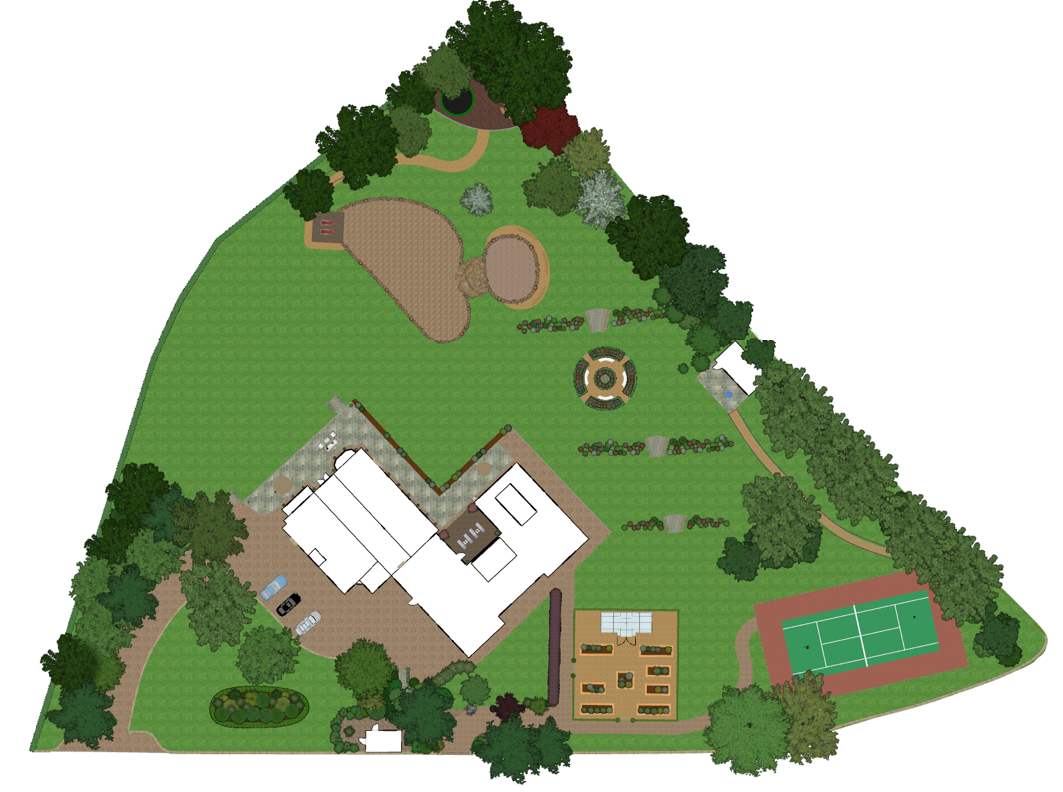

 ee key benefits of a Landscape Visual Impact Assessment:

 Soil contamination occurs when the level of pollutants, including chemicals, man-made waste, radioactive materials and salts, is higher than the normally expected level. This then results in the deterioration of the natural properties of the soil, as well as the environment, comfort and health of individuals being adversely affected.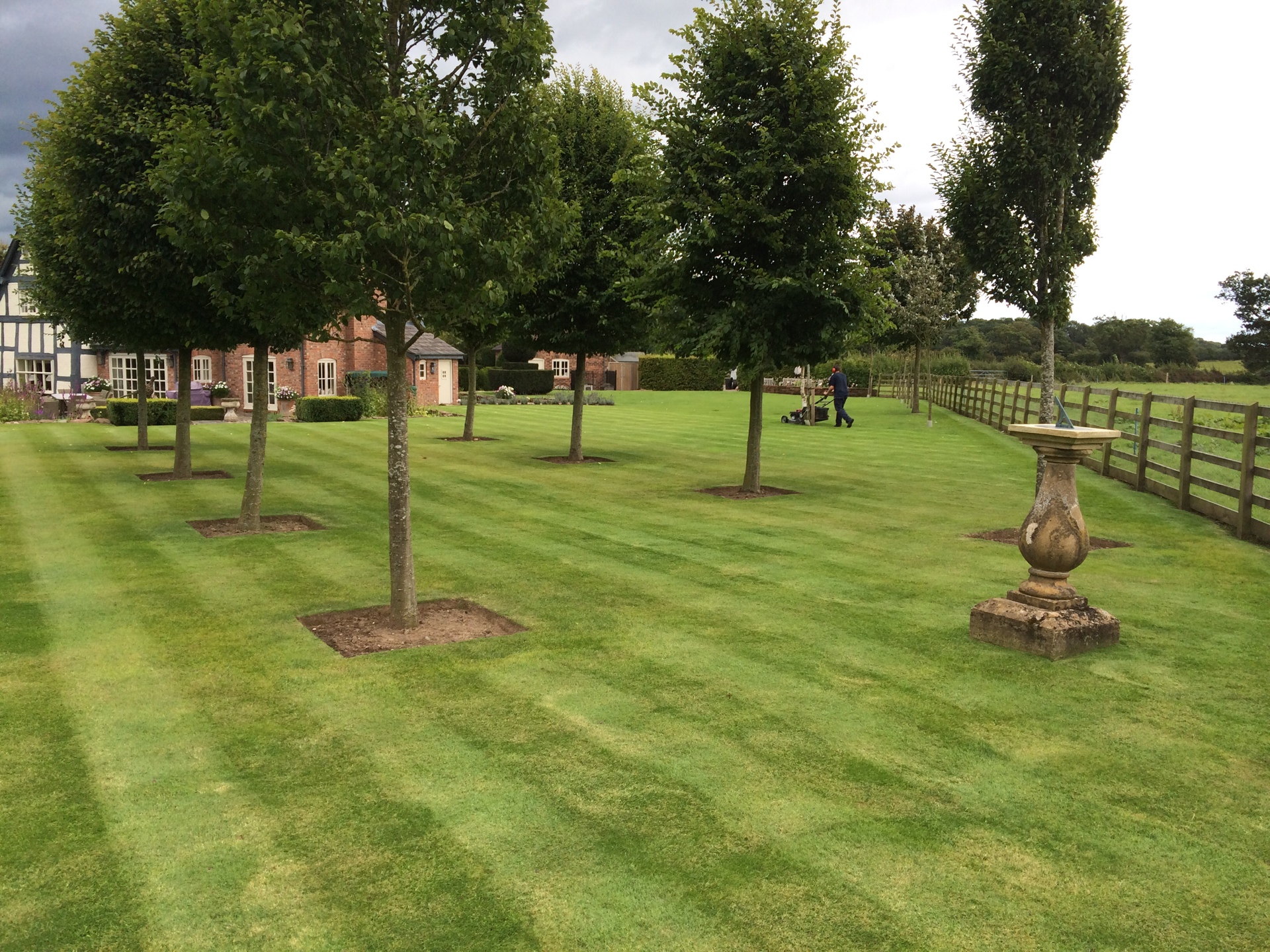



 The National Planning Policy Framework (NPPF) sets out government planning policy for England. It was published by the Department for Communities and Local Government (now the Ministry of Housing, Communities and Local Government (MHCLG)) on 27 March 2012 and can be downloaded from the MHCLG website.