
Testing requirements vary depending on material type, regulatory framework and intended outcome.
Use the guide below to identify the analysis most relevant to your site or project.
Regulatory decisions depend on defensible analytical data.
Environmental and laboratory testing provides the data needed to understand the condition and classification of soil, plant tissue and waste materials. Whether you’re investigating contamination, meeting regulatory requirements or informing a management strategy, accurate analysis provides the evidence needed to make confident decisions.
Every project begins by identifying the most appropriate testing requirements before samples are collected and analysed to recognised standards. At ProHort, we coordinate the sampling process, laboratory testing and reporting, ensuring the results are clear, compliant and tailored to your project.

When: Excavation or reuse of soil linked to water industry assets.
Purpose: Confirm compliance with UK Water Industry Research guidelines for reuse or transfer.
Timing: Year-round
When: Planning conditions, contamination checks or BNG soil suitability
Purpose: Assess nutrient levels, pH, contamination or soil health
Timing: Year-round (weather-dependent sampling).


When: Diagnosing nutrient uptake or pollution stress in trees and shrubs.
Purpose: Measure nutrient balance to guide management or mitigation
Timing: April to October
When: Tree or shrub decline, especially in planning or import-control contexts.
Purpose: Detect Phytophthora pathogens and confirm plant health compliance.
Timing: April–September (weather-dependent); year-round for scoping (PEA).

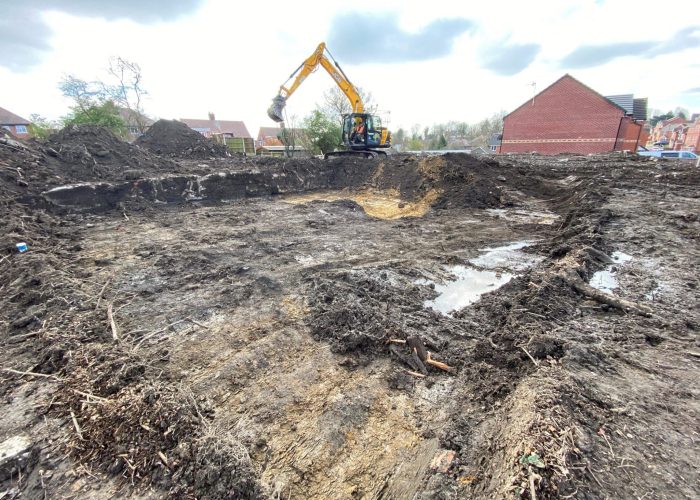
When: Excavated soils or materials require waste classification
Purpose: Define hazardous/non-hazardous status for disposal or reuse
Timing: Year-round
Choosing the right testing approach from the outset helps avoid unnecessary delays, reduces compliance risks and ensures decisions are based on reliable technical evidence. Whether you need a single laboratory analysis or a coordinated testing programme, we’ll identify the most appropriate solution for your project.
Tell us about your site or requirements, and our team will recommend the most suitable testing and analysis service.
Environmental laboratory testing analyses soil, plant tissue or waste materials to confirm classification, contaminant thresholds and regulatory status. In development and land management projects, this evidence supports planning validation, waste disposal decisions, remediation strategy and environmental compliance under UK regulation.
WAC testing (Waste Acceptance Criteria testing) determines whether soil or waste materials meet landfill acceptance standards. It is required before material can be disposed of at licensed facilities and forms part of UK waste classification and environmental compliance obligations.
Without valid WAC results, material cannot be lawfully accepted.
UKWIR testing follows Water UK Industry Research guidance to assess material suitability where contact with drinking water infrastructure or controlled water systems may occur. It confirms that soils or imported materials meet regulatory thresholds for water safety and environmental protection.
Soil testing and analysis measures contaminants, heavy metals, hydrocarbons, nutrients and pH levels. It establishes land quality status and supports contaminated land risk assessment, remediation design, planning condition discharge and due diligence reporting.
Soil testing is typically required where development involves potential contamination, waste reuse, remediation works or discharge of planning conditions. Early sampling confirms environmental status before disposal, design or regulatory decisions are fixed.
This prevents misclassification and costly re-work.
Phytophthora testing identifies regulated plant pathogens within soil or plant tissue samples. Laboratory confirmation is required where root rot, dieback or biosecurity risk is suspected. Accurate diagnosis supports containment strategy, planting decisions and regulatory reporting.
Phytophthora is confirmed through accredited laboratory methods such as ELISA or PCR analysis. Visual symptoms alone are not sufficient for compliance or management decisions. Laboratory verification provides defensible evidence for biosecurity action.
Leaf analysis measures nutrient uptake and plant health indicators within tissue samples. It supports nutrient management planning, performance monitoring and environmental assurance in landscape, arboricultural and agricultural contexts.
Accredited laboratory testing confirms contaminant levels and classification thresholds before material is disposed of, reused or remediated. This protects against regulatory enforcement, rejected waste loads, insurance exposure and programme delay.
Defensible data reduces liability.
The correct test depends on your regulatory objective.
WAC testing for landfill disposal
UKWIR testing for water infrastructure compliance
Soil testing for contamination assessment
Phytophthora testing for plant health and biosecurity
Leaf analysis for nutrient and performance monitoring
Early review ensures sampling strategy and reporting align with project timelines and regulatory standards.