Biodiversity Net Gain (BNG) Assessment in Lichfield

Biodiversity Net Gain (BNG) in Lichfield

Developing or submitting a planning application in Lichfield and require Biodiversity Net Gain?

BNG is now a mandatory requirement – we specialise in providing compliant reports to achieve planning consent. 

Fast, Clear, Planning-Ready Support

Fast response 

Calls answered in 2 rings, emails replied to within the hour.

Free expert advice

Clear guidance before you commit.

Cost-effective

Working in partnership with clients to ensure planning approval first time

Typical 10-day turnaround

Industry Leading Standard

Expert Team

We stay with you from first call through to submission. 

Do you need a Biodiversity Net Gain Assessment in Lichfield?

Biodiversity Net Gain is now a required component of the planning system for most developments in Lichfield. Proposals must demonstrate that the site will deliver a measurable improvement in biodiversity compared with its existing condition. Lichfield District Council often cannot validate applications lacking clear, robust BNG evidence, which can lead to delays during later stages of the planning process.

Planning officers in Lichfield frequently request BNG where development may interact with important ecological features. Typical examples include:
  • Canal and river corridors linked to the Trent & Mersey Canal and River Trent
  • Regenerating former industrial and agricultural sites with early-stage habitat
  • Suburban woodland edges, green corridors and parks connecting neighbourhoods
  • Valley bottoms, stream corridors and the district’s extensive network of pathways
Appropriate BNG evidence helps maintain planning momentum and prevents validation issues.

We support developments across the Lichfield area, including the city centre, Stowe, Leomansley, Boley Park, Chadsmead, Streethay, Fradley and surrounding parishes within the local authority boundary.

Why planning authorities in Lichfield request a BNG

Lichfield District Council encourages early preparation of BNG evidence to confirm that the 10% uplift can be achieved. Early baseline work allows potential constraints to be identified at the outset, giving both the applicant and the planning authority confidence that the development can deliver a compliant uplift. A verified habitat baseline, a fully justified Metric calculation and a clear, proportionate strategy for securing biodiversity gains help ensure alignment with national policy, minimise redesign later in the process and significantly reduce planning risk.

Local Case Insight

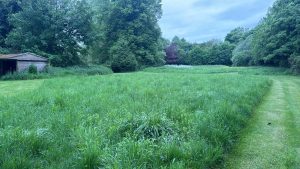
A BNG assessment for a residential scheme in Fradley identified previously overlooked habitat areas along an old farm track. What appeared at first glance to be common improved grassland was found, through detailed UKHab mapping, to include developing scrub patches, tall-herb communities and a damp depression supporting wet-tolerant species. Together, these features provided significantly greater biodiversity value and ecological function than the design team anticipated. Recognising these elements early in the process allowed the layout to be refined, protecting valuable habitat parcels and ensuring that the overall scheme could achieve a compliant biodiversity uplift without major redesign later on.

How the BNG process works

We produce planning-ready BNG Assessments aligned to Lichfield’s policy expectations.

Key BNG Deliverables for Lichfield Projects

For developments in Lichfield, our BNG assessments provide the core information planning officers expect. Each assessment includes:

  • Verified UKHab baseline survey
  • Clear and defensible Biodiversity Metric
  • Practical uplift strategy suitable for site conditions
  • Planning-ready reporting to meet validation requirements

This structure supports Lichfield Council’s requirements and offers a proportionate route to demonstrating BNG across a wide range of development types.

Step 1

Habitat baseline surveys

Year-round, with optimal survey seasons

Step 2

Metric 4.0 calculations

 Completed once habitat data is verified. 

Step 3

Uplift strategy development

Aligned with design progression and layout refinement.

Step 4

Integration with Other Surveys

Only if needed. PEA, EIA, and Protected Species surveys 

Next Steps

Contact us, and we’ll confirm exactly what your Lichfield site requires. We provide a planning-ready, proportionate route forward. 

FAQ - BNG in Lichfield

Does Lichfield require BNG for most developments?

Yes — unless a site falls under national exemptions.

You can review local planning guidance here: 

Yes. The Trent & Mersey Canal and linked corridors often require early BNG consideration.

Many do, particularly those reverting to scrub or mixed habitat.

Are off-site units accepted in Lichfield?

Yes, provided justification is clear and long-term security is in place.

Yes, provided justification is clear and long-term security is in place.

Before fixing the site layout, ensuring uplift can be delivered.

Related Services

Biodiversity Net Gain (BNG) Assessment in Solihull

Biodiversity Net Gain (BNG) in Solihull

Developing or submitting a planning application in Solihull and require Biodiversity Net Gain?

BNG is now mandatory for most developments – we provide compliant, planning-ready reports aligned with Solihull Council requirements.

Fast, Clear, Planning-Ready Support

Fast response 

Calls answered in 2 rings, emails replied to within the hour.

Free expert advice

Clear guidance before you commit.

Cost-effective

Working in partnership with clients to ensure planning approval first time

Typical 10-day turnaround

Industry Leading Standard

Expert Team

We stay with you from first call through to submission. 

Do you need a Biodiversity Net Gain Assessment in Solihull?

In Solihull, BNG is a key requirement for most developments. Developers must show a net improvement in biodiversity relative to the site’s original condition. This involves conserving habitats along rivers and railway corridors, enhancing green wedges and urban parks, and creating additional planting or wetland areas to support wildlife, fostering sustainable growth while maintaining ecological networks.

Planning officers in Solihull often request BNG information where development may impact important ecological networks. Typical examples include:

  • River corridors, such as the River Blythe and River Cole, including associated floodplain habitats
  • Brownfield land, particularly in Shirley, Olton, and Chelmsley Wood, supporting regenerating scrub and grassland
  • Green corridors, including linear parks, green wedges, and urban parks connecting neighbourhoods
  • Rail-adjacent habitats, where embankments and disused railway corridors provide valuable habitats

Clear and correctly presented BNG evidence is essential, as planning applications may otherwise face validation issues or delays.

We cover all areas of Solihull, including the town centre, Shirley, Knowle, Dorridge, Olton, Balsall Common, and surrounding neighbourhoods.

Why planning authorities in Solihull request a BNG

Councils in Solihull expect BNG information at an early stage to ensure developments meet the required ten percent increase in biodiversity before finalising the layout. They require a verified baseline, a completed Metric showing the change in biodiversity units, and a clear plan for delivering and securing the gain. This aligns with NPPF Section 15 guidance.

Local Case Insight

A BNG assessment for a residential and commercial scheme in Shirley uncovered a narrow strip of rough grassland and regenerating scrub adjacent to a disused railway. A small wet depression and tall herb areas contributed unexpectedly high biodiversity value. By refining the site layout to retain these features and reinforcing them with new planting along the corridor, the project achieved the required net gain entirely on-site. This allowed planning approval to proceed without off-site compensation or redesigns.

How the BNG process works

We produce planning-ready BNG Assessments aligned to Solihull’s policy expectations.

Key BNG Deliverables for Birmingham Projects

For developments in Solihull, our BNG assessments provide the essential information planning officers require. Each assessment includes:

  • A verified UKHab baseline tailored to Solihull habitats
  • A clearly justified Metric showing biodiversity unit changes
  • A practical, site-specific uplift strategy
  • Planning-ready reporting suitable for validation
  • Optional long-term management and gain plan material

This approach meets Solihull Council expectations and offers a proportionate method to demonstrate BNG across various types of developments.

Step 1

Habitat baseline surveys

Year-round, with optimal survey seasons

Step 2

Metric 4.0 calculations

 Completed once habitat data is verified. 

Step 3

Uplift strategy development

Aligned with design progression and layout refinement.

Step 4

Integration with Other Surveys

Only if needed. PEA, EIA, and Protected Species surveys 

Next Steps

Contact us, and we’ll confirm exactly what your Solihull site requires. We provide a planning-ready, proportionate route forward. 

FAQ - BNG in Solihull

Does Solihull Council require BNG at validation?

Yes, most applications (except exempt categories) must submit BNG evidence.

You can review local planning guidance here:

Yes, rivers like the Blythe and Cole are priority ecological corridors, requiring careful assessment.

Yes, regenerating brownfield sites often support valuable habitats.

Can BNG be delivered fully on-site for small developments?

Often yes, through wildflower areas, wetland creation, and scrub/grassland improvements.

Disused tracks and embankments can hold moderate-to-high value habitats and require accurate classification.

Verified baseline, completed Metric, and early uplift strategy submitted at validation.

Related Services

Do You Need a Biodiversity Gain Plan in Ilkeston?

You’ll need a Biodiversity Gain Plan in Ilkeston if your planning permission includes a condition linked to Biodiversity Net Gain (BNG). The Biodiversity Gain Plan is the document that shows how the required biodiversity improvement will actually be delivered, how it will be maintained, and who is responsible for it.

Without an approved Biodiversity Gain Plan in place, many developments cannot legally begin, even where planning permission has already been granted.

Planning officers in Ilkeston most frequently request a Biodiversity Gain Plan when proposals interact with:

  • Former industrial and made-ground parcels across the Erewash Valley, including sites near Gallows Inn, Cotmanhay and Hallam Fields

  • Regenerating brownfield land with scrub, young woodland or tall herb mosaics linked to historic mining and manufacturing activity

  • Settlement-edge greenfield release areas around West Hallam, Kirk Hallam and Little Hallam

  • Linear ecological corridors formed by the Erewash Canal, River Erewash, old mineral routes and the rail line that supports wildlife movement

  • Floodplain and wetland margins with elevated baseline value, particularly where development may affect connectivity between riparian habitats

Planning applications in Ilkeston often face validation delays where baseline habitats or metric calculations are incomplete, unclear or submitted in non-standard format.

We provide Biodiversity Gain Plan services across Ilkeston, supporting projects throughout the town centre and all surrounding neighbourhoods, including Cotmanhay, Larklands, Hallam Fields, Kirk Hallam, Little Hallam, Abbotsford, and Shipley View. We also work across nearby villages, outlying settlements and rural areas within the wider Ilkeston and Erewash area, ensuring full coverage for developments requiring Biodiversity Net Gain support.

Why Planning Authorities in Ilkeston Request a Biodiversity Gain Plan

Planning Authorities across Ilkeston require a Biodiversity Gain Plan because Biodiversity Net Gain is now a statutory requirement under the Environment Act 2021. The Plan provides the legally enforceable route for delivering biodiversity improvements tied to a specific planning permission. Without an approved Plan, the BNG condition cannot be lawfully discharged, and development cannot commence on site. 

Local Case Insight

On a small commercial redevelopment site near Hallam Fields, a Biodiversity Gain Plan was required after baseline surveys identified higher-than-expected habitat value within a narrow band of tall herb vegetation beside an old mineral access track. The plan clarified achievable on-site uplift, integrated targeted planting within the redesigned boundary, and set out the 30-year management responsibilities. The planning condition was discharged on first review, enabling the developer to progress without relying on off-site units or altering the approved layout.

How the Biodiversity Gain Plan Process Works

We produce planning-ready BNG Assessments aligned to Ilkeston’s policy expectations.

Key BNG Deliverables for Ilkeston Projects

Your Biodiversity Gain Plan is structured to meet Ilkeston’s planning requirements and typically includes:

  • Habitat delivery strategy — how and where biodiversity uplift will be achieved

  • Mapped habitat parcels — legally reliable plans linking habitats to the approved metric

  • Optional integration with a Habitat Management & Monitoring Plan (HMMP) where 30-year management is required

  • Submission-ready planning document — formatted for Local Planning Authority approval

This ensures your BNG condition in Ilkeston can be discharged cleanly and lawfully.

Step 1

Initial Review

We assess your existing BNG assessment, site layout and planning condition.

Step 2

Plan Preparation

Habitat delivery proposals, mapping and management requirements are drafted.

Step 3

Coordination Stage

The plan is aligned with your build programme and any wider ecological or planning documents.

Step 4

Submission and Support

 We respond to any LPA queries or amendments required.

Next Steps

Ready to Secure Approval and start on site? We’ll confirm what your Ilkeston site needs and help you move forward without unnecessary delay. 

FAQ - BGP in Ilkeston

Do brownfield sites in Ilkeston make the assessment more complex?

Regenerated industrial or mineral sites often hold more ecological value than expected, so accurate condition assessments are essential. Further guidance on how such sites are considered under BNG rules can be found at: https://www.gov.uk/guidance/mandatory-biodiversity-net-gain

Most minor and major applications in Ilkeston require a Biodiversity Gain Plan, particularly where the proposal affects regenerating brownfield, settlement-edge fields or land close to the Erewash Canal or River Erewash. The plan must demonstrate a minimum 10% biodiversity gain and secure that uplift for at least 30 years.

What must be included in an Ilkeston-compliant Biodiversity Gain Plan?

Your plan must include the baseline habitat assessment, the metric calculations and a clear explanation of how uplift will be delivered, funded and managed. Planners expect robust justification before off-site units or statutory credits are introduced.

Off-site units may be accepted where constraints prevent on-site uplift from achieving the required 10%. Evidence must demonstrate why on-site delivery is limited and how the off-site provision meets the biodiversity metric rules.

Related Services

Fast, Clear, Planning-Ready Support

Fast response 

Calls answered in 2 rings, emails replied to within the hour.

Free expert advice

Clear guidance before you commit.

Cost-effective

Working in partnership with clients to ensure planning approval first time

Typical 10-day turnaround

Industry Leading Standard

Expert Team

We stay with you from first call through to submission. 

Do you need a Biodiversity Net Gain Assessment in Stafford?

Biodiversity Net Gain is now a mandatory consideration for most development proposals in Stafford. Applicants must demonstrate that the site will deliver a measurable increase in biodiversity compared with its starting condition. Stafford Borough Council may delay or invalidate applications if BNG information is missing or incomplete.

Planning officers in Stafford regularly request BNG where development may affect local habitat networks. Examples include:

  • River corridors such as the River Sow
  • Former industrial and agricultural land undergoing natural regeneration
  • Urban green spaces, tree belts and parkland used by wildlife
  • Stream corridors, drainage channels and rail-side habitat routes

Clear BNG evidence helps keep planning applications on track.

We support developments across Stafford, including the town centre, Baswich, Wildwood, Castlefields, Doxey, Queensville, Littleworth and surrounding rural communities.

Why planning authorities in Stafford request a BNG

Stafford Borough Council encourages early BNG submissions to ensure each proposal can demonstrate the required 10% biodiversity uplift from the outset. Establishing a verified baseline, presenting a robust and fully justified Metric, and setting out a clear, deliverable approach to on- or off-site habitat creation all help ensure compliance with national policy. By preparing this information early, applicants significantly reduce planning risk, avoid validation delays, and provide the LPA with confidence that BNG obligations will be met throughout the development process.

Local Case Insight

A BNG assessment for a housing-led project in Baswich identified valuable habitat features along a small stream corridor. What initially appeared to be simple unmanaged scrub was found to include tall herb vegetation, scattered trees, and a damp hollow that collectively supported unexpected biodiversity value. By accurately capturing these features within the baseline and Metric, the project team was able to design a proportionate enhancement strategy from the outset, ensuring the required uplift could be achieved without later redesign or delays.

How the BNG process works

We produce planning-ready BNG Assessments aligned to Stafford’s policy expectations.

Key BNG Deliverables for Stafford Projects

For developments in Stafford, our BNG assessments provide the core information planning officers expect. Each assessment includes:

  • Verified UKHab baseline
  • A transparent and justified Biodiversity Metric
  • A practical uplift strategy tailored to the site 
  • Reporting suitable for planning validation 

This structure supports Stafford Council’s requirements and offers a proportionate route to demonstrating BNG across a wide range of development types.

Step 1

Habitat baseline surveys

Year-round, with optimal survey seasons

Step 2

Metric 4.0 calculations

 Completed once habitat data is verified. 

Step 3

Uplift strategy development

Aligned with design progression and layout refinement.

Step 4

Integration with Other Surveys

Only if needed. PEA, EIA, and Protected Species surveys 

Next Steps

Contact us, and we’ll confirm exactly what your Stafford site requires. We provide a planning-ready, proportionate route forward. 

FAQ - BNG in Stafford

Does Stafford require BNG for most developments?

Yes — unless exempt by national rules.

You can review local planning guidance here: 

Yes. The River Sow and smaller watercourses are important habitat corridors.

Many do, especially those with early-stage vegetation.

Can off-site units be used?

Yes, provided they are justified and secured for 30 years.

Yes — it is a key requirement of BNG delivery.

During early design stages to ensure layout compatibility.

Related Services

Biodiversity Gain Plan in Manchester

Biodiversity Gain Plan in Manchester

Do you need a Biodiversity Gain Plan in Manchester before you can start work?

Where Biodiversity Net Gain applies, a Biodiversity Gain Plan becomes the legal document that allows work to begin. We put that plan together clearly, correctly and in a format councils approve, so your project moves ahead.

Fast, Clear, Planning-Ready Support

Fast response 

Calls answered in 2 rings, emails replied to within the hour.

Free expert advice

Clear guidance before you commit.

Cost-effective

Working in partnership with clients to ensure planning approval first time

Typical 10-day turnaround

Industry Leading Standard

Expert Team

We stay with you from first call through to submission. 

Do You Need a Biodiversity Gain Plan in Manchester?

You will need a Biodiversity Gain Plan in Manchester when your planning permission includes a condition tied to Biodiversity Net Gain. The Biodiversity Gain Plan sets out how the required uplift will be delivered on the ground, how it will be managed over time and who is responsible for securing it.

Without an approved Biodiversity Gain Plan, most developments in Manchester cannot legally start work, even if full planning permission has already been issued.

Planning officers in Manchester commonly request Biodiversity Gain Plan evidence where development may affect:

• Urban regeneration and housing areas across Manchester and Salford

• Brownfield and former industrial land in towns such as Bolton, Oldham and Rochdale

• Major transport and logistics schemes linked to the M60, M62, M56 and key rail routes

• River and canal corridors, floodplain habitats and wider green infrastructure

Incomplete or unclear Biodiversity Gain Plan information often leads to validation delays or added conditions later in the process.

We deliver Biodiversity Gain Plan services across Manchester, Salford, Bolton, Bury, Oldham, Rochdale, Stockport, Tameside, Trafford, Wigan and the wider surrounding areas within the city region.

Why Planning Authorities in Manchester Request a Biodiversity Gain Plan

Planning authorities across Greater Manchester require a Biodiversity Gain Plan because Biodiversity Net Gain is now a statutory duty under the Environment Act 2021. The Plan sets out the legally enforceable method for delivering the biodiversity improvements linked to a planning permission. Without an approved Plan, the BNG condition cannot be discharged and development cannot begin on site.

If you want, I can also create a shorter version or a more technical version for professional audiences.

Local Case Insight

A mixed use redevelopment in Ancoats required a Biodiversity Gain Plan after baseline work showed that several small habitat pockets around an old service yard contributed more biodiversity value than expected. The site layout initially removed these areas, meaning the proposed uplift could not be demonstrated within the boundary. By revising the design to retain the higher value sections and introducing new native planting along the internal pedestrian routes, the project secured the uplift needed for the Biodiversity Gain Plan. This allowed the planning team to discharge the BNG condition without delay and enabled construction to start as scheduled.

How the Biodiversity Gain Plan Process Works

We produce planning-ready BNG Assessments aligned to Manchester’s policy expectations.

Key BNG Deliverables for Manchester Projects

Your Biodiversity Gain Plan is prepared to meet the expectations of planning officers across Manchester and typically includes:

  •  A habitat delivery strategy that sets out how the required biodiversity uplift will be achieved within the city
  • Mapped habitat parcels that provide clear, reliable plans linked to the approved Metric
  • Optional integration with a Habitat Management and Monitoring Plan where long term management is required
  • A submission ready document formatted for approval by Manchester City Council

This structure supports a smooth and lawful discharge of the BNG condition in Manchester.

Step 1

Initial Review

We assess your existing BNG assessment, site layout and planning condition.

Step 2

Plan Preparation

Habitat delivery proposals, mapping and management requirements are drafted.

Step 3

Coordination Stage

The plan is aligned with your build programme and any wider ecological or planning documents.

Step 4

Submission and Support

 We respond to any LPA queries or amendments required.

Next Steps

Ready to secure approval and start on site? We’ll confirm what your  Manchester site needs and help you move forward without unnecessary delay. 

FAQ - BGP in Manchester

Does a city centre tower scheme in Manchester require a Biodiversity Gain Plan?

Yes. High rise residential or commercial developments within Manchester city centre must comply with mandatory Biodiversity Net Gain legislation where applicable. A Biodiversity Gain Plan must demonstrate at least 10 percent measurable uplift compared to the approved baseline.

On tight urban plots, uplift may be delivered through biodiverse green roofs, podium planting, vertical greening systems and carefully designed courtyard landscapes. The Biodiversity Gain Plan must quantify these habitats accurately within the statutory Biodiversity Metric.

Yes. Baseline habitat value is calculated at the time of planning submission. Clearing vegetation prematurely can lead to incorrect baseline assumptions and potential enforcement or recalculation issues.

Where schemes include extensive basements or underground parking, available habitat area may be limited. The Biodiversity Gain Plan must reflect actual achievable habitat delivery and may require off site biodiversity units to achieve compliance.

Yes. Due to density and site constraints, many city centre developments rely partly on registered off site biodiversity units. The Biodiversity Gain Plan must confirm legal securing and registration of those units.

Who approves the Biodiversity Gain Plan in Manchester?

Manchester City Council acts as the Local Planning Authority and is responsible for approving the Biodiversity Gain Plan prior to commencement.

Planning guidance can be accessed at:
https://www.manchester.gov.uk/planning

Green roof proposals must include clear ecological specifications, substrate depth, planting composition and long term securing arrangements. Vague references to “extensive green roof” are unlikely to satisfy metric requirements.

Temporary site uses may influence habitat condition prior to submission. The Biodiversity Gain Plan must be based on accurate, up to date ecological survey data reflecting the site at submission stage.

Delays frequently arise where metric outputs do not match architectural plans, habitat areas are overestimated or ecological design is not technically specified. Coordination between architect and ecologist is essential.

ProHort prepares compliant Biodiversity Gain Plans tailored to Manchester’s high density urban context. We ensure accurate metric modelling, realistic vertical habitat proposals and clear legal securing arrangements to reduce approval risk.

Related Services

Biodiversity Net Gain (BNG) Assessment in Cannock

Biodiversity Net Gain (BNG) in Cannock

Developing or submitting a planning application in Cannock and require Biodiversity Net Gain?

BNG is now a mandatory requirement – we specialise in providing compliant reports to achieve planning consent. 

Fast, Clear, Planning-Ready Support

Fast response 

Calls answered in 2 rings, emails replied to within the hour.

Free expert advice

Clear guidance before you commit.

Cost-effective

Working in partnership with clients to ensure planning approval first time

Typical 10-day turnaround

Industry Leading Standard

Expert Team

We stay with you from first call through to submission. 

Do you need a Biodiversity Net Gain Assessment in Cannock?

Biodiversity Net Gain is now a required part of the planning process for most developments in Cannock. Proposals must show that the site will achieve a measurable improvement in biodiversity compared with its existing condition. Cannock Chase District Council may delay or refuse validation where BNG evidence is unclear, incomplete or missing.

Planning officers in Cannock commonly request BNG where development may affect significant habitat networks. Examples include:
    • Heathland edges and woodland linked to Cannock Chase
    • Former mining, industrial and depot sites with natural regeneration
    • Urban greenspace, parkland and habitat corridors through neighbourhoods
    • Railway verges, stream lines and valley bottoms supporting wildlife movement
    Clear BNG evidence helps avoid planning delays and strengthens applications.

    We support developments across Cannock, including Hednesford, Heath Hayes, Bridgtown, Hawks Green, Norton Canes, Chadsmoor and surrounding settlements within the Cannock Chase district.

    Why planning authorities in Cannock request a BNG

    Cannock Chase District Council looks for early BNG information to ensure that a development can realistically deliver the required 10% uplift. Early submission of evidence helps the authority understand the site’s ecological context—particularly important given the sensitivity of habitats associated with Cannock Chase. A verified baseline, complete and justified Metric calculation, and a clearly defined uplift mechanism all support national policy expectations while giving planners confidence that biodiversity gains are achievable. This proactive approach reduces the likelihood of redesign, avoids validation delays and helps keep the project on a predictable planning pathway.

    Local Case Insight

    A BNG assessment for a commercial scheme in Hednesford identified a series of notable habitat features along the margin of a disused colliery. What initially appeared to be simple rough grassland was, upon detailed survey, found to contain developing scrub, tall-herb stands and a seasonal wet depression supporting a mix of wet-tolerant species. These elements collectively contributed a higher biodiversity value than the project team had anticipated. Identifying these features early allowed the design to be adjusted to retain the most valuable habitat pockets, secure biodiversity units on-site and ensure that the scheme could meet its BNG obligations without major redesign later in the planning process.

    How the BNG process works

    We produce planning-ready BNG Assessments aligned to Cannock’s policy expectations.

    Key BNG Deliverables for Cannock Projects

    For developments in Cannock, our BNG assessments provide the core information planning officers expect. Each assessment includes:

    • Verified UKHab baseline mapping
    • A transparent Biodiversity Metric
    • A practical uplift strategy tailored to site conditions 
    • Planning-ready reporting for validation 

    This structure supports Cannock Council’s requirements and offers a proportionate route to demonstrating BNG across a wide range of development types.

    Step 1

    Habitat baseline surveys

    Year-round, with optimal survey seasons

    Step 2

    Metric 4.0 calculations

     Completed once habitat data is verified. 

    Step 3

    Uplift strategy development

    Aligned with design progression and layout refinement.

    Step 4

    Integration with Other Surveys

    Only if needed. PEA, EIA, and Protected Species surveys 

    Next Steps

    Contact us, and we’ll confirm exactly what your Cannock site requires. We provide a planning-ready, proportionate route forward. 

    FAQ - BNG in Cannock

    Is BNG required for most Cannock developments?

    Yes — unless exempt under national rules.

    You can review local planning guidance here: 

    Yes. Proximity to the Chase often increases ecological scrutiny.

    Often — naturally regenerating land can hold valuable habitat.

    Are off-site units permitted?

    Often — naturally regenerating land can hold valuable habitat.

    Yes — habitat management is essential for BNG delivery.

    Yes — habitat management is essential for BNG delivery.

    Related Services

    Biodiversity Gain Plan in Birmingham

    Biodiversity Gain Plan in Birmingham

    Do you need a Biodiversity Gain Plan in Birmingham before you can start work?

    Where Biodiversity Net Gain (BNG) applies, a Biodiversity Gain Plan becomes the legal document that allows work to begin. We put that plan together clearly, correctly, and in a format Birmingham City Council and neighbouring authorities approve, so your project moves ahead.

    Fast, Clear, Planning-Ready Support

    Fast response 

    Calls answered in 2 rings, emails replied to within the hour.

    Free expert advice

    Clear guidance before you commit.

    Cost-effective

    Working in partnership with clients to ensure planning approval first time

    Typical 10-day turnaround

    Industry Leading Standard

    Expert Team

    We stay with you from first call through to submission. 

    Do You Need a Biodiversity Gain Plan in Birmingham?

    You’ll need a Biodiversity Gain Plan in Birmingham if your planning permission includes a condition linked to Biodiversity Net Gain (BNG). The Biodiversity Gain Plan is the document that shows how the required biodiversity improvement will actually be delivered, how it will be maintained, and who is responsible for it.

    Without an approved Biodiversity Gain Plan in place, many developments cannot legally begin, even where planning permission has already been granted.

    Planning officers in Birmingham most frequently require formal Biodiversity Gain Plan evidence where development affects:

    • Major housing and mixed-use regeneration programmes across central Birmingham, Digbeth, Ladywood, Bordesley, and nearby urban districts.

    • Commercial, logistics and industrial schemes linked to the M6, A38(M), and regional rail network, particularly around Nechells, Tyseley, Castle Bromwich, and Saltley.

    • Urban fringe greenfield release and edge-of-city growth on the boundaries of Sutton Coldfield, Kings Norton, Northfield, Harborne, and Edgbaston.

    • River corridors, canals and floodplains associated with the River Rea, River Tame, and the Birmingham Canal Navigations.

    If this evidence isn’t provided in the correct format, many planning applications aren’t validated at all, or they are delayed by conditions later in the process.

    We provide Biodiversity Gain Plan services across: Birmingham, Sutton Coldfield, Edgbaston, Harborne, Northfield, Kings Norton, Digbeth, Ladywood, Solihull, West Bromwich, Halesowen, and all surrounding neighbourhoods and urban districts.

    Why Planning Authorities in Birmingham Request a Biodiversity Gain Plan

    Planning Authorities in Birmingham require a Biodiversity Gain Plan because Biodiversity Net Gain is now a statutory requirement under the Environment Act 2021. The Plan provides the legally enforceable route for delivering biodiversity improvements tied to a specific planning permission. Without an approved Plan, the BNG condition cannot be lawfully discharged, and development cannot commence on site.

    Local Case Insight

    On an urban-led regeneration scheme in Digbeth, planning permission was granted subject to a Biodiversity Net Gain condition. A structured Biodiversity Gain Plan was prepared, setting out on-site habitat creation and long-term delivery responsibilities. The condition was discharged on first review, allowing the development programme to proceed without delay.

    How the Biodiversity Gain Plan Process Works

    We produce planning-ready BNG Assessments aligned to Birmingham policy expectations.

    Key BNG Deliverables for Projects in Birmingham

    Your Biodiversity Gain Plan is structured

    to meet Birmingham’s planning requirements and typically includes:

    • Habitat delivery strategy — how and where biodiversity uplift will be achieved

    • Mapped habitat parcels — legally reliable plans linking habitats to the approved metric

    • Optional integration with a Habitat Management & Monitoring Plan (HMMP) where 30-year management is required

    • Submission-ready planning document — formatted for Local Planning Authority approval

    This ensures your BNG condition in Birmingham can be discharged cleanly and lawfully.

    Step 1

    Initial Review

    We assess your existing BNG assessment, site layout and planning condition.

    Step 2

    Plan Preparation

    Habitat delivery proposals, mapping and management requirements are drafted.

    Step 3

    Coordination Stage

    The plan is aligned with your build programme and any wider ecological or planning documents.

    Step 4

    Submission and Support

     We respond to any LPA queries or amendments required.

    Next Steps

    Ready to Secure Approval and start on site? We’ll confirm what your Birmingham site needs and help you move forward without unnecessary delay. 

    FAQ - BGP in Birmingham

    What is a Biodiversity Gain Plan?

    A legal document showing how biodiversity improvements will be delivered, maintained, and managed for your development.

    Only developments with a planning condition linked to Biodiversity Net Gain require a plan.

    Areas with large-scale housing, commercial, or greenfield developments—such as Digbeth, Ladywood, Sutton Coldfield, Kings Norton, and Northfield.

    How long does it take to prepare a Biodiversity Gain Plan in Birmingham?

    Preparation depends on site size and complexity, but we typically deliver planning-ready documents within a few weeks.

    Yes, we can integrate a Habitat Management & Monitoring Plan (HMMP) to ensure compliance over 30 years if required.

    Development cannot legally begin on site without an approved plan, and doing so may result in enforcement action from Birmingham City Council.

    Related Services

    Do You Need a Biodiversity Gain Plan in Long Eaton?

    You’ll need a Biodiversity Gain Plan in Long Eaton if your planning permission includes a condition linked to Biodiversity Net Gain (BNG). The Biodiversity Gain Plan is the document that shows how the required biodiversity improvement will actually be delivered, how it will be maintained, and who is responsible for it.

    Without an approved Biodiversity Gain Plan in place, many developments cannot legally begin, even where planning permission has already been granted.

    Planning officers in Long Eaton most frequently request a Biodiversity Gain Plan where development interacts with:

    • Regenerating industrial and canal-side parcels around Toton Sidings, Long Eaton Wharf and the former lace manufacturing zones

    • Floodplain and wetland systems connected to the River Trent, Erewash flood corridor and the Sawley Cut

    • Settlement-edge grassland and plantation strips around Sawley, Wilsthorpe and Chilwell Lane

    • Linear ecological routes linked to the Erewash Canal, rail corridors, drainage channels and utility easements that support year-round wildlife movement

    • Brownfield plots with natural recolonisation where tall herb, ruderal vegetation and scrub create unexpectedly high baseline values

    Long Eaton applications often encounter validation delays when baseline assessments, habitat condition scores or long-term management commitments are incomplete or insufficiently evidenced.

    We provide Biodiversity Gain Plan services across Long Eaton, supporting projects throughout the town centre and all surrounding neighbourhoods, including Sawley, Wilsthorpe, Fields Farm, Grange Park, New Sawley, Chilwell Green, and Sandiacre. We also work across nearby villages, outlying settlements and rural areas within the wider Long Eaton and Erewash area, ensuring full coverage for developments requiring Biodiversity Net Gain support.

    Why Planning Authorities in Long Eaton Request a Biodiversity Gain Plan

    Planning Authorities across Long Eaton require a Biodiversity Gain Plan because Biodiversity Net Gain is now a statutory requirement under the Environment Act 2021. The Plan provides the legally enforceable route for delivering biodiversity improvements tied to a specific planning permission. Without an approved Plan, the BNG condition cannot be lawfully discharged, and development cannot commence on site. 

    Local Case Insight

    On a mixed-use redevelopment site near Wilsthorpe, a Biodiversity Gain Plan was required after surveys identified a narrow wet swale running across a previously hard-surfaced area. The feature held greater ecological value than initially assumed by the design team, prompting a targeted on-site enhancement strategy to be integrated into the revised layout. The Biodiversity Gain Plan set out the uplift, monitoring and 30-year management responsibilities, and the planning condition was discharged on first review without the need for off-site units or programme adjustments.

    How the Biodiversity Gain Plan Process Works

    We produce planning-ready BNG Assessments aligned to Long Eaton’s policy expectations.

    Key BNG Deliverables for Long Eaton Projects

    Your Biodiversity Gain Plan is structured to meet Long Eaton’s planning requirements and typically includes:

    • Habitat delivery strategy — how and where biodiversity uplift will be achieved

    • Mapped habitat parcels — legally reliable plans linking habitats to the approved metric

    • Optional integration with a Habitat Management & Monitoring Plan (HMMP) where 30-year management is required

    • Submission-ready planning document — formatted for Local Planning Authority approval

    This ensures your BNG condition in Long Eaton can be discharged cleanly and lawfully.

    Step 1

    Initial Review

    We assess your existing BNG assessment, site layout and planning condition.

    Step 2

    Plan Preparation

    Habitat delivery proposals, mapping and management requirements are drafted.

    Step 3

    Coordination Stage

    The plan is aligned with your build programme and any wider ecological or planning documents.

    Step 4

    Submission and Support

     We respond to any LPA queries or amendments required.

    Next Steps

    Ready to Secure Approval and start on site? We’ll confirm what your Long Eaton site needs and help you move forward without unnecessary delay. 

    FAQ - BGP in Long Eaton

    Do I need a Biodiversity Gain Plan for development in Long Eaton?

    Most minor and major applications in Long Eaton require a Biodiversity Gain Plan, particularly where proposals interact with the Trent corridor, Erewash floodplain, canal-side land or brownfield plots with naturalised vegetation. The plan must demonstrate a minimum 10% biodiversity gain and show how uplift will be secured for 30 years.

    Proposals in Sawley, Wilsthorpe, Toton Lane, Long Eaton Wharf, Nottingham Road, New Sawley and the canal corridor frequently require formal submissions. Erewash Borough Council pays particular attention to sites within the floodplain or those containing early-stage scrub and wetland mosaics.

    Are Long Eaton’s floodplain and wetland features challenging for BNG assessment?

    Floodplain and canal-side features can hold higher baseline value than anticipated, so accurate condition scoring is essential. Further national guidance on how these habitats are treated within BNG rules is available at: https://www.gov.uk/guidance/mandatory-biodiversity-net-gain

    Off-site units may be acceptable where constraints such as flood storage requirements or canal-side easements limit on-site uplift. Evidence must show why on-site delivery is restricted and how the selected off-site area meets metric compliance rules.

    Related Services

    Biodiversity Gain Plan in Stoke-on-Trent

    Biodiversity Gain Plan in Stoke-on-Trent

    Do you need a Biodiversity Gain Plan in Stoke-on-Trent before you can start work?

    Where Biodiversity Net Gain applies, a Biodiversity Gain Plan becomes the legal document that allows work to begin. We put that plan together clearly, correctly and in a format councils approve, so your project moves ahead.

    Fast, Clear, Planning-Ready Support

    Fast response 

    Calls answered in 2 rings, emails replied to within the hour.

    Free expert advice

    Clear guidance before you commit.

    Cost-effective

    Working in partnership with clients to ensure planning approval first time

    Typical 10-day turnaround

    Industry Leading Standard

    Expert Team

    We stay with you from first call through to submission. 

    Do You Need a Biodiversity Gain Plan in Stoke-on-Trent?

    You’ll need a Biodiversity Gain Plan in Stoke-on-Trent if your planning permission includes a condition linked to Biodiversity Net Gain (BNG). The Biodiversity Gain Plan is the document that shows how the required biodiversity improvement will actually be delivered, how it will be maintained, and who is responsible for it.

    Without an approved Biodiversity Gain Plan in place, many developments cannot legally begin, even where planning permission has already been granted.

    Planning officers in Stoke-on-Trent most frequently require formal Biodiversity Gain Plan evidence where development affects:
    • Strategic housing and urban expansion across Hanley, Blurton, Longton, and Stoke town centre
    • Industrial and regeneration land in Fenton, Tunstall, and Etruria
    • Greenfield release and edge-of-city development around Meir, Trentham, and Weston Coyney
    • River corridors, floodplains, and wetland networks associated with the River Trent, Fowlea Brook, and Ford Green Brook
    If this evidence isn’t submitted in the correct format, planning applications are often not validated or delayed by conditions later in the process.

    We provide Biodiversity Gain Plan services across Stoke-on-Trent, including Hanley, Tunstall, Burslem, Longton, Fenton, Blurton, Meir, Trentham, and Weston Coyney, as well as all surrounding suburbs, villages, and rural areas within the city’s boundary.

    Why Planning Authorities in Stoke-on-Trent Request a Biodiversity Gain Plan

    Planning authorities in Stoke-on-Trent require a Biodiversity Gain Plan because Biodiversity Net Gain is now a statutory obligation under the Environment Act 2021. The Plan sets out the legally enforceable method for delivering biodiversity enhancements linked to a specific planning permission. Without an approved Plan, the BNG condition cannot be lawfully discharged, meaning development cannot legally begin on site.

    Local Case Insight

    On a mixed residential redevelopment site in Stoke-on-Trent, planning permission was granted with a Biodiversity Net Gain condition. A detailed Biodiversity Gain Plan was prepared, outlining on-site habitat creation and long-term management responsibilities. The condition was successfully discharged at first review, allowing the development to proceed on schedule without delays.

    How the Biodiversity Gain Plan Process Works

    We produce planning-ready BNG Assessments aligned to Stoke-on-Trent’s policy expectations.

    Key BNG Deliverables for Stoke-on-Trent Projects

    Your Biodiversity Gain Plan is designed to comply with Stoke-on-Trent’s planning requirements and generally includes:

    • Habitat delivery strategy — detailing how and where biodiversity improvements will be achieved

    • Mapped habitat parcels — legally robust plans linking each habitat to the approved metric

    • Optional integration with a Habitat Management & Monitoring Plan (HMMP) for sites requiring 30-year management

    • Submission-ready planning document — prepared in the correct format for Local Planning Authority approval

    This approach ensures your BNG condition in Stoke-on-Trent can be discharged efficiently and in full compliance with the law.

    Step 1

    Initial Review

    We assess your existing BNG assessment, site layout and planning condition.

    Step 2

    Plan Preparation

    Habitat delivery proposals, mapping and management requirements are drafted.

    Step 3

    Coordination Stage

    The plan is aligned with your build programme and any wider ecological or planning documents.

    Step 4

    Submission and Support

     We respond to any LPA queries or amendments required.

    Next Steps

    Ready to Secure Approval and start on site? We’ll confirm what your Stoke-on-Trent site needs and help you move forward without unnecessary delay. 

    FAQ - BGP in Stoke-on-Trent

    What is a Biodiversity Gain Plan and why is it needed in Stoke-on-Trent?

    A Biodiversity Gain Plan is a formal document that demonstrates how a development will achieve Biodiversity Net Gain (BNG). In Stoke-on-Trent, it is required by planning authorities to meet statutory obligations under the Environment Act 2021 and to allow BNG conditions to be discharged lawfully.

    This applies across councils such as: 

    Until the Plan is approved, the BNG condition cannot be discharged and development cannot lawfully proceed. 

    Planning officers in Stoke-on-Trent usually request a Biodiversity Gain Plan for strategic housing projects, industrial or regeneration sites, greenfield developments, and developments affecting river corridors, floodplains, or wetland areas.

    A properly prepared Plan provides clear evidence of on-site biodiversity delivery, mapped habitats, and long-term management responsibilities. This ensures that the BNG condition can be discharged efficiently, reducing delays in obtaining full planning approval.

    How long does it take to prepare a Biodiversity Gain Plan in Stoke-on-Trent?

    Yes. For sites requiring 30-year habitat management, the Biodiversity Gain Plan can be integrated with a Habitat Management & Monitoring Plan (HMMP), providing a comprehensive approach that meets Stoke-on-Trent planning requirements.

    Yes. BNG is a statutory requirement under the Environment Act 2021 across England. While Stoke-on-Trent planning authorities enforce it locally, other councils also require a Biodiversity Gain Plan to ensure compliance with national legislation.

    Without an approved Plan, the BNG condition cannot be lawfully discharged. This means construction cannot legally commence, potentially causing significant delays and legal issues for the project.

    Related Services

    Biodiversity Gain Plan in Salford

    Biodiversity Gain Plan in Salford

    Do you need a Biodiversity Gain Plan in Salford before you can start work?

    Where Biodiversity Net Gain applies, a Biodiversity Gain Plan becomes the legal document that allows work to begin. We put that plan together clearly, correctly and in a format councils approve, so your project moves ahead.

    Fast, Clear, Planning-Ready Support

    Fast response 

    Calls answered in 2 rings, emails replied to within the hour.

    Free expert advice

    Clear guidance before you commit.

    Cost-effective

    Working in partnership with clients to ensure planning approval first time

    Typical 10-day turnaround

    Industry Leading Standard

    Expert Team

    We stay with you from first call through to submission. 

    Do You Need a Biodiversity Gain Plan in Salford?

    Biodiversity Net Gain now forms a mandatory part of the planning system, and Salford City Council applies these requirements across a wide range of development types. A Biodiversity Gain Plan must show how the ecological value of the site will improve from the confirmed baseline, supported by clear evidence and a defensible Metric. Planning officers rely on this document to check that the proposed uplift is deliverable, proportionate and in line with national expectations. When key information is unclear or missing, applications often face validation delays, so accurate baseline data and a well structured delivery strategy are essential for progressing a scheme in Salford.

    Salford officers often request Biodiversity Gain Plan information where development may influence:

    • Riverside, canal and dockland environments linked to the Irwell, Manchester Ship Canal and the inland waterways

    • Regeneration and mixed use developments across areas such as Ordsall, Salford Quays and Chapel Street

    • Former industrial land and brownfield plots where early stage habitats have developed

    • Green corridors, railway lines and major transport routes that provide movement networks for wildlife

    Clear and well presented Biodiversity Gain Plan evidence helps avoid validation issues and reduces the likelihood of planning delays in Salford.

    We support projects across the Salford city area, including Salford Quays, Ordsall, Pendleton, Weaste, Eccles, Irlam, Swinton, Walkden, Worsley and all surrounding neighbourhoods within the Salford local authority boundary.

    Why Planning Authorities in Salford Request a Biodiversity Gain Plan

    Salford City Council encourages applicants to address Biodiversity Net Gain requirements early so the planning team can fully understand how the uplift will be delivered. This typically involves confirming the ecological baseline, completing a Metric that shows the change in biodiversity units and preparing a clear strategy for securing the uplift over the long term. These steps reflect national policy under NPPF Section 15 and help ensure that BNG submissions are robust during planning review.

    Establishing the baseline early reduces the need for later design changes and supports a smoother planning process in Salford.

    Local Case Insight

    A Biodiversity Gain Plan prepared for a mixed commercial scheme near Ordsall revealed several valuable habitat areas within what had been assumed to be low value land. Along the edge of the site, scattered scrub, species rich grassland and damp ground formed a small but meaningful ecological corridor linked to the Irwell valley. By adjusting the layout to retain these features and strengthening the corridor with native planting, the development achieved the required uplift within the boundary. This allowed the BNG condition to be discharged without delay and ensured that construction could begin on schedule.

    How the Biodiversity Gain Plan Process Works

    We produce planning-ready BNG Assessments aligned to Salford’s policy expectations.

    Key BNG Deliverables for Salford Projects

    For developments in Salford, our Biodiversity Gain Plans provide the core information planning officers expect. Each Plan includes:

    •  a clear habitat delivery strategy showing how uplift will be achieved
    • mapped habitat parcels linked directly to the approved Metric
    • optional Habitat Management and Monitoring Plan material when long term management is required
    • a submission ready document prepared for approval by Salford City Council

    This structure supports a lawful and efficient discharge of the BNG condition in Salford.

    Step 1

    Initial Review

    We assess your existing BNG assessment, site layout and planning condition.

    Step 2

    Plan Preparation

    Habitat delivery proposals, mapping and management requirements are drafted.

    Step 3

    Coordination Stage

    The plan is aligned with your build programme and any wider ecological or planning documents.

    Step 4

    Submission and Support

     We respond to any LPA queries or amendments required.

    Next Steps

    Ready to secure approval and start on site? We’ll confirm what your Salford site needs and help you move forward without unnecessary delay. 

    FAQ - BGP in Salford

    Do I need a Biodiversity Gain Plan for development in Salford?

    Yes. Most developments in Salford that fall under BNG rules require an approved Biodiversity Gain Plan before works can begin.

    Until the Plan is approved, the BNG condition cannot be discharged and development cannot lawfully proceed. 

    The Plan is normally required after planning permission is granted but before Salford Council can discharge the BNG condition

    A confirmed baseline, a completed Metric, mapped habitat parcels and a clear delivery strategy.

    Can my project in Salford start without an approved Biodiversity Gain Plan?

    No. If a BNG condition is attached to your permission, the Plan must be approved before development can legally commence.

    A qualified ecologist experienced in BNG and the Metric should prepare the Plan to meet Salford’s planning requirements.

    Off site biodiversity units within Greater Manchester may be used, with statutory credits considered only when no other options exist.

    Related Services

    ---