Planning ready ecological appraisals that identify constraints early, stabilise design and keep your project moving with clarity and control — delivered nationwide by qualified ecologists.
If your project involves vegetation, buildings or ground boundaries, early ecological clarity is essential.
A Preliminary Ecological Appraisal provides it — the recognised first stage under NPPF Section 15 and CIEEM best practice.
When completed before design lock-in, a PEA turns uncertainty into foresight.
Each week gained here protects months later in the programme.
A PEA establishes your ecological baseline, recording habitats, identifying protected species potential and mapping planning risk.
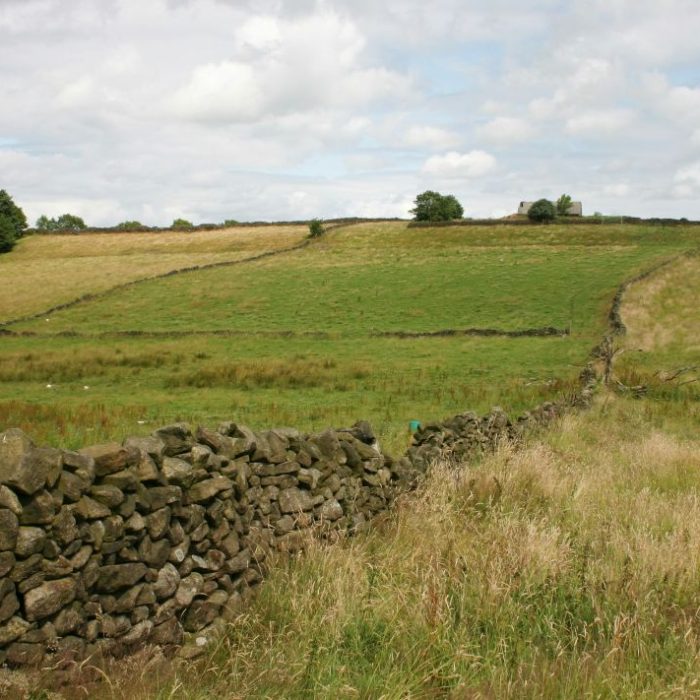
These indicators suggest your site might require more than a basic walkover and may attract LPA scrutiny:
If any apply, acting now secures survey capacity while it’s still available. Delay it and ecology becomes the factor that dictates your timeline.
We keep guidance clear and planning-ready — supporting predictable project delivery.
| Service | Purpose | Outcome |
|---|---|---|
| Ecological Walkover | Record habitats and features | Solid ecological baseline |
| Protected Species Screening | Assess realistic species risk | Focused next steps |
| Mapping & Site Context | Identify constraints and opportunities | Evidence planners can trust |
| Survey Roadmap | Outline seasonal requirements | Predictable sequencing |
| Practical Mitigation Guidance | Inform design and construction | Reduced ecological and schedule risk |
| Integration with BNG/Design | Align ecology with wider goals | Cleaner design development |
| Reporting & Recommendations | Deliver structured reasoning | Planning ready evidence |
Our process is designed to remove friction and keep decisions moving.

Send your boundary and proposed works. We confirm scope against policy and planning context.

On-site ecological walkover using DEFRA-aligned UKHab methods.

Concise, defensible recommendations outlining next steps and programme timing.
Each report follows CIEEM and Natural England methodology, ensuring evidence stands up anywhere in the UK.
Early instruction secures the survey window and keeps ecology off the critical path.
That’s how project control is maintained.
Year-round
Seasonal
Year-round
Local authorities must protect biodiversity under the Wildlife & Countryside Act 1981, Habitats Regulations and NERC Act 2006.
They rely on PEAs to confirm that risk has been identified and managed proportionately.
For your project, this means fewer validation queries and smoother dialogue.
A clear PEA shows you’ve anticipated compliance — not waited for enforcement.
That foresight keeps planning predictable.
Each ProHort appraisal follows CIEEM guidance, Natural England standards and UKHab classification, producing reports LPAs recognise immediately.
It includes:
Every PEA is built around the project, not the paperwork. We interpret each site through the lens of planning delivery, balancing ecological rigour with programme momentum.
A well-timed PEA:
Early clarity maintains schedule stability. Later discovery creates delay.
This is where foresight pays off.
Get the ecological clarity that keeps your design on track.
Phone: 0800 494 7479
Email: [email protected]
We cover many areas across England. Click below to find out more.
A compliant Preliminary Ecological Appraisal is a full planning document, not simply a site visit.
For most residential developments, fees typically start from:
£1,200 + VAT
This includes licensed ecological data searches, habitat classification, protected species risk assessment, and a planning ready technical report.
Costs increase depending on site size, habitat diversity, and overall planning complexity.
A compliant PEA involves significantly more than a walkover survey.
Professional fees reflect the full scope of work, including:
Lower cost surveys often exclude formal data searches or provide limited reporting, which can result in planning delays or requests for further information.
A Preliminary Ecological Appraisal is the first stage ecological survey used to support a planning application.
It identifies habitats on site, assesses the potential for protected species, and provides clear recommendations to inform planning decisions and determine whether further ecological surveys are required.
In most cases, yes.
Local Planning Authorities require ecological information where a site has the potential to support habitats or protected species. Without a PEA, planning applications are commonly delayed, made invalid, or refused due to insufficient ecological evidence.
A PEA includes a site walkover survey carried out by a qualified ecologist, combined with desk based data analysis.
This assesses habitats, identifies ecological constraints, and evaluates the likelihood of protected species being present. The findings are then compiled into a planning ready report.
A compliant PEA report typically includes:
The report is structured to meet Local Planning Authority requirements and support planning validation.
The site survey itself is usually completed within a single visit.
Reports are typically issued within a few working days, depending on site complexity and data search returns. Larger or more complex sites may require additional time for analysis and reporting.
Yes.
A Preliminary Ecological Appraisal can be undertaken year round because it focuses on habitat assessment rather than detailed species surveys.
However, if further surveys are required, these may be seasonally constrained and should be planned accordingly.
No.
A PEA assesses the likelihood of protected species being present based on habitat suitability. If potential is identified, targeted surveys such as bat surveys or great crested newt surveys will be recommended to confirm presence or likely absence.
PEA costs vary depending on:
More complex or larger sites are quoted individually following an initial review.
A PEA is an initial, high level assessment used to identify ecological constraints and survey requirements.
An Ecological Impact Assessment is a more detailed study that evaluates the effects of a proposed development and outlines mitigation, compensation, and enhancement measures.
A PEA often informs whether an EcIA is required.
Most Local Planning Authorities require ecological assessments where biodiversity may be affected.
Guidance is typically set out within local validation checklists and national planning policy. Further information can be found via:
https://www.planningportal.co.uk/
Submitting a PEA alongside a planning application helps ensure compliance and reduces the risk of delays.