Fast, planning-ready GCN assessments with predictable timelines, seasonal clarity and practical advice aligned to your programme.
You may need a GCN survey if your site:
Because GCN are a European Protected Species, planning authorities require clear evidence wherever habitat risk is identified. Early checks protect timelines, avoid seasonal delays and shape proportionate next steps.
If any apply, a GCN survey is usually required.
| Service | Purpose | Outcome |
|---|---|---|
| GCN eDNA Testing | Fast presence/likely absence screening | Clear positive/negative result |
| Habitat Suitability Index (HSI) | Early risk scoring | Practical suitability rating |
| Presence/Likely Absence Surveys | Alternative to eDNA Testing | Robust evidence for planning |
| Population Surveys | Gives an estimate of the population size | Data for mitigation/licensing |
| Mitigation & Licensing | If impacts are unavoidable | Planning-ready solutions |

Send the site location and timeframe. We confirm whether eDNA is eligible or if seasonal surveys are required.

eDNA sampling (April–June) or multi-visit presence/absence surveys depending on need
Planning-ready reports, clarity for planners, and next steps for your programme.
Missing the eDNA window usually means waiting until the next survey season. Early booking protects your timeline.
Mid April – June
Mid March – Mid June
Mid April – June
Seasonally Dependent
Evidence for planners. Clarity for project teams.
GCN surveys are required under UK law when suitable habitat exists. Missing or incorrect evidence can lead to:
Relevant legislation includes:
ProHort ensures your evidence is clear, proportionate and aligned to your build schedule.
Need GCN or eDNA surveys? Let’s confirm your route and secure your survey window.
Phone: 0800 494 7479
Email: [email protected]
We cover many areas across England and Wales. Click below to find out more.
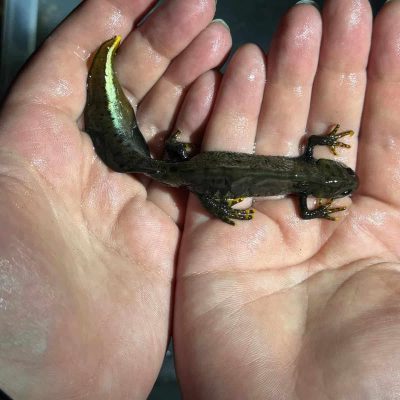
Environmental DNA, commonly referred to as eDNA, is a survey method used to detect the presence of great crested newts by analysing water samples from ponds. As newts shed DNA into the water through skin cells, mucus, and waste, laboratory analysis can confirm whether the species is present without needing to physically capture or observe individuals.
eDNA surveys are seasonally constrained and can only be undertaken between mid April and the end of June. This period aligns with the breeding season when great crested newts are most likely to be present in ponds, ensuring reliable detection results for planning purposes.
Yes. eDNA testing is widely accepted by local planning authorities as a valid method of presence or likely absence assessment for great crested newts, provided it is carried out in accordance with recognised guidelines.
For validation requirements, you should always refer to your local authority guidance, for example:
https://www.planningportal.co.uk/
A licence is not required to undertake eDNA sampling itself. However, surveys must be carried out by a competent ecologist, and any follow up surveys or mitigation works involving great crested newts may require a licence from Natural England.
eDNA testing is highly reliable when undertaken within the correct seasonal window and following standard methodology. It is designed as a presence or likely absence tool, meaning it can confirm whether newts are present, but it does not provide population size or distribution data.
If a positive result is returned, further surveys will typically be required. This often involves traditional presence surveys, such as torchlight surveys or bottle trapping, to establish population size and inform any mitigation strategy required for planning.
A negative eDNA result is generally accepted as evidence of likely absence. This can allow planning applications to proceed without the need for further surveys, provided there are no other ecological constraints identified on site.
The process involves collecting multiple water samples from around the perimeter of a pond using sterile equipment. These samples are then combined and sent to a laboratory for analysis. The survey is quick, non intrusive, and does not disturb habitats or wildlife.
Once samples are submitted to the laboratory, results are typically returned within a few working days. This makes eDNA one of the fastest methods available for assessing great crested newt presence in support of planning.
Not all ponds require testing. A Preliminary Ecological Appraisal or site assessment will determine whether ponds are suitable for great crested newts and whether eDNA testing is required to support a planning application.
eDNA can replace initial presence surveys, but it cannot replace population assessments. If newts are detected, traditional survey methods are still required to inform mitigation, licensing, and development design.
Several factors can influence results, including water quality, pond disturbance, seasonal timing, and sample handling. This is why surveys must follow strict protocols to ensure results are valid for planning submission.
eDNA testing is suitable where ponds are present within or near a development site and there is potential for great crested newts. It is commonly required for residential, commercial, and infrastructure projects where ecological constraints may apply.
Great crested newts are a protected species under UK law, and planning authorities require evidence that development will not harm them or their habitats. eDNA testing provides a robust and efficient way to inform planning decisions and avoid delays.
While standard eDNA testing for planning focuses on great crested newts, the method can be adapted to detect other species. However, separate testing protocols are required depending on the species being targeted.