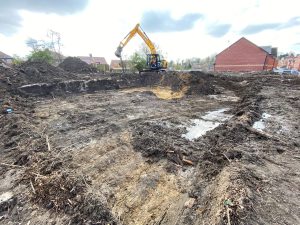
Soil Testing & Analysis in London

Soil Testing and Analysis in London

How will soil conditions shape planning, design and risk management across your London site?


Our soil testing service provides clear, lab-verified evidence on composition, contamination and suitability. We translate results into practical recommendations developers, architects and contractors can act on from day one.

Fast, Clear, Planning-Ready Support

Fast response 

Calls answered in 2 rings, emails replied to within the hour.

Free expert advice

Clear guidance before you commit.

Cost-effective

Working in partnership with clients to ensure planning approval first time

Typical 10-day turnaround

Industry Leading Standard

Expert Team

We stay with you from first call through to submission. 

Do you need Soil & Analysis Testing in London?

If you’re building, extending or altering land in London, soil analysis provides the evidence architects and engineers need to design foundations, drainage and risk mitigation accurately.

We deliver fast, planning-ready results that remove guesswork and help keep construction choices efficient.

Engineering considerations across London reflect complex urban geology and intensive redevelopment, including:

  • Extensive London Clay, presenting shrink–swell and settlement challenges

  • Made ground from historic development, requiring detailed investigation

  • River terrace and alluvial soils along the Thames, influencing drainage and foundation depth

  • High-density development pressure, increasing sensitivity to ground movement

These factors strongly influence planning submissions.

Our soil testing and analysis service is delivered across London and its surrounding districts, supporting planning, design and land quality assessment for homes, developments and large construction projects.

Compliance & Legal Context for Soil Testing & Analysis in London

Soil data interacts with multiple planning requirements:

NHBC foundation guidance & shrink–swell tables

BS 5930 Site Investigation Standard

Contaminated land policy & Environmental Protection Act principles

Accurate soil classification reduces structural risk and avoids unnecessary over-engineering.

Local Case Insight

A self-build project within Greater London required soil testing due to the presence of London Clay and nearby mature trees. Analysis confirmed shrink–swell risk associated with seasonal moisture changes and root influence. The report allowed structural engineers to refine foundation design at an early stage, mitigating subsidence risk and avoiding later planning or building control complications.

Soil Testing & Analysis Packages in London

Our Soil Analysis Reports in London give developers, designers and landscapers reliable baseline data that informs planting plans, remediation strategies and specification choices with confidence.

Key Deliverables for London Soil Analysis

  • Accredited laboratory analysis (ISO 17025 & ISO 9001) 
  • Nutrient and contamination profiling 
  • Suitability assessment for development, remediation or planting 
  • Clear recommendations aligned with regulatory and planning needs 
  • Field observations (Comprehensive Package) 
  • Planning-ready, remediation-ready and design-support reporting 
  • Nationwide coverage 

Core Package

You collect the sample using the ProHort sampling kit and instructions.
The sample is returned to ProHort via our courier.

Analytical Package

(Includes the full Core Package)

Adds professional interpretation of laboratory data, showing how results compare with accepted standards.

Comprehensive Package

(Includes Core + Analytical)

A ProHort expert attends site, undertakes sampling and conducts a visual assessment of factors influencing soil behaviour.

Support

Our team is here to guide you throughout the process.

Next Steps

Need soil testing in London?


Share your address and goals and we’ll confirm testing scope immediately.

FAQ - Soil Testing & Analysis in London

Why is soil testing essential for development in London?

London contains extensive made ground, historic contamination and complex sub-surface conditions. Soil testing ensures safe development and regulatory compliance.

London Councils – https://www.londoncouncils.gov.uk/

Residential schemes, basement construction, commercial development and infrastructure projects routinely require soil testing.


Made ground, hydrocarbons, heavy metals and variable groundwater conditions are frequently identified.


How does soil testing influence foundation and basement design in London?

Results guide foundation systems, piling depth and waterproofing strategies.


Yes, permeability testing supports surface water management and planning approval.


Early testing supports design coordination and avoids planning delays.


Related Services

Soil Testing & Analysis in Cornwall

Soil Testing and Analysis in Cornwall

How will soil conditions shape planning, design and risk management across your Cornwall site?


Our soil testing service provides clear, lab-verified evidence on composition, contamination and suitability. We translate results into practical recommendations developers, architects and contractors can act on from day one.

Fast, Clear, Planning-Ready Support

Fast response 

Calls answered in 2 rings, emails replied to within the hour.

Free expert advice

Clear guidance before you commit.

Cost-effective

Working in partnership with clients to ensure planning approval first time

Typical 10-day turnaround

Industry Leading Standard

Expert Team

We stay with you from first call through to submission. 

Do you need Soil & Analysis Testing in Cornwall?

If you’re building, extending or altering land in Cornwall, soil analysis provides the evidence architects and engineers need to design foundations, drainage and risk mitigation accurately.

We deliver fast, planning-ready results that remove guesswork and help keep construction choices efficient.

Engineering considerations across Cornwall are influenced by its coastal setting and historic mining activity, including:

  • Variable granite and slate geology, affecting excavation and foundation design

  • Historic mining and quarrying areas, requiring assessment of ground stability

  • Coastal soils and shallow groundwater, influencing drainage and erosion control

  • Rural development sites, where ground conditions are often untested

These factors commonly shape planning submissions.

Our soil testing and analysis service is delivered across Cornwall and its surrounding districts, supporting planning, design and land quality assessment for homes, developments and large construction projects.

Compliance & Legal Context for Soil Testing & Analysis in Cornwall

Soil data interacts with multiple planning requirements:

NHBC foundation guidance & shrink–swell tables

BS 5930 Site Investigation Standard

Contaminated land policy & Environmental Protection Act principles

Accurate soil classification reduces structural risk and avoids unnecessary over-engineering.

Local Case Insight

A residential development in Cornwall commissioned soil analysis after variable ground conditions were identified across the site. Testing highlighted changes in soil composition and moisture retention linked to local geology and topography. The findings informed foundation design and drainage considerations, enabling early design refinements and reducing the risk of ground-related issues during construction.

Soil Testing & Analysis Packages in Cornwall

Our Soil Analysis Reports in Cornwall give developers, designers and landscapers reliable baseline data that informs planting plans, remediation strategies and specification choices with confidence.

Key Deliverables for Cornwall Soil Analysis

  • Accredited laboratory analysis (ISO 17025 & ISO 9001) 
  • Nutrient and contamination profiling 
  • Suitability assessment for development, remediation or planting 
  • Clear recommendations aligned with regulatory and planning needs 
  • Field observations (Comprehensive Package) 
  • Planning-ready, remediation-ready and design-support reporting 
  • Nationwide coverage 

Core Package

You collect the sample using the ProHort sampling kit and instructions.
The sample is returned to ProHort via our courier.

Analytical Package

(Includes the full Core Package)

Adds professional interpretation of laboratory data, showing how results compare with accepted standards.

Comprehensive Package

(Includes Core + Analytical)

A ProHort expert attends site, undertakes sampling and conducts a visual assessment of factors influencing soil behaviour.

Support

Our team is here to guide you throughout the process.

Next Steps

Need soil testing in Cornwall?


Share your address and goals and we’ll confirm testing scope immediately.

FAQ - Soil Testing & Analysis in Cornwall

Why is soil testing important for development in Cornwall?

Cornwall includes mineral-rich soils, historic mining land and coastal conditions that can affect stability and contamination risk.

Cornwall Council – https://www.cornwall.gov.uk/


Residential housing, tourism developments and infrastructure projects often require soil testing.


Mining-related contamination, variable ground conditions and shallow soils are frequently encountered.


How does soil testing influence foundation design in Cornwall?

Testing informs foundation type and mitigation where historic workings or poor ground are present.


Yes, soil testing supports drainage design in areas with shallow or impermeable soils.


Testing should be completed early to inform site layout and planning submissions.


Related Services

Soil Testing & Analysis in Somerset

Soil Testing and Analysis in Somerset

How will soil conditions shape planning, design and risk management across your Somerset site?


Our soil testing service provides clear, lab-verified evidence on composition, contamination and suitability. We translate results into practical recommendations developers, architects and contractors can act on from day one.

Fast, Clear, Planning-Ready Support

Fast response 

Calls answered in 2 rings, emails replied to within the hour.

Free expert advice

Clear guidance before you commit.

Cost-effective

Working in partnership with clients to ensure planning approval first time

Typical 10-day turnaround

Industry Leading Standard

Expert Team

We stay with you from first call through to submission. 

Do you need Soil & Analysis Testing in Somerset?

If you’re building, extending or altering land in Somerset, soil analysis provides the evidence architects and engineers need to design foundations, drainage and risk mitigation accurately.

We deliver fast, planning-ready results that remove guesswork and help keep construction choices efficient.

Engineering considerations across Somerset reflect low-lying landscapes and floodplain conditions, including:

  • Alluvial and peat soils, affecting bearing capacity and settlement

  • High groundwater levels within Levels and Moors areas, influencing foundation design

  • River floodplains, requiring careful drainage and flood mitigation planning

  • Agricultural land conversion, where soil structure may be altered

These factors regularly influence planning submissions.

Our soil testing and analysis service is delivered across Somerset and its surrounding districts, supporting planning, design and land quality assessment for homes, developments and large construction projects.

Compliance & Legal Context for Soil Testing & Analysis in Somerset

Soil data interacts with multiple planning requirements:

NHBC foundation guidance & shrink–swell tables

BS 5930 Site Investigation Standard

Contaminated land policy & Environmental Protection Act principles

Accurate soil classification reduces structural risk and avoids unnecessary over-engineering.

Local Case Insight

A self-build scheme in Somerset required soil testing following the identification of clay soils and areas prone to seasonal waterlogging. Laboratory results confirmed shrink–swell potential and variable bearing capacity. Early incorporation of the findings into foundation design helped manage settlement risk and avoided the need for later structural redesign.

Soil Testing & Analysis Packages in Somerset

Our Soil Analysis Reports in Somerset give developers, designers and landscapers reliable baseline data that informs planting plans, remediation strategies and specification choices with confidence.

Key Deliverables for Somerset Soil Analysis

  • Accredited laboratory analysis (ISO 17025 & ISO 9001) 
  • Nutrient and contamination profiling 
  • Suitability assessment for development, remediation or planting 
  • Clear recommendations aligned with regulatory and planning needs 
  • Field observations (Comprehensive Package) 
  • Planning-ready, remediation-ready and design-support reporting 
  • Nationwide coverage 

Core Package

You collect the sample using the ProHort sampling kit and instructions.
The sample is returned to ProHort via our courier.

Analytical Package

(Includes the full Core Package)

Adds professional interpretation of laboratory data, showing how results compare with accepted standards.

Comprehensive Package

(Includes Core + Analytical)

A ProHort expert attends site, undertakes sampling and conducts a visual assessment of factors influencing soil behaviour.

Support

Our team is here to guide you throughout the process.

Next Steps

Need soil testing in Somerset?


Share your address and goals and we’ll confirm testing scope immediately.

FAQ - Soil Testing & Analysis in Somerset

Why is soil testing required for development in Somerset?

Somerset includes floodplain land, clay soils and areas with high groundwater levels.

Somerset Council – https://www.somerset.gov.uk/


Residential schemes, commercial development and infrastructure works often require soil testing.


Clay soils, poor drainage and high water tables are frequently recorded.


How does soil testing support foundation design in Somerset?

Testing helps determine foundation depth and whether ground improvement is necessary.


Yes, permeability testing informs SuDS design and flood risk management.


Early testing supports compliant planning submissions.


Related Services

Soil Testing & Analysis in Leicestershire

Soil Testing and Analysis in Leicestershire

How will soil conditions shape planning, design and risk management across your Leicestershire site?


Our soil testing service provides clear, lab-verified evidence on composition, contamination and suitability. We translate results into practical recommendations developers, architects and contractors can act on from day one.

Fast, Clear, Planning-Ready Support

Fast response 

Calls answered in 2 rings, emails replied to within the hour.

Free expert advice

Clear guidance before you commit.

Cost-effective

Working in partnership with clients to ensure planning approval first time

Typical 10-day turnaround

Industry Leading Standard

Expert Team

We stay with you from first call through to submission. 

Do you need Soil & Analysis Testing in Leicestershire?

If you’re building, extending or altering land in Leicestershire, soil analysis provides the evidence architects and engineers need to design foundations, drainage and risk mitigation accurately.

We deliver fast, planning-ready results that remove guesswork and help keep construction choices efficient.

Engineering considerations across Leicestershire are shaped by mixed rural and urban geology, including:

  • Clay-rich soils, increasing shrink–swell movement risk

  • Glacial deposits and superficial soils, influencing foundation selection

  • Former industrial and quarry sites, requiring ground condition confirmation

  • Agricultural land on settlement edges, where compaction affects stability

These factors commonly inform planning submissions.

Our soil testing and analysis service is delivered across Leicestershire and its surrounding districts, supporting planning, design and land quality assessment for homes, developments and large construction projects.

Compliance & Legal Context for Soil Testing & Analysis in Leicestershire

Soil data interacts with multiple planning requirements:

NHBC foundation guidance & shrink–swell tables

BS 5930 Site Investigation Standard

Contaminated land policy & Environmental Protection Act principles

Accurate soil classification reduces structural risk and avoids unnecessary over-engineering.

Local Case Insight

A residential development in Leicestershire undertook soil analysis after initial investigations highlighted cohesive clay soils typical of the region. Testing confirmed moisture-sensitive behaviour influenced by adjacent hedgerows and land management history. The soil report supported early foundation design adjustments, reducing subsidence risk and ensuring buildability from the outset.

Soil Testing & Analysis Packages in Leicestershire

Our Soil Analysis Reports in Leicestershire give developers, designers and landscapers reliable baseline data that informs planting plans, remediation strategies and specification choices with confidence.

Key Deliverables for Leicestershire Soil Analysis

  • Accredited laboratory analysis (ISO 17025 & ISO 9001) 
  • Nutrient and contamination profiling 
  • Suitability assessment for development, remediation or planting 
  • Clear recommendations aligned with regulatory and planning needs 
  • Field observations (Comprehensive Package) 
  • Planning-ready, remediation-ready and design-support reporting 
  • Nationwide coverage 

Core Package

You collect the sample using the ProHort sampling kit and instructions.
The sample is returned to ProHort via our courier.

Analytical Package

(Includes the full Core Package)

Adds professional interpretation of laboratory data, showing how results compare with accepted standards.

Comprehensive Package

(Includes Core + Analytical)

A ProHort expert attends site, undertakes sampling and conducts a visual assessment of factors influencing soil behaviour.

Support

Our team is here to guide you throughout the process.

Next Steps

Need soil testing in Leicestershire?


Share your address and goals and we’ll confirm testing scope immediately.

FAQ - Soil Testing & Analysis in Leicestershire

Why is soil testing important for development in Leicestershire?

Leicestershire includes clay soils and agricultural land where ground conditions influence stability and drainage.

Leicestershire County Council – https://www.leicestershire.gov.uk/

Housing schemes, employment sites and infrastructure projects commonly require soil testing.


Clay shrink–swell potential and variable permeability are commonly encountered.


How does soil testing influence foundation design in Leicestershire?

Results inform foundation depth and the need for mitigation measures.


Yes, soil structure and nutrients affect planting success.


Testing should be completed early in the planning process.


Related Services

Soil Testing & Analysis in Berkshire

Soil Testing and Analysis in Berkshire

How will soil conditions shape planning, design and risk management across your Berkshire site?


Our soil testing service provides clear, lab-verified evidence on composition, contamination and suitability. We translate results into practical recommendations developers, architects and contractors can act on from day one.

Fast, Clear, Planning-Ready Support

Fast response 

Calls answered in 2 rings, emails replied to within the hour.

Free expert advice

Clear guidance before you commit.

Cost-effective

Working in partnership with clients to ensure planning approval first time

Typical 10-day turnaround

Industry Leading Standard

Expert Team

We stay with you from first call through to submission. 

Do you need Soil & Analysis Testing in Berkshire?

If you’re building, extending or altering land in Berkshire, soil analysis provides the evidence architects and engineers need to design foundations, drainage and risk mitigation accurately.

We deliver fast, planning-ready results that remove guesswork and help keep construction choices efficient.

Engineering considerations across Berkshire reflect varied geology and suburban development pressure, including:

  • Chalk and clay soils, affecting drainage and foundation design

  • River terrace deposits along the Thames, influencing groundwater management

  • Redevelopment of previously developed land, requiring confirmation of made ground

  • High-value development sites, where ground movement risk is closely scrutinised

These factors frequently shape planning submissions.

Our soil testing and analysis service is delivered across Berkshire and its surrounding districts, supporting planning, design and land quality assessment for homes, developments and large construction projects.

Compliance & Legal Context for Soil Testing & Analysis in Berkshire

Soil data interacts with multiple planning requirements:

NHBC foundation guidance & shrink–swell tables

BS 5930 Site Investigation Standard

Contaminated land policy & Environmental Protection Act principles

Accurate soil classification reduces structural risk and avoids unnecessary over-engineering.

Local Case Insight

A self-build home in Berkshire required soil testing after clay soils were identified during site preparation. Analysis confirmed shrink–swell characteristics linked to local geology and surrounding tree cover. The results enabled early structural design revisions, allowing the project to progress efficiently while minimising long-term ground movement risk.

Soil Testing & Analysis Packages in Berkshire

Our Soil Analysis Reports in Berkshire give developers, designers and landscapers reliable baseline data that informs planting plans, remediation strategies and specification choices with confidence.

Key Deliverables for Berkshire Soil Analysis

  • Accredited laboratory analysis (ISO 17025 & ISO 9001) 
  • Nutrient and contamination profiling 
  • Suitability assessment for development, remediation or planting 
  • Clear recommendations aligned with regulatory and planning needs 
  • Field observations (Comprehensive Package) 
  • Planning-ready, remediation-ready and design-support reporting 
  • Nationwide coverage 

Core Package

You collect the sample using the ProHort sampling kit and instructions.
The sample is returned to ProHort via our courier.

Analytical Package

(Includes the full Core Package)

Adds professional interpretation of laboratory data, showing how results compare with accepted standards.

Comprehensive Package

(Includes Core + Analytical)

A ProHort expert attends site, undertakes sampling and conducts a visual assessment of factors influencing soil behaviour.

Support

Our team is here to guide you throughout the process.

Next Steps

Need soil testing in Berkshire?


Share your address and goals and we’ll confirm testing scope immediately.

FAQ - Soil Testing & Analysis in Berkshire

Why is soil testing important for development in Berkshire?

Berkshire includes river valleys, clay soils and historic land uses that can affect stability and drainage.

West Berkshire Council – https://www.westberks.gov.uk/

Residential, commercial and education developments commonly require soil testing.


Clay soils, made ground and variable groundwater levels are common.


How does soil testing influence design decisions in Berkshire?

It informs foundation design, drainage strategy and remediation needs.


Yes, permeability testing supports sustainable drainage design.


Testing should be completed before submitting a planning application.


Related Services

Soil Testing in Buckinghamshire

Soil Testing and Analysis in Buckinghamshire

How will soil conditions shape planning, design and risk management across your Buckinghamshire site?


Our soil testing service provides clear, lab-verified evidence on composition, contamination and suitability. We translate results into practical recommendations developers, architects and contractors can act on from day one.

Fast, Clear, Planning-Ready Support

Fast response 

Calls answered in 2 rings, emails replied to within the hour.

Free expert advice

Clear guidance before you commit.

Cost-effective

Working in partnership with clients to ensure planning approval first time

Typical 10-day turnaround

Industry Leading Standard

Expert Team

We stay with you from first call through to submission. 

Do you need Soil & Analysis Testing in Buckinghamshire?

If you’re building, extending or altering land in Buckinghamshire, soil analysis provides the evidence architects and engineers need to design foundations, drainage and risk mitigation accurately.

We deliver fast, planning-ready results that remove guesswork and help keep construction choices efficient.

Engineering considerations across Buckinghamshire are influenced by chalk landscapes and rural development patterns, including:

  • Chalk geology across the Chilterns, affecting foundation depth and infiltration

  • Clay soils in lowland areas, increasing shrink–swell sensitivity

  • Agricultural land conversion, where soil conditions vary widely

  • Small-scale redevelopment sites, requiring confirmation of historic ground use

These factors commonly influence planning submissions.

Our soil testing and analysis service is delivered across Buckinghamshire and its surrounding districts, supporting planning, design and land quality assessment for homes, developments and large construction projects.

Compliance & Legal Context for Soil Testing & Analysis in Buckinghamshire

Soil data interacts with multiple planning requirements:

NHBC foundation guidance & shrink–swell tables

BS 5930 Site Investigation Standard

Contaminated land policy & Environmental Protection Act principles

Accurate soil classification reduces structural risk and avoids unnecessary over-engineering.

Local Case Insight

A residential plot in Buckinghamshire commissioned soil analysis due to concerns over clay-rich soils and variable ground conditions. Testing identified shrink–swell potential associated with local geology and nearby vegetation. The findings informed foundation specification and layout decisions early in the process, reducing the likelihood of later redesign and improving overall construction certainty.

Soil Testing & Analysis Packages in Buckinghamshire

Our Soil Analysis Reports in Buckinghamshire give developers, designers and landscapers reliable baseline data that informs planting plans, remediation strategies and specification choices with confidence.

Key Deliverables for Buckinghamshire Soil Analysis

  • Accredited laboratory analysis (ISO 17025 & ISO 9001) 
  • Nutrient and contamination profiling 
  • Suitability assessment for development, remediation or planting 
  • Clear recommendations aligned with regulatory and planning needs 
  • Field observations (Comprehensive Package) 
  • Planning-ready, remediation-ready and design-support reporting 
  • Nationwide coverage 

Core Package

You collect the sample using the ProHort sampling kit and instructions.
The sample is returned to ProHort via our courier.

Analytical Package

(Includes the full Core Package)

Adds professional interpretation of laboratory data, showing how results compare with accepted standards.

Comprehensive Package

(Includes Core + Analytical)

A ProHort expert attends site, undertakes sampling and conducts a visual assessment of factors influencing soil behaviour.

Support

Our team is here to guide you throughout the process.

Next Steps

Need soil testing in Buckinghamshire?


Share your address and goals and we’ll confirm testing scope immediately.

FAQ - Soil Testing & Analysis in Buckinghamshire

Why do developments in Buckinghamshire require soil testing?

Buckinghamshire includes chalk landscapes and clay soils where ground conditions affect stability and drainage.

Buckinghamshire Council – https://www.buckinghamshire.gov.uk/

Residential schemes, commercial developments and infrastructure projects frequently require soil testing.


Chalk dissolution features, clay shrink–swell and variable permeability are common.


How does soil testing influence foundation design in Buckinghamshire?

Testing informs foundation depth and construction methods.


Yes, permeability testing supports SuDS and surface water management.


Early testing helps prevent planning delays.


Related Services

Landscaping Schemes in Shropshire

Landscaping Schemes in Shropshire

Landscaping Schemes in Shropshire: Are They Required for Planning?

Shropshire planning authorities often require a landscaping scheme where development affects visual appearance, settlement edges, public views or heritage settings. Providing a clear, well-designed scheme upfront helps demonstrate policy compliance, reduces planning risk and can prevent delays caused by requests for further information.

Fast, Clear, Planning-Ready Support

Fast response 

Calls answered in 2 rings, emails replied to within the hour.

Free expert advice

Clear guidance before you commit.

Cost-effective

Working in partnership with clients to ensure planning approval first time

Typical 10-day turnaround

Industry Leading Standard

Expert Team

We stay with you from first call through to submission. 

Do you need a Landscaping Scheme in Shropshire?

You’re likely to need a formal landscaping scheme in Shropshire where development proposals alter site layout, boundaries, levels or public-facing areas. Local planning authorities regularly require landscaping details to demonstrate how new development integrates with its surroundings, addresses visual impact, manages boundaries and delivers policy-compliant green infrastructure. Applications submitted without a clear landscaping strategy often receive planning conditions, requests for clarification or delayed approvals.

Shropshire planning authorities commonly require landscaping schemes where development affects:

  • Rural settlement edges adjoining open countryside or agricultural land

  • New residential, employment or mixed-use development proposals

  • Public-facing frontages, site access points and shared spaces

  • Sites adjoining neighbouring dwellings, roads or sensitive boundaries

  • Proposals involving changes to ground levels, drainage or boundary treatments

Landscaping details are often secured by condition even where permission is granted, making early preparation important to avoid post-decision delay.

We provide planning ready landscaping schemes across Shropshire, helping developments integrate successfully into townscapes, countryside and heritage settings.

Why Shropshire Planning Authorities Request Landscaping Schemes

In Shropshire, landscaping schemes are often required where development affects countryside character, settlement edges or heritage settings. Prepared in line with local planning policy, the National Planning Policy Framework (NPPF) and relevant landscape guidance, a landscaping scheme sets out how planting, boundary treatments and open space design will integrate the development into its surroundings and mitigate visual and environmental impacts.

Local Case Insight

On a residential development near a Shropshire market town, planning permission was issued subject to a landscaping condition. Initial layout proposals raised concerns regarding boundary definition and how the scheme would sit within its rural surroundings. A revised landscaping scheme introduced structured planting, refined boundary treatments and clearly set out long-term maintenance responsibilities. The condition was discharged at first submission, enabling construction works to progress without delay.

How the Landscaping Scheme Process Works

We prepare planning-ready landscaping schemes that align with Shropshire planning policy and help secure approval through clear, policy-led design.

Key Landscaping Scheme Deliverables for Shropshire Projects

Your Landscaping Scheme is structured to meet Shropshire’s planning requirements and typically includes:

  • Baseline review – Site context, constraints and relevant landscape or green infrastructure policy.

  • Landscape proposals – Planting plans, materials, boundary treatments and layout details.

  • Mitigation & enhancement – Measures to soften development, manage views and strengthen local character.

  • Submission-ready document – Clearly formatted drawings and notes aligned with Local Planning Authority expectations.

This ensures your landscaping scheme in Shropshire can be submitted confidently and assessed without unnecessary delay.

Step 1

Review

Ecological reports and architect drawings will be reviewed. 

Step 2

Preparation

Landscaping scheme design process will start

Step 3

Coordination stage

Discuss final proposed scheme with clients.

Step 4

Submission and support

 We respond to any Landscaping Scheme queries or make amendments required.

Next Steps

Ready to secure approval and start on site? We’ll confirm what your Shropshire site needs and help you move forward without unnecessary delay. 

FAQ - Landscaping Schemes in Shropshire

Why are landscaping schemes required for development in Shropshire?

Shropshire contains sensitive rural landscapes and historic settlements where development must integrate carefully with its surroundings. Landscaping schemes help protect landscape character and visual amenity.

Shropshire Council – https://next.shropshire.gov.uk/

Housing developments, rural conversions and commercial schemes commonly require detailed landscaping proposals.


Schemes typically include planting plans, boundary treatments, materials, and long-term maintenance proposals.


How do landscaping schemes support biodiversity in Shropshire?

Native planting and hedgerow retention are often required to enhance local habitats and ecological connectivity.


Ideally during the design stage so landscape considerations shape site layout.


Yes, approval and implementation are commonly secured by planning condition.


Related Services

Landscaping Schemes in Wales

Landscaping Schemes in Wales

Landscaping Schemes in Wales: Are They Required for Planning?

Wales planning authorities often require a landscaping scheme where development affects visual appearance, settlement edges, public views or heritage settings. Providing a clear, well-designed scheme upfront helps demonstrate policy compliance, reduces planning risk and can prevent delays caused by requests for further information.

Fast, Clear, Planning-Ready Support

Fast response 

Calls answered in 2 rings, emails replied to within the hour.

Free expert advice

Clear guidance before you commit.

Cost-effective

Working in partnership with clients to ensure planning approval first time

Typical 10-day turnaround

Industry Leading Standard

Expert Team

We stay with you from first call through to submission. 

Do you need a Landscaping Scheme in Wales?

You’re likely to need a formal landscaping scheme in Wales where development proposals alter site layout, boundaries, levels or public-facing areas. Local planning authorities regularly require landscaping details to demonstrate how new development integrates with its surroundings, addresses visual impact, manages boundaries and delivers policy-compliant green infrastructure. Applications submitted without a clear landscaping strategy often receive planning conditions, requests for clarification or delayed approvals.

Planning authorities across Wales commonly require landscaping schemes where development affects:

  • Settlement fringes transitioning into rural or coastal landscapes

  • New housing, commercial or mixed-use developments

  • Street frontages, access routes or public realm spaces

  • Sites adjoining existing communities, highways or environmentally sensitive boundaries

  • Schemes involving earthworks, drainage alterations or boundary works


Landscaping is frequently conditioned as part of consent, meaning early design input is essential to avoid delays after approval.

We provide planning ready landscaping schemes across Wales, helping developments integrate successfully into townscapes, countryside and heritage settings.

Why Wales Planning Authorities Request Landscaping Schemes

In Wales, landscaping schemes are often required where development affects countryside character, settlement edges or heritage settings. Prepared in line with local planning policy, the National Planning Policy Framework (NPPF) and relevant landscape guidance, a landscaping scheme sets out how planting, boundary treatments and open space design will integrate the development into its surroundings and mitigate visual and environmental impacts.

Local Case Insight

On a residential scheme in a Welsh settlement, planning approval was granted subject to a landscaping condition. The original proposals prompted concerns about visual integration with neighbouring properties and surrounding landscape character. An updated landscaping scheme incorporated structured planting, revised boundary treatments and a defined management approach. The condition was discharged on first review, allowing the development to proceed smoothly.

How the Landscaping Scheme Process Works

We prepare planning-ready landscaping schemes that align with Wales planning policy and help secure approval through clear, policy-led design.

Key Landscaping Scheme Deliverables for Wales Projects

Your Landscaping Scheme is structured to meet Wales’ planning requirements and typically includes:

  • Baseline review – Site context, constraints and relevant landscape or green infrastructure policy.

  • Landscape proposals – Planting plans, materials, boundary treatments and layout details.

  • Mitigation & enhancement – Measures to soften development, manage views and strengthen local character.

  • Submission-ready document – Clearly formatted drawings and notes aligned with Local Planning Authority expectations.

This ensures your landscaping scheme in Wales can be submitted confidently and assessed without unnecessary delay.

Step 1

Review

Ecological reports and architect drawings will be reviewed. 

Step 2

Preparation

Landscaping scheme design process will start

Step 3

Coordination stage

Discuss final proposed scheme with clients.

Step 4

Submission and support

 We respond to any Landscaping Scheme queries or make amendments required.

Next Steps

Ready to secure approval and start on site? We’ll confirm what your Staffordshire site needs and help you move forward without unnecessary delay. 

FAQ - Landscaping Schemes in Wales

Why are landscaping schemes important for developments in Wales?

Wales contains nationally designated landscapes, rural settlements and coastal areas where visual and environmental impacts must be carefully managed.

Welsh Government – https://www.gov.wales/

Residential, commercial, energy and infrastructure projects often require landscaping as part of planning consent.


Planting schedules, native species selection, boundary treatments and habitat enhancements are commonly required.


How do landscaping schemes support policy objectives in Wales?

They help meet placemaking, biodiversity and climate resilience objectives set out in national planning policy.


At an early design stage to ensure compliance and reduce planning risk.


Yes, schemes are often subject to conditions requiring implementation and maintenance.


Related Services

Landscaping Schemes in Sussex

Landscaping Schemes in Sussex

Landscaping Schemes in Sussex: Are They Required for Planning?

Sussex planning authorities often require a landscaping scheme where development affects visual appearance, settlement edges, public views or heritage settings. Providing a clear, well-designed scheme upfront helps demonstrate policy compliance, reduces planning risk and can prevent delays caused by requests for further information.

Fast, Clear, Planning-Ready Support

Fast response 

Calls answered in 2 rings, emails replied to within the hour.

Free expert advice

Clear guidance before you commit.

Cost-effective

Working in partnership with clients to ensure planning approval first time

Typical 10-day turnaround

Industry Leading Standard

Expert Team

We stay with you from first call through to submission. 

Do you need a Landscaping Scheme in Sussex?

You’re likely to need a formal landscaping scheme in Sussex where development proposals alter site layout, boundaries, levels or public-facing areas. Local planning authorities regularly require landscaping details to demonstrate how new development integrates with its surroundings, addresses visual impact, manages boundaries and delivers policy-compliant green infrastructure. Applications submitted without a clear landscaping strategy often receive planning conditions, requests for clarification or delayed approvals.

Sussex planning authorities commonly require landscaping schemes where development affects:

  • Village and town edges adjoining countryside or designated landscapes

  • Residential, commercial or mixed-use developments of all scales

  • Public-facing frontages, access arrangements or communal spaces

  • Sites bordering existing housing, roads or sensitive landscape edges

  • Developments involving level changes, drainage or boundary realignment


Landscaping schemes are often required by condition, making early preparation important to maintain project timelines.

We provide planning ready landscaping schemes across Sussex, helping developments integrate successfully into townscapes, countryside and heritage settings.

Why Sussex Planning Authorities Request Landscaping Schemes

In Sussex, landscaping schemes are often required where development affects countryside character, settlement edges or heritage settings. Prepared in line with local planning policy, the National Planning Policy Framework (NPPF) and relevant landscape guidance, a landscaping scheme sets out how planting, boundary treatments and open space design will integrate the development into its surroundings and mitigate visual and environmental impacts.

Local Case Insight

On a residential development on the edge of a Sussex town, planning permission included a landscaping condition. The initial layout raised questions over boundary treatments and visual impact on adjoining properties. A revised scheme introduced coordinated planting, adjusted boundaries and clarified long-term maintenance. The condition was approved at first submission, avoiding delays to the construction programme.

How the Landscaping Scheme Process Works

We prepare planning-ready landscaping schemes that align with Sussex planning policy and help secure approval through clear, policy-led design.

Key Landscaping Scheme Deliverables for Sussex Projects

Your Landscaping Scheme is structured to meet Sussex’s planning requirements and typically includes:

  • Baseline review – Site context, constraints and relevant landscape or green infrastructure policy.

  • Landscape proposals – Planting plans, materials, boundary treatments and layout details.

  • Mitigation & enhancement – Measures to soften development, manage views and strengthen local character.

  • Submission-ready document – Clearly formatted drawings and notes aligned with Local Planning Authority expectations.

This ensures your landscaping scheme in Sussex can be submitted confidently and assessed without unnecessary delay.

Step 1

Review

Ecological reports and architect drawings will be reviewed. 

Step 2

Preparation

Landscaping scheme design process will start

Step 3

Coordination stage

Discuss final proposed scheme with clients.

Step 4

Submission and support

 We respond to any Landscaping Scheme queries or make amendments required.

Next Steps

Ready to secure approval and start on site? We’ll confirm what your Sussex site needs and help you move forward without unnecessary delay. 

FAQ - Landscaping Schemes in Sussex

Why are landscaping schemes important for development in Sussex?

Sussex includes Areas of Outstanding Natural Beauty, coastal zones and historic settlements where landscape integration is critical.

East Sussex County Council – https://www.eastsussex.gov.uk/

Mid-Sussex District Council – https://www.midsussex.gov.uk/

West Sussex County Council – https://www.westsussex.gov.uk/

Housing developments, tourism schemes and commercial projects commonly require landscaping proposals.


Native species and coastal-appropriate planting are often prioritised to reflect local character.


How do landscaping schemes address visual impact in Sussex?

They provide screening, soften built form and protect important views.


Often as part of a planning application or to discharge a condition.


Yes, implementation and maintenance are commonly secured through conditions.


Related Services

Landscaping Schemes in Bristol

Landscaping Schemes in Bristol

Landscaping Schemes in Bristol: Are They Required for Planning?

Bristol planning authorities often require a landscaping scheme where development affects visual appearance, settlement edges, public views or heritage settings. Providing a clear, well-designed scheme upfront helps demonstrate policy compliance, reduces planning risk and can prevent delays caused by requests for further information.

Fast, Clear, Planning-Ready Support

Fast response 

Calls answered in 2 rings, emails replied to within the hour.

Free expert advice

Clear guidance before you commit.

Cost-effective

Working in partnership with clients to ensure planning approval first time

Typical 10-day turnaround

Industry Leading Standard

Expert Team

We stay with you from first call through to submission. 

Do you need a Landscaping Scheme in Bristol?

You’re likely to need a formal landscaping scheme in Bristol where development proposals alter site layout, boundaries, levels or public-facing areas. Local planning authorities regularly require landscaping details to demonstrate how new development integrates with its surroundings, addresses visual impact, manages boundaries and delivers policy-compliant green infrastructure. Applications submitted without a clear landscaping strategy often receive planning conditions, requests for clarification or delayed approvals.

Bristol planning officers commonly require landscaping schemes where development affects:

  • Urban edge sites and regeneration areas transitioning into surrounding neighbourhoods

  • Residential, commercial or mixed-use developments

  • Street frontages, access corridors and public realm spaces

  • Sites adjoining existing buildings, transport routes or sensitive boundaries

  • Schemes involving changes to levels, drainage or boundary treatments

Landscaping details are frequently conditioned even where permission is granted, highlighting the importance of early submission.

We provide planning ready landscaping schemes across Bristol, helping developments integrate successfully into townscapes, countryside and heritage settings.

Why Bristol Planning Authorities Request Landscaping Schemes

In Bristol, landscaping schemes are often required where development affects countryside character, settlement edges or heritage settings. Prepared in line with local planning policy, the National Planning Policy Framework (NPPF) and relevant landscape guidance, a landscaping scheme sets out how planting, boundary treatments and open space design will integrate the development into its surroundings and mitigate visual and environmental impacts.

Local Case Insight

On a residential development within the Bristol urban fringe, planning consent was granted subject to a landscaping condition. Early designs raised concerns regarding boundary treatments and integration with neighbouring residential areas. A revised landscaping proposal provided structured planting, improved boundary detailing and a clear maintenance strategy. The condition was discharged at first submission, allowing works to commence without delay.

How the Landscaping Scheme Process Works

We prepare planning-ready landscaping schemes that align with Bristol planning policy and help secure approval through clear, policy-led design.

Key Landscaping Scheme Deliverables for Bristol Projects

Your Landscaping Scheme is structured to meet Bristol’s planning requirements and typically includes:

  • Baseline review – Site context, constraints and relevant landscape or green infrastructure policy.

  • Landscape proposals – Planting plans, materials, boundary treatments and layout details.

  • Mitigation & enhancement – Measures to soften development, manage views and strengthen local character.

  • Submission-ready document – Clearly formatted drawings and notes aligned with Local Planning Authority expectations.

This ensures your landscaping scheme in Bristol can be submitted confidently and assessed without unnecessary delay.

Step 1

Review

Ecological reports and architect drawings will be reviewed. 

Step 2

Preparation

Landscaping scheme design process will start

Step 3

Coordination stage

Discuss final proposed scheme with clients.

Step 4

Submission and support

 We respond to any Landscaping Scheme queries or make amendments required.

Next Steps

Ready to secure approval and start on site? We’ll confirm what your Bristol site needs and help you move forward without unnecessary delay. 

FAQ - Landscaping Schemes in Bristol

Why are landscaping schemes required for developments in Bristol?

Bristol’s dense urban environment relies on landscaping to deliver green infrastructure and soften new development.

Bristol City Council – https://www.bristol.gov.uk/

Residential, mixed-use and regeneration projects commonly require detailed landscaping proposals.


Urban planting, public realm improvements, and biodiversity enhancements are key components.


How do landscaping schemes support sustainability in Bristol?

They contribute to urban cooling, surface water management and biodiversity net gain.


During early design stages to integrate with layout and public realm planning.


Yes, they are usually secured through planning conditions.


Related Services

---