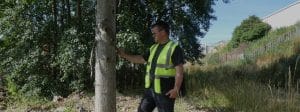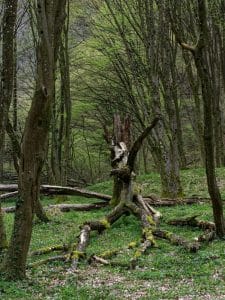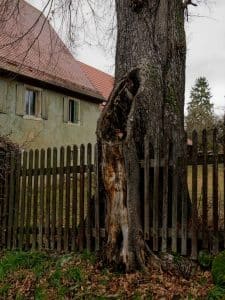

Has a lender or insurer raised concerns about trees near your Shropshire home?
We supply concise, independent tree reports that address risk, management and compliance so valuations, policies and transactions can proceed without delay.
Calls answered in 2 rings, emails replied to within the hour.
Clear guidance before you commit.
Working in partnership with clients to ensure planning approval first time
Industry Leading Standard
We stay with you from first call through to submission.
If you’re buying, selling or insuring a property in Shropshire and trees sit close to the building, lenders and insurers may ask for independent arboricultural evidence before they proceed.
A Mortgage & Insurance Tree Report provides clear, professional advice on tree condition, future growth and potential risk, giving valuers, underwriters and solicitors the confidence they need to move forward without delay, exclusions or renegotiation.
Across Shropshire, tree-related lending and insurance concerns most commonly arise where properties sit within historic settlements and semi-rural landscapes that insurers and valuers consider higher risk.
This includes:
Mature residential streets in Shrewsbury, Ludlow and Bridgnorth where large trees pre-date modern foundations and root influence extends beneath neighbouring plots
Village-edge housing where retained trees sit close to extensions, garages or boundary walls
Properties near historic woodland belts or former estate parkland where tree age, size and species raise questions around long-term stability
Semi-rural homes and converted agricultural buildings where trees form part of the setting and insurers require evidence of condition and management
Mixed ground conditions, including pockets of clay, where insurers scrutinise tree proximity more closely during underwriting
In these settings, lenders and insurers are not testing planning compliance. They are seeking clear, independent evidence that trees do not present an unacceptable risk to the structure, or that risks are understood and managed.
Our Mortgage and Insurance Tree Reports support transactions across Shropshire’s towns, villages and rural areas.
Mortgage providers and insurers request tree reports where nearby trees could influence foundations, drainage or long-term property risk. In parts of Shropshire with shrinkable soils, mature gardens or historic movement, valuers often need clear arboricultural evidence before confirming cover or lending.
Independent reporting, aligned with BS 3998 and BS 5837 where planning factors apply, helps decisions proceed without delays, exclusions or last-minute conditions.
Our Shropshire Mortgage and Insurance Reports clarify whether a tree presents a real issue, a manageable concern or no material risk at all.
A clear, independent arboricultural assessment including:
tree condition and structural risk
distance to foundations and services
species, height and growth potential
root influence + subsidence risk commentary
lender/insurer-ready documentation
Our reporting answers the exact questions lenders ask and prevents unnecessary delays or misinterpretation.
Send your address, photos and lender/insurer requirement.
Measure, inspect and document risk.
Clear written evidence for lender/insurer use.
Quick clarification if further questions arise.
Need a mortgage or insurance tree report in Shropshire?
Send your site details and we’ll confirm exactly what your lender or insurer requires — fast, clear and aligned to local expectations.
Trees may be flagged during a mortgage valuation if they are close to a house, boundary wall, outbuilding, or other structure. The lender may want reassurance that the trees are not likely to cause damage, increase subsidence risk, or create future insurance concerns.
A mortgage tree survey provides an independent arboricultural assessment for lenders, buyers, insurers, or solicitors. It considers the trees, their condition, their relationship with nearby buildings, and whether any practical management recommendations are needed.
Yes. A tree survey can help insurers understand whether nearby trees may be relevant to suspected or historic subsidence. The report can consider species, size, condition, distance from the property, and whether further investigation or proportionate tree management is appropriate.
No. Large trees do not automatically need to be removed because they are near a property. A professional survey helps distinguish between trees that are acceptable, trees that need routine management, and trees that may require further investigation.
Where trees on neighbouring land may influence the property, they can be considered from accessible areas. The report can record their likely relevance, but access to neighbouring land may be needed for a closer inspection.
No. A tree survey for mortgages and insurance purposes is focused on property risk, lender requirements, insurance concerns, and trees near existing buildings. A BS5837 tree survey is normally used to support planning applications and development design.
If tree works are recommended, the report should explain why they are advised and whether checks are needed before work begins. This may include confirming whether the tree is protected by a Tree Preservation Order or located within a Conservation Area.
Yes. Rural properties, larger gardens, converted barns, and homes with mature tree cover can raise questions during purchase or insurance checks. A mortgage or insurance tree survey can provide clear evidence for solicitors, lenders, and insurers.
Tree Preservation Orders and Conservation Area rules are managed by the relevant Local Planning Authority. For many properties in the county, guidance can be found through Shropshire Council’s planning pages: https://www.shropshire.gov.uk/planning/. You should check protection before carrying out any tree works.
Most straightforward residential surveys can be inspected and reported quickly, although timescales depend on access, the number of trees, site complexity, and whether the lender or insurer has asked for specific information.