

Focused assessments to confirm whether trees are causing structural, surface or drainage damage — clear evidence, measured solutions and stable decision-making.
Damage around trees often appears suddenly: lifting surfaces, cracked walls, displaced paving or recurring drainage issues. A Tree Damage Survey identifies whether the tree is directly involved, indirectly contributing, or simply nearby.
Tree-related damage is frequently misunderstood. Some symptoms look significant but are unrelated; others reveal a genuine structural interaction. A clear assessment distinguishes cosmetic issues from real risk, helping you avoid unnecessary works or delays.
A Tree Damage Survey investigates whether a tree is contributing to structural, surface or drainage damage by assessing:
The assessment provides a clear conclusion on whether tree influence is:
confirmed, possible, or unlikely.
Reports are suitable for planning, structural investigations, insurance queries and contractor guidance.
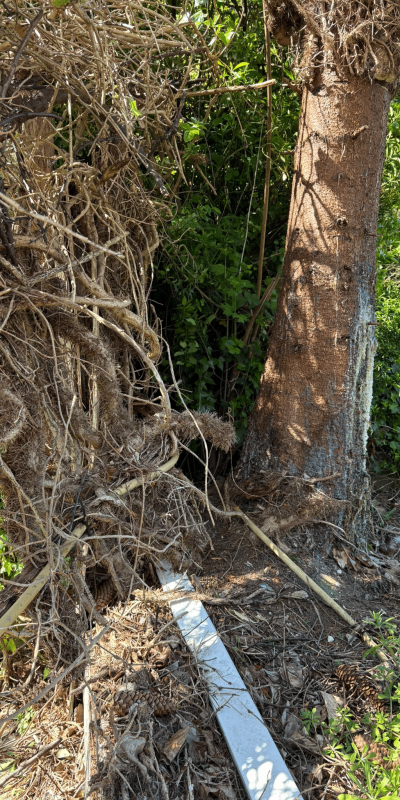
You may need a tree damage survey if you’ve seen:
A Tree Damage Survey identifies the cause and sets out proportionate next steps.
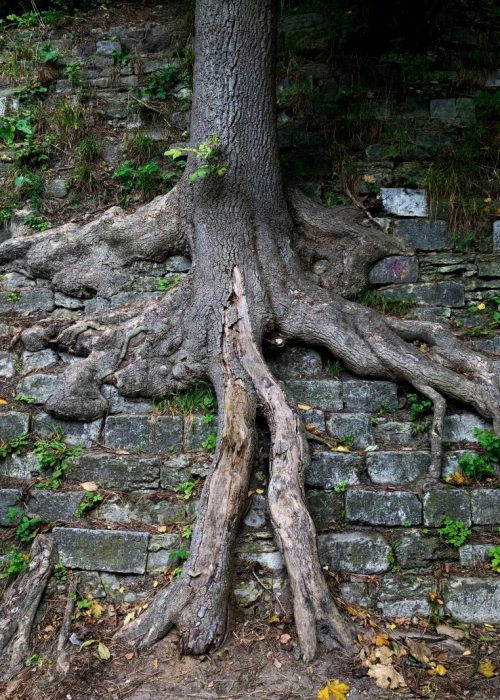
Trees fall under planning legislation as material considerations.
When damage occurs, LPAs require reliable evidence to determine:
Without clear reporting, applications may stall, trigger further questions or require design changes.
A clear, practical and defensible assessment:
Diagnosis based on visible symptoms, structural context and root behaviour.
No exaggerated claims. Recommendations are aligned with real risk.
Reporting structured to support planning decisions and avoid unnecessary delays.
Clear explanations without technical fog.
| Step | Description |
|---|---|
| 1. Initial Review | Provide photos, site details and any previous notes. |
| 2. Site Assessment | Inspection of trees, surfaces, structures and ground conditions. |
| 3. Diagnosis | Tree involvement identified as confirmed, possible or unlikely. |
| 4. Recommendations | Options aligned to risk and project requirements. |
| 5. Reporting | A clear, planning-ready and contractor-friendly report. |
Need a Tree Damage Survey? Share your site details and we’ll confirm exactly what’s required.
Phone: 0800 494 7479
Email: [email protected]
We cover many areas across England and Wales. Click below to find out more.
A Tree Damage Survey is a specialist arboricultural assessment used to investigate whether trees are causing structural damage to buildings, walls, drives, or other built assets. It provides clear, evidence based conclusions on causation, supported by site inspection, tree data, and where required, soil and foundation analysis.
A Tree Damage Survey is typically required when there are signs of structural movement such as cracking, subsidence, or heave, and trees are present nearby. It is often requested by homeowners, insurers, loss adjusters, or solicitors to establish whether vegetation is contributing to the issue.
Trees can contribute to subsidence by extracting moisture from shrinkable clay soils, leading to ground movement. In some cases, direct damage can occur through root growth affecting drains, paving, or shallow foundations. A professional survey determines whether the tree is a contributing factor or not.
Proving causation requires a combination of arboricultural assessment and supporting evidence. This may include tree species identification, distance from the structure, soil type, seasonal movement patterns, and in some cases laboratory soil testing or root identification. A Tree Damage Survey brings this evidence together into a defensible conclusion.
Responsibility depends on ownership and whether negligence can be demonstrated. If a tree owner has been made aware of a risk and failed to act reasonably, liability may arise. A Tree Damage Survey provides the technical evidence needed to support or defend a claim.
You cannot automatically force removal, but if damage is proven and liability established, legal action may be taken. In many cases, issues are resolved through insurance claims or professional negotiation supported by survey evidence.
Yes, insurers often require a professional Tree Damage Survey to confirm causation before accepting or rejecting a subsidence claim. The report provides the technical justification needed to support decisions on liability and remedial action.
Costs vary depending on the complexity of the case, number of trees, and level of investigation required. As a guide, straightforward assessments typically start from around £495 plus VAT, with more detailed investigations quoted individually where specialist testing or monitoring is needed.
A typical Tree Damage Survey includes a site inspection, tree identification and measurement, assessment of distance and influence, review of visible damage, and a clear professional opinion on causation. Where required, recommendations for further investigation or management are also provided.
Yes, Tree Damage Surveys are often used in legal and insurance contexts. Reports can be prepared in line with Part 35 of the Civil Procedure Rules where required, making them suitable for dispute resolution and expert witness use.
Site inspections are usually completed within a few hours depending on site size and complexity. The full report is typically issued within a few working days, although more complex cases involving testing or third party data may take longer.
Yes, where damage is proven, the survey can support applications for tree works, including works to protected trees. Applications must be submitted to the relevant Local Planning Authority, such as:
https://www.planningportal.co.uk/applications/trees
If the tree is not responsible, the report will clearly state this and may identify alternative causes such as drainage defects, construction issues, or natural settlement. This ensures decisions are based on evidence rather than assumption.
No. Cracking can occur for many reasons, including thermal movement, settlement, or structural defects. A Tree Damage Survey ensures that trees are only implicated where there is clear supporting evidence.
Yes, in some cases more than one tree may influence soil moisture levels and contribute to movement. The survey assesses the combined impact of all relevant vegetation to provide an accurate conclusion.

