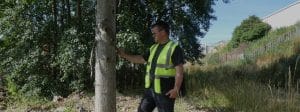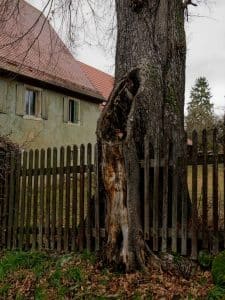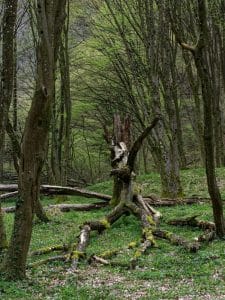

Confronted with a Tree Preservation Order decision in Wales and unsure how to proceed?
We prepare clear, proportionate arboricultural submissions that help Welsh councils balance protection with practical management, improving the chances of approval or successful appeal.
Calls answered in 2 rings, emails replied to within the hour.
Clear guidance before you commit.
Working in partnership with clients to ensure planning approval first time
Industry Leading Standard
We stay with you from first call through to submission.
Across Wales, Tree Preservation Orders are widely used to safeguard trees of cultural, environmental and landscape importance, particularly within conservation areas, historic communities and sensitive rural and coastal settings.
If a protected tree is preventing essential work, blocking a development proposal, posing a safety concern or has triggered a refusal, a TPO Application or Appeal provides the structured evidence Welsh councils require to make a lawful decision. We clarify what is achievable, why permission is justified, and how to present the case so planners can approve works, accept removal, or reconsider a refusal without delay.
TPO considerations commonly arise where development or tree works affect:
Long-established residential areas in Cardiff, Swansea, and Newport, where protected trees define streetscape character
Conservation-focused settings near historic cores and parkland edges
Edge-of-settlement sites where retained trees form important green buffers
Semi-rural properties where prominent specimens have local visual or community significance
Planners assess both individual tree value and contribution to local landscape and heritage.
We support TPO applications and appeals across Cardiff, Vale of Glamorgan, Newport, and surrounding Welsh counties.
In Wales, Tree Preservation Orders (TPOs) place legal controls on what can and cannot be done to protected trees. Homeowners and developers must submit a formal application or appeal when proposed works could affect a protected tree’s structure, health, or long-term condition.
Welsh local authorities assess these submissions under the Town and Country Planning Act 1990 and the Town and Country Planning (Tree Preservation) (Wales) Regulations 2012, balancing the tree’s amenity value against evidence of risk, potential damage, or legitimate management needs. Clear, proportionate arboricultural evidence helps ensure decisions are made without refusal, delay, or enforcement action.
Our TPO applications and appeals are evidence-led, commercially aware and proportionate, designed to justify reasonable tree works, resolve constraint conflicts and support planning decisions without unnecessary escalation or delay.
TPO decisions in Wales sit on clear evidence, not opinion. We deliver:
Once these objectives are satisfied, your TPO application stands on solid ground and moves forward with confidence.
Share your TPO decision notice, site address and photos.
Assessment of tree condition, amenity value and risk.
Clear justification prepared for works, variation or appeal.
Guidance through forms, documents and LPA responses.
If your ready for a TPO application or appeal in Wales, contact us today.
In Wales, Tree Preservation Orders are managed by the relevant Local Planning Authority (LPA), which may be a county or county borough council depending on the location.
For example, you can review planning information through Planning Portal Wales:
https://www.planningportal.co.uk/wales
Each authority maintains its own records, so it is important to confirm the correct council for your site.
The core principles are similar, but TPOs in Wales operate under Welsh planning legislation and guidance.
This means that while the process is familiar, policies and interpretation may vary slightly depending on the Local Planning Authority and Welsh Government guidance.
Yes. If a tree is covered by a Tree Preservation Order, you must obtain consent before carrying out any work, including pruning or removal.
This applies regardless of whether the tree is located on private or public land.
Applications are typically submitted through Planning Portal Wales or directly to the relevant Local Planning Authority.
A complete application should include:
Well-prepared applications are more likely to be approved without delay.
Unauthorised work on a protected tree is a criminal offence in Wales.
Enforcement action may include:
This applies whether the work was intentional or carried out without checking protection status.
Trees in Conservation Areas are not automatically subject to a TPO, but they are still protected.
You must provide the Local Planning Authority with 6 weeks’ written notice before carrying out work, allowing time for the council to assess whether formal protection should be applied.
Yes, but only where there is a clear and immediate risk to safety.
In these cases, you must:
This exemption is carefully controlled and must be justified.
Councils in Wales will assess applications based on:
Decisions aim to balance tree preservation with practical management needs.
Yes. TPOs can apply to trees in both urban and rural settings, including farmland.
Even in open countryside, protected trees cannot be removed or altered without consent unless specific legal exemptions apply.
TPOs are a key planning constraint and must be considered early in the design process.
Where protected trees are present, you may be required to submit:
Addressing these requirements early helps avoid delays during planning validation and decision stages.