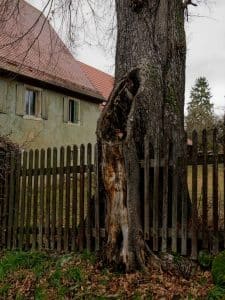
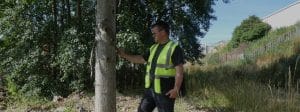
Concerned a tree’s condition could become a safety or liability issue in Shropshire?
We assess tree health objectively and proportionately, giving clear guidance that supports planning decisions, duty-of-care obligations and responsible management.
Calls answered in 2 rings, emails replied to within the hour.
Clear guidance before you commit.
Working in partnership with clients to ensure planning approval first time
Industry Leading Standard
We stay with you from first call through to submission.
If you’re a homeowner, you may need a Tree Health Survey where a mature tree shows signs of decline, disease, instability or damage close to a house, driveway or boundary. Insurers, lenders and local authorities often request independent evidence before decisions are made.
If you’re a developer or landowner, Tree Health Surveys are commonly required where retained trees influence layout, access, safety or long-term site viability. Early clarity avoids unnecessary retention assumptions, late redesign or post-consent complications.
A Tree Health Survey provides a clear, professional view of tree condition, risk and realistic management options.
Across Shropshire, tree health issues frequently arise where mature trees are located close to built form or key access routes. Common local settings include:
Historic residential areas in Shrewsbury, Ludlow and Bridgnorth where established trees overhang properties and boundary lines
Rural roads and approach routes across market towns where declining trees create highway safety concerns
Village edges and farmstead plots where long-unmanaged trees sit close to homes, barns or services
Exposed sites along hillsides and open countryside subject to wind exposure and storm damage
Here, tree condition is scrutinised for safety, liability and appropriate future management rather than amenity value alone.
We undertake Tree Health Surveys across Shrewsbury, Telford, Oswestry and nearby communities, assisting landowners, developers and estate managers across Shropshire.
Tree health can quickly become a material consideration where decline, disease or structural weakness creates risk to people, property or development proposals. Local authorities, insurers and landowners rely on clear arboricultural evidence to distinguish between trees that can be responsibly retained and those requiring intervention.
Under the Town and Country Planning Act 1990, trees may influence planning decisions where safety, amenity or future management is relevant. Where works are proposed, BS 3998 (Tree Work – Recommendations) provides the professional framework for appropriate arboricultural intervention, while BS 5837 may apply where tree condition affects layout, access or development feasibility.
Our Tree Health Surveys are commercially aware, proportionate and planning-led, designed to support real-world construction sequencing, access logistics and foundation strategy without unnecessary escalation.
Our Tree Health Survey typically provides:
Professional assessment of tree condition and structural integrity
Identification of disease, decline or defect risk
Practical management or remediation recommendations
Reporting aligned with Shropshire LPA, insurer and lender expectations
Our experts provide clear decision-ready arboricultural evidence across Shropshire.
Review of site details, concerns and any planning or insurance context.
Detailed inspection of tree condition, structure, vitality and defects.
Clear evaluation of safety, longevity and management implications.
Integration with other arboricultural or ecological surveys where required.
Need clarity on tree health in Shropshire?
We’ll assess any risk thoroughly and help you move forward with confidence.
Shropshire’s rural character, ancient hedgerows and parkland trees mean surveys are essential to assess longevity, disease risk and landscape value.
Shropshire Council – https://next.shropshire.gov.uk/
Mature oaks, boundary hedgerows, riparian trees and veteran specimens often require detailed inspection.
Yes, particularly where field boundary trees or historic landscape features may be affected.
They help determine whether trees can be retained safely or require mitigation or replacement.
Yes, surveys often inform phased pruning, monitoring or succession planting strategies.
They frequently support or supplement BS5837 tree surveys where health concerns are identified.