Preliminary Ecological Appraisal (PEA) in the West Midlands
Do you have the ecological evidence West Midlands planners require at validation?
We provide the baseline ecological evidence used by the West Midlands LPAs to validate applications and confirm whether further protected species surveys are required.
Fast, Clear, Planning-Ready Support
Fast response
Calls answered in 2 rings, emails replied to within the hour.
Free expert advice
Clear guidance before you commit.
Cost-effective
Working in partnership with clients to ensure planning approval first time
Typical 10-day turnaround
Industry Leading Standard
Expert Team
We stay with you from first call through to submission.
Do you need a Preliminary Ecological Appraisal in the West Midlands?
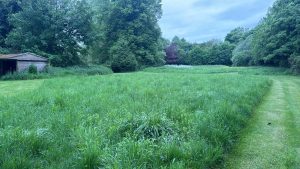
Preliminary Ecological Appraisal (PEA) is typically needed for West Midlands projects where works involve vegetation clearance, demolition, boundary changes, ground disturbance, or features such as former industrial land, field margins, watercourses or mature trees. This includes small residential projects and larger commercial schemes. It gives the council the information they need to decide whether protected species are affected and what, if anything, must be done next.
By identifying risks early, a PEA helps clarify whether ecology could affect your project and what further surveys may be needed to keep it moving on schedule.
The need for PEAs across the county is frequently shaped by the following features:
- Birmingham & Black Country canal networks – continuous wet corridors supporting bats, birds and aquatic habitats
- Sandwell Valley and surrounding public open space – large connected habitat blocks within urban development zones
- Former industrial land in Dudley, Walsall and Wolverhampton – mosaic habitats with elevated reptile and invertebrate potential
- Transport corridors around the M5, M6 and rail infrastructure – linear habitats and unmanaged verges triggering survey risk
- Urban parks and river floodplains along the Tame and Rea – ecological connectivity intersecting regeneration sites
These landscape patterns are routinely factored into PEA screening by West Midlands LPAs.
Our PEA services cover all West Midlands Local Planning Authorities, providing the accurate ecological information councils need to progress applications smoothly.
Why the West Midlands Planning Authorities Request PEAs
West Midlands planning authorities are required to apply the Wildlife & Countryside Act 1981, the Habitats Regulations and the NERC Act 2006 when determining applications. A PEA is the primary evidence they use to confirm ecological risk has been identified proportionately.
Without a clear PEA, applications can be held at validation, delayed by seasonal survey requirements, or receive conditions only after further ecological evidence is provided.
Local Case Insight
What Happens During a Preliminary Ecological Appraisal?
We carry out Preliminary Ecological Appraisals (PEAs) year-round across the West Midlands. Follow-up species surveys are seasonal; however, a PEA indicates if any are needed, allowing your project to keep moving without unnecessary delays.
Key PEA Deliverables for West Midlands Projects
Our PEA aligns with the West Midlands LPA evidence expectations and provides:
A complete habitat baseline and ecological constraint map
Protected-species risk screening with clear survey guidance
Seasonal timing advice to keep your project on schedule
A planning-ready PEA report for LPA validation
The result: confident ecological decisions and a smoother planning process.
Step 1
Baseline Established
Boundary and proposed works checked against policy and planning context.
Step 2
Fieldwork
On-site ecological walkover using DEFRA-aligned UKHab methods.
Next Steps
Need a PEA in the West Midlands?
We’ll confirm what your site requires and map the cleanest route through validation.
FAQ - Preliminary Ecological Appraisals (PEA) in the West Midlands
What is a Preliminary Ecological Appraisal used for in the West Midlands?
A Preliminary Ecological Appraisal (PEA) is used to identify ecological constraints on development sites across the West Midlands. It establishes baseline conditions, including habitats and potential protected species, to support planning decisions.
Why are PEAs commonly required for development in the West Midlands?
PEAs are commonly required due to the mix of urban, suburban, and green infrastructure across the West Midlands. Even heavily developed areas can support protected species, making ecological assessment an important planning requirement.
What types of sites in the West Midlands typically trigger a PEA?
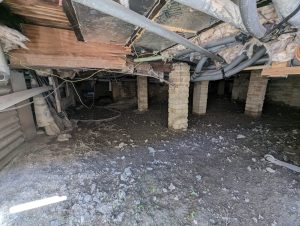
Sites with trees, scrub, derelict buildings, canals, parks, or unmanaged land in the West Midlands often trigger the need for a PEA, as these features can provide suitable habitat for protected species.
What does a West Midlands PEA survey involve?
A PEA survey includes a site walkover, habitat assessment, and ecological data review. It evaluates ecological features and identifies any constraints or further survey requirements relevant to planning.
How does a PEA help developers in the West Midlands?
A PEA helps developers by identifying ecological risks early, allowing them to plan mitigation, avoid delays, and ensure compliance with planning policy before submitting an application.
Are PEAs required for brownfield sites in the West Midlands?
Yes, brownfield sites in the West Midlands often require PEAs. Despite being previously developed, these sites can support species such as bats, birds, and invertebrates.
Can a PEA support planning validation in the West Midlands?
A PEA can form part of a valid planning submission by providing the ecological information required by Local Planning Authorities. Without it, applications may be delayed or deemed invalid.
What species are commonly considered during a West Midlands PEA?
Commonly considered species include bats, badgers, nesting birds, great crested newts, and reptiles. The PEA assesses the likelihood of these species being present based on habitat suitability.
Does a PEA include recommendations for mitigation in the West Midlands?
Yes, a PEA includes recommendations to avoid, mitigate, or compensate for ecological impacts. It may also suggest enhancements to improve biodiversity in line with planning policy.
Which West Midlands councils may require a PEA?
Planning authorities across the West Midlands may require PEAs, including Birmingham City Council, Coventry City Council, Wolverhampton City Council, Dudley Council, and Sandwell Council. You can review requirements via Birmingham City Council’s planning portal: https://www.birmingham.gov.uk/planning.