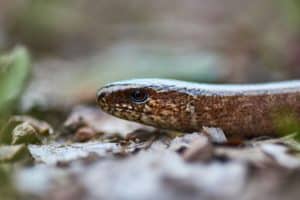
We carry out Great Crested Newt (GCN) surveys across East Sussex and West Sussex, including Brighton and Hove, Crawley, Horsham, Chichester, Lewes, Eastbourne, Worthing, and surrounding rural areas.

Need planning-compliant GCN surveys in Sussex?
We provide tailored Great Crested Newt (GCN) survey services across Sussex, including eDNA testing and habitat assessments, delivering practical, planning-ready reports that support development proposals.
Calls answered in 2 rings, emails replied to within the hour.
Clear guidance before you commit.
Working in partnership with clients to ensure planning approval first time
Industry Leading Standard
We stay with you from first call through to submission.
Sussex includes a diverse range of habitats, from chalk downland ponds and clay lowlands to wooded estates, river valleys, and coastal farmland. These landscapes can provide suitable breeding and terrestrial habitat for Great Crested Newts, meaning planning authorities often require ecological evidence where development may impact ponds or associated habitats.
A GCN assessment helps determine habitat suitability, assesses potential risks, and confirms whether eDNA testing or traditional survey methods are required. Early engagement reduces uncertainty and helps prevent delays linked to seasonal survey constraints.
You may require a Great Crested Newt (GCN) or eDNA survey in Sussex if your project involves:
Development near chalk or clay-lined ponds on the South Downs or Weald
Residential extensions or infill sites in villages around Lewes or Haywards Heath
Farm diversification or agricultural works near historic field ponds in West Sussex
Infrastructure or drainage works close to river valleys such as the Arun or Ouse
Landscaping proposals affecting estate ponds or wet woodland margins
Sites identified as having GCN potential during planning screening or ecological appraisal
Confirming survey needs early is particularly important in Sussex due to varied geology and habitat connectivity.
We carry out Great Crested Newt (GCN) surveys across East Sussex and West Sussex, including Brighton and Hove, Crawley, Horsham, Chichester, Lewes, Eastbourne, Worthing, and surrounding rural areas.
In Sussex, local planning authorities may request Great Crested Newt (GCN) survey evidence where suitable habitats—such as ponds, wet ditches, watercourse margins, and surrounding terrestrial areas—are present, to ensure development proposals comply with wildlife legislation and national planning policy. Without timely and proportionate survey work, planning applications can face delays due to validation queries, additional planning conditions, or seasonal restrictions linked to key GCN activity periods. Such delays can disrupt project timelines and may lead to avoidable redesigns, emphasizing the importance of early, targeted GCN assessments.
We provide practical, proportionate GCN assessments, from habitat appraisals and eDNA or full surveys to clear, planning-ready reports with mitigation, timing guidance, and actionable next steps to keep projects on track.
We deliver planning-compliant Great Crested Newt (GCN) services across Sussex, providing practical support to your project team, including:
Natural England–approved eDNA surveys
Full presence/absence checks where necessary
Terrestrial habitat evaluations
Proportionate reporting to satisfy local planning authority requirements
Our approach is straightforward: the appropriate survey method at the right stage, with clear, actionable advice to keep your development on track.
Share your site details and programme, and we’ll identify whether an eDNA or full survey is required.
We conduct walkovers, eDNA tests, or full GCN surveys based on site potential and season.
You receive planning-ready reports with impacts, mitigation, licensing, and clear timelines.
Require a GCN assessment in Sussex? Check your site’s needs early to keep your project moving.
Sussex contains a wide variety of habitats that can support Great Crested Newts, including farmland ponds, woodland edges, grazing marshes and established hedgerow networks. Where development could affect these habitats, Local Planning Authorities may request ecological surveys before determining a planning application. Early ecological advice helps identify any potential constraints before they become costly delays.
Great Crested Newt surveys are often required for residential developments, agricultural building conversions, commercial schemes, renewable energy projects and infrastructure works where ponds or suitable terrestrial habitat are present nearby. Even relatively small developments can require surveys if protected species could be affected by the proposed works.
There is no fixed distance that automatically triggers a survey. Ecologists consider factors such as the size of the pond, habitat quality, landscape connectivity and the nature of the proposed development. Although ponds close to development receive the greatest attention, suitable terrestrial habitat beyond the pond itself may also need to be assessed before planning decisions are made.
The survey method depends on the site and planning requirements. An ecologist will first assess nearby habitats and determine whether an eDNA survey or traditional survey methodology is appropriate. Traditional surveys involve several visits during the breeding season, while eDNA surveys require water samples from suitable ponds. The findings are then presented in a report suitable for planning purposes.
Yes. Discovering Great Crested Newts does not automatically prevent development. Instead, the survey findings help identify appropriate mitigation measures that protect the species while allowing development to proceed lawfully. This may involve habitat creation, ecological supervision, timing restrictions or, where necessary, obtaining a protected species licence.
No. Ponds are primarily used for breeding during spring, but Great Crested Newts spend much of the year in surrounding terrestrial habitats. They often shelter beneath logs, stones, dense vegetation, grassland, scrub and woodland. Because of this, developments affecting land surrounding ponds can be just as important as works affecting the ponds themselves.
Yes. Commissioning ecological surveys at the beginning of a project allows any protected species issues to be identified before planning submission. If surveys are delayed until after an application has been submitted, additional information requests from the Local Planning Authority can extend planning timescales and, in some cases, postpone projects until the next survey season.
Great Crested Newts are protected under the Wildlife and Countryside Act 1981 (as amended) and the Conservation of Habitats and Species Regulations 2017. These laws make it an offence to intentionally capture, injure, kill or disturb Great Crested Newts or damage or destroy the habitats they use for breeding or shelter without the appropriate legal permissions.
Great Crested Newt surveys may be requested by planning authorities including East Sussex County Council, West Sussex County Council, Brighton & Hove City Council, and district and borough councils such as Chichester, Horsham, Mid Sussex, Arun, Lewes, Wealden, Rother, Adur and Worthing, depending on the location and nature of the proposed development. Applicants should always review the relevant Local Planning Authority’s ecological validation requirements before submitting an application.
ProHort provides Great Crested Newt surveys throughout Sussex for homeowners, developers, architects, planning consultants and landowners. Our experienced ecologists deliver practical advice, recognised survey methodologies and planning reports tailored to Local Planning Authority requirements. By identifying ecological constraints early, we help clients minimise planning risk, maintain project timescales and achieve compliance with wildlife legislation.