
Bat Surveys
Effective bat risk management begins with early assessment, keeping planning approval on track from the outset.
Bats are legally protected, and where buildings, trees or structures may offer roosting potential, local planning authorities require survey evidence.
We carry out Preliminary Roost Assessments to establish roosting potential and record evidence of presence. Where bats are confirmed, we prepare mitigation strategies that meet statutory requirements while allowing the project to progress. Measures are evidence-led and proportionate, ensuring protection is delivered without unnecessary cost. This provides the survey evidence required for informed planning decisions.
What Bat Survey Do I Need?
A Quick Guide
Most planning applications involving roof works, conversions, demolition or tree removal trigger bat survey requirements.
Use the guide below to identify the survey stage most likely to apply to your project.

Preliminary Roost Assessment
When: buildings, bridges or mature trees show roost potential, or lighting and demolition could affect bats.
Purpose: Assess buildings and trees for roost potential.
Timing: Year-round
Next Steps: If no evidence of bats is found and the building or structure is not suitable for bats, a PRA is all that’s required.
If evidence of bats is found or if the building or structure has roost potential, further emergence surveys will be needed
Bat Emergence Survey
When: The results of the PRA will determine how many emergence surveys are needed.
Purpose: If there is evidence of bats or if the building or structure has bat roost potential.
Timing: May to August
Your Next Step
Do you require a bat survey? Call us today to book in one of our expert ecologists.
Bat Survey FAQs
Do I need a bat survey for planning permission?
A bat survey for planning permission is required where development may affect buildings, trees or structures with potential bat roosting features. All bat species in the UK are protected under the Wildlife and Countryside Act 1981 and the Conservation of Habitats and Species Regulations 2017. Local planning authorities require survey evidence where roosts may be impacted before determining an application.
Is a bat survey a legal requirement?
A bat survey becomes a legal requirement where development has the potential to disturb or damage a bat roost. It is an offence to damage or destroy a bat roost, even if bats are not present at the time. Survey evidence is therefore required to demonstrate compliance with wildlife legislation before works proceed.
Who needs a bat survey?
Developers, architects, homeowners and contractors may need a bat survey where works involve roof alterations, loft conversions, demolition, extensions, barn conversions or tree removal. If a structure could support roosting bats, survey evidence is typically required at planning stage.
What is a Preliminary Roost Assessment (PRA)?
A Preliminary Roost Assessment is the first stage of a bat survey. It involves a daytime inspection of a building, tree or structure to assess roosting potential and record any direct or indirect evidence of bat presence. The findings determine whether further bat emergence surveys are required.
What is a bat emergence survey?
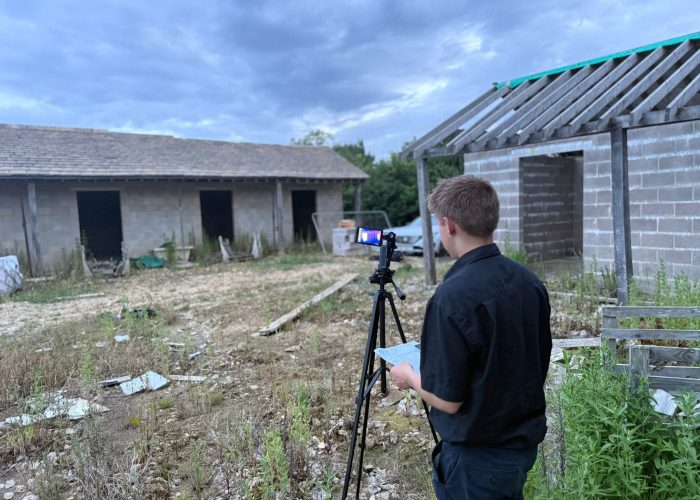
A bat emergence survey involves dusk and/or dawn monitoring to observe bats entering or leaving a structure. These surveys confirm presence, roost type and usage levels. They follow recognised ecological guidance and are required where roosting potential or evidence has been identified during a Preliminary Roost Assessment.
What time of year are bat surveys carried out?
Preliminary Roost Assessments can be undertaken throughout the year, although winter inspections may be limited by reduced visibility of evidence. Bat emergence surveys must be carried out during the active bat season, typically between May and September, in accordance with survey guidance.
How long does a bat survey take?
A Preliminary Roost Assessment is usually completed in a single site visit. If bat emergence surveys are required, multiple visits are undertaken during the appropriate seasonal window to meet recognised survey standards.
How long is a bat survey valid for?
Bat survey validity depends on site context and planning authority expectations. In most cases, survey reports are considered valid for up to two years, provided site conditions and surrounding habitat have not materially changed.
What happens if a bat survey finds bats?
If a bat survey confirms the presence of bats, a mitigation strategy must be designed to avoid or minimise impacts. In some cases, a European Protected Species licence from Natural England may be required before works commence. Survey findings determine the appropriate mitigation pathway.
How much does a bat survey cost?
The cost of a bat survey depends on the size and complexity of the site and whether only a Preliminary Roost Assessment is required or further bat emergence surveys are necessary. Early assessment helps define scope clearly and align survey requirements with programme and budget.