
Planning-ready bat assessments for homes, conversions and development projects across England and Wales.
Fast, clear and proportionate PRA surveys that establish roost potential, confirm planning risk, and set out a predictable route forward — with reporting written for planners, developers and homeowners.
For planners and developers:
A PRA is the gateway assessment that determines the level of survey required. Submitting planning without it usually results in validation delays or seasonal postponement.
For homeowners:
A PRA provides clarity, prevents unexpected survey requests, and ensures work remains lawful.
You are likely to need a Preliminary Roost Assessment if your project involves:
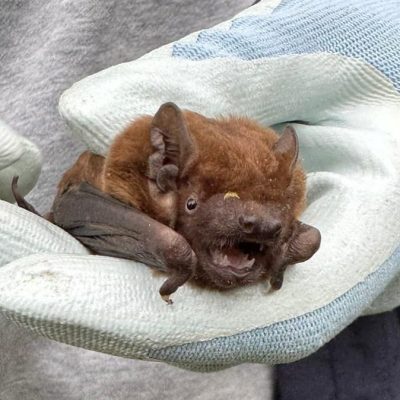
A Preliminary Roost Assessment is the first stage of a roosting bats or nesting birds survey. It is a structured inspection of buildings, trees or structures to identify whether bats or birds could be using them.
A roost doesn’t necessarily look like a nest.
Bats use surprisingly small openings and often leave no visible signs at all — which is why planners require PRA evidence before demolition, roof works or redevelopment.
The PRA determines roost potential (negligible, low, moderate or high) and whether a Dusk Emergence Survey is legally required.
Before development, planners will expect a PRA if any of the following apply:
Early warning signs:
The PRA identifies the level of risk before you commit to further surveys or design changes.
These small details regularly trigger planning queries — a PRA resolves them early and keeps your project on-track.


We provide a robust, planning-ready PRA with clear interpretation and next steps.
| Service | Purpose | Outcome |
|---|---|---|
| Preliminary Roost Assessment (PRA) | Identify bat roost or nesting bird potential in buildings/trees | Negligible/Low/Moderate/High classification + clear next steps |
| Internal/Endoscope Inspection | Check accessible features for evidence | Rapid confirmation where features allow |
| Dusk Emergence Surveys (if required) | Confirm presence/ likely absence | Legally defensible results for planning |
| Activity Surveys | Assess wider site use | Data for layout, lighting, design & mitigation |
| Mitigation & Licensing Support | If roosts are confirmed | Proportionate, lawful measures aligned to your programme |
Every recommendation is explained in practical terms, so you know exactly what each step means for your build schedule.
Our process is designed to remove friction and keep decisions moving.

Send the site location, timeline and project details. We confirm the exact level of survey required.

PRA surveys are available year-round. Internal inspections and endoscopes used where safe and appropriate.
Concise, defensible recommendations outlining next steps and programme impact.
Missing the Spring emergence window normally means waiting until next year.
We schedule early to secure your position and protect your programme
Year-round
Seasonal: May – August
May–August
All bat roosts, even if bats are not present, are protected under UK law. Planning authorities must request evidence where roost potential exists.
Without a PRA, the risks include:
Relevant legislation:
Our commitment:
We deliver PRA surveys to recognised UK standards, strict legal expectations, and planning-authority requirements — with reporting built for scrutiny, not just submission.
We understand the scrutiny that comes with ecology and meet it with clarity, accuracy and planning-focused delivery.
Your planning-ready report will include:
Evidence that satisfies planning and guides project teams.
Why homeowners, planners and developers choose ProHort:
Many clients, especially homeowners, are unsure what “negligible”, “low”, “moderate” or “high” means in practice.
Your report explains:
We also add summaries, so you understand exactly what the outcome means for your build, budget and schedule.
We cover many areas across England. Click below to find out more.
A Preliminary Roost Assessment (PRA) is an initial bat survey used to determine whether a building, structure, or tree has the potential to support roosting bats. It is typically required to support planning applications where development may affect features suitable for bats. The survey provides a risk-based assessment and confirms whether further surveys are necessary.
A PRA is usually required where works involve buildings, roof structures, trees, or other features that could support bats. Many Local Planning Authorities request a PRA as part of planning validation where there is any reasonable likelihood of bat presence, particularly on older or rural sites.
For straightforward residential properties, PRAs typically start from:
£499 + VAT
This applies to single dwellings or small outbuildings with clear access.
Larger properties, complex roof structures, multiple buildings, or restricted access are quoted individually.
The PRA fee includes:
If emergence or activity surveys are required, these are quoted separately.
The survey involves a detailed inspection of the building or structure, including external features and accessible internal areas such as loft spaces. The ecologist will assess potential roosting features and surrounding habitat, alongside reviewing local bat records where relevant.
Yes. A PRA can be undertaken throughout the year as it is based on visual inspection and habitat assessment rather than bat activity surveys. This allows it to be completed at any stage of the planning process.
No. A PRA assesses the potential for bats to be present rather than confirming presence or absence. If evidence is found, or the site is assessed as having suitable features, further surveys may be recommended to confirm bat activity.
If the site is assessed as having moderate or high potential for bats, additional surveys such as bat emergence or activity surveys may be required. These surveys are seasonal and are used to confirm presence, species, and roosting behaviour.
Most PRA surveys are completed within a few hours on site, depending on the size and complexity of the property. Reports are typically issued within a few working days, supporting timely planning submissions.
In most cases, a PRA helps to avoid delays by identifying potential constraints early in the process. As it can be completed year-round, it allows any further survey requirements to be identified and planned in advance.
Not all applications require a PRA, but it is commonly requested where bats could be affected. Requirements vary by Local Planning Authority and site characteristics.
Guidance can be found via:
https://www.gov.uk/guidance/protected-species-how-to-review-planning-applications
and relevant local authority planning portals.
A PRA is the first stage of bat assessment and focuses on identifying potential roosting features. A bat survey (such as an emergence survey) is a follow-on stage used to confirm bat presence, species, and behaviour where required.

