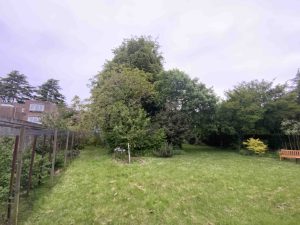

Need 3D Landscape Visuals to Bring Your Planning Application to Life?
3D landscape design is often recommended for developments with complex layouts, sensitive settlement edges, or significant planting and public-realm features. It helps clearly show how a proposal will sit within its surroundings and can support pre-application discussions, public consultation, and smoother engagement with Staffordshire planning officers by providing clear visual context.
Calls answered in 2 rings, emails replied to within the hour.
Clear guidance before you commit.
Working in partnership with clients to ensure planning approval first time
Industry Leading Standard
We stay with you from first call through to submission.
3D landscape design is often requested where proposals involve complex residential layouts, sensitive settlement edge sites or commercial schemes that require clear public-realm presentation. It is especially valuable on sites with retained trees, planting buffers or landscape mitigation features, and during pre-application or public consultation stages. In Staffordshire, planning officers typically respond more efficiently when the visual context of a proposal is clearly illustrated.
Staffordshire planning authorities commonly request or welcome 3D landscape designs where development involves:
Settlement edge proposals where visual integration with the countryside is sensitive
New residential, commercial or mixed-use developments requiring clear spatial understanding
Street facing layouts, access routes or public-realm areas visible from public viewpoints
Sites adjoining existing housing, highways or visually sensitive boundaries
Schemes with changes in levels, retained trees or landscape mitigation features
3D landscape visuals are often used to support planning discussions, design justification and stakeholder engagement, helping reduce uncertainty and streamline decision making.
We provide planning-ready 3D landscape designs across Staffordshire, helping developments clearly visualise layout, levels and planting so schemes integrate effectively with surrounding townscapes, countryside and heritage settings.
In Staffordshire, 3D landscape visuals help planning officers and consultees understand how proposals sit within the existing landscape and built context, how planting, boundaries and open spaces integrate with surrounding areas, and how schemes respond to site levels and movement routes. By showing how landscapes will function once established, not just at completion, clear 3D visuals help address neighbour and consultee concerns, support balanced planning decisions and reduce uncertainty during the application process.
We prepare planning-ready 3D Landscape Design that align with Staffordshire planning policy and help secure approval through clear, policy-led design.
3D Landscape Designs for Staffordshire developments are structured to support planning and design decisions. This typically includes:
Contextual modelling – Accurate representation of the site, surrounding landscape, built form and key viewpoints relevant to Staffordshire settings.
Proposed landscape visualisation – 3D views showing planting, open space, boundaries, levels and circulation as the scheme will appear once established.
Planning-ready visuals – Clear, proportionate images suitable for submission, pre-application discussions or stakeholder consultation.
This ensures 3D landscape designs for Staffordshire schemes clearly communicate intent, reduce ambiguity and support smoother planning assessment.
A visit to site is reqired to discuss plans and measurements are taken
3D Landscape Design is created.
Meeting to discuss proposals and design
We respond to any 3D Landscape Design queries or make amendments required.
Ready to begin your 3D design?
We’ll confirm what your Staffordshire site needs and help you move forward.
It is not always mandatory, but it is frequently requested where layout, levels or landscape integration are difficult to interpret from drawings alone. Staffordshire planning guidance often encourages clear visual communication at application stage:
https://www.staffordshire.gov.uk/Planning.aspx
Yes. 3D landscape visuals are commonly used during pre-application stages to clarify proposals, reduce uncertainty and support early design feedback from planning officers.
No. They complement plans, sections and elevations by providing spatial understanding rather than replacing technical information.
Clear visuals can help explain design intent, show how planting and buffers work, and support informed decision-making by consultees and the public.
Yes. Planting can be represented at indicative maturity to illustrate structure, scale and long-term landscape outcomes.
Yes. Models can be refined as layouts, planting strategies or mitigation proposals change, making them useful throughout the planning process.
Further guidance on visual presentation in planning can be found here:
https://www.gov.uk/guidance/planning-practice-guidance