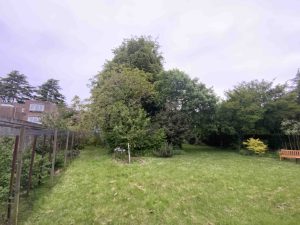

How will habitat commitments be delivered across your Worcestershire site?
Our Habitat Action Plans. We set out clear, practical measures to manage and enhance habitats over the lifetime of the development.
Calls answered in 2 rings, emails replied to within the hour.
Clear guidance before you commit.
Working in partnership with clients to ensure planning approval first time
Industry Leading Standard
We stay with you from first call through to submission.
If your Worcestershire development affects existing habitats, creates new ones, or relies on habitat enhancement to support planning approval, a Habitat Action Plan may be required.
Habitat Action Plans are commonly requested where planning permission depends on demonstrable habitat improvement, not just survey evidence. They are used to show how habitats will be created, restored or enhanced, how success will be measured, and how outcomes align with planning policy expectations.
In simple terms, this is the document that explains what will change on the ground, why it matters, and how it will be delivered.
Across Worcestershire, Habitat Action Plans are frequently triggered by:
River Severn floodplain — riparian habitats and wet grassland
Agricultural fringes — hedgerows and ditches forming priority networks
Former industrial land — mosaic habitats requiring enhancement
Canal corridors — linear wildlife routes
Village-edge development — semi-natural green infrastructure
These are the locations where LPAs expect clear habitat strategies.
Our Habitat Action Plans are prepared for sites across Worcestershire and surrounding areas, supporting residential, commercial and mixed-use developments.
Worcestershire planning authorities use Habitat Action Plans to satisfy duties under the NERC Act 2006, Environment Act 2021 and local biodiversity policies that require tangible habitat enhancement, not just avoidance of harm.
Where habitat outcomes are unclear, applications are commonly delayed by additional conditions, requests for revised ecological strategies, or uncertainty around long-term delivery. A well-scoped HAP reduces that risk by converting policy expectation into a structured, site-specific plan planners can rely on.
Our Habitat Action Plans in Worcestershire are structured to provide clarity for everyone involved in the project. These allow planners to assess compliance, designers to work with known constraints, and contractors to understand what must be protected or delivered on site.
Most importantly, it reduces the risk of late-stage ecological conditions being imposed without a clear delivery framework.
All of our Habitat Action Plans in Worcestershire are tailored to the site, but typically include:
Policy-aligned habitat commitments
Clear, site-specific habitat outcomes tied directly to local planning policy and biodiversity objectives, not generic enhancement statements.
Delivery-ready habitat actions
Practical measures written so they can be implemented on site without reinterpretation, redesign or further ecological clarification.
Accountability and longevity clarity
Defined responsibilities, timescales and success measures so habitat delivery does not stall post-determination or during condition discharge.
Integration with the wider ecology package
Clean alignment with PEAs, BNG assessments, Species Action Plans or future HMMPs, ensuring documents support one another rather than conflict.
Identification of which habitats matter on your site and why, aligned to local policy and planning context.
Realistic measures that can be delivered within the site boundary, budget and construction programme.
Defined timing, delivery stages and responsibility so actions do not stall post-permission.
Alignment with PEAs, BNG assessments, Species Action Plans or HMMPs where required.
Does your Worcestershire application rely on habitat enhancement to progress?
We can confirm whether a Habitat Action Plan is required and scope it proportionately from the outset.
Often, yes. Worcestershire includes significant river corridors such as the River Severn, where ecological sensitivity is higher. A Habitat Action Plan is typically required to demonstrate how habitats will be protected and enhanced alongside development.
On floodplain sites, a HAP ensures that habitat creation and management align with hydrological conditions. It helps integrate biodiversity with drainage design and ensures ecological features are resilient to flooding.
Yes. Habitat Action Plans often work alongside sustainable drainage strategies. They help ensure that features such as attenuation basins, swales, and ponds are designed to deliver both drainage and ecological benefits.
Planning authorities in Worcestershire expect clear, site specific detail. This includes defined habitat types, management prescriptions, monitoring requirements, and measurable biodiversity outcomes.
A HAP supports Biodiversity Net Gain by setting out how habitats will be created, enhanced, and managed over time. It provides the practical framework for delivering biodiversity improvements identified through metric calculations.
Yes, in many cases. Worcestershire has a strong agricultural landscape, and even farmland can support important ecological features. A HAP ensures these are considered and enhanced as part of development.
If a HAP is not provided where required, or lacks sufficient detail, planning applications may be delayed or refused. Worcestershire planning authorities require robust ecological strategies to support decision making.
Typical habitats include grassland, hedgerows, woodland, orchards, ponds, wetlands, and river corridors. Worcestershire developments often require careful integration of habitats within rural and semi rural settings.
Yes. Local planning policies and validation requirements must be followed. Guidance can be accessed via Worcestershire County Council:
https://www.worcestershire.gov.uk/planning
A compliant HAP must align with both local and national biodiversity policy.
A HAP should be developed early in the project lifecycle, following ecological surveys and alongside site design. Early integration helps ensure biodiversity measures are deliverable and reduces planning risk.