Habitat Action Plans
Focused ecological frameworks that secure, enhance and monitor key habitats — aligning your development with biodiversity policy and keeping planning predictable across the UK.
Do you need a Habitat Action Plan?
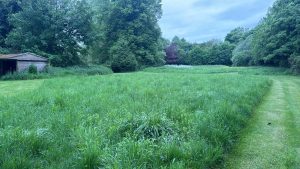
If your development affects important habitats such as grassland, woodland, wetland or riparian corridors, your planning authority may require a Habitat Action Plan (HAP).
These plans demonstrate exactly how habitats will be protected, enhanced and managed to meet Biodiversity Net Gain and policy objectives.
What is a Habitat Action Plan?
A HAP sets out the actions needed to protect, restore and enhance habitats during and after development.
It links site-specific ecology to planning conditions, showing planners how biodiversity objectives will be delivered and monitored over time.


Trigger points — signs your site needs a HAP
These indicators suggest your site might require more than a basic walkover and may attract LPA scrutiny:
- habitats of medium or high distinctiveness recorded in your PEA or BNG
- areas identified as S41 priority habitats or within Nature Recovery Networks
- mitigation or enhancement conditions applied to multiple parcels
- post-development management obligations lasting beyond one season
- complex sites where multiple habitat types interact (e.g. grassland–wetland mosaics)
Under the Environment Act 2021, NERC Act 2006 (S41) and NPPF Section 15, LPAs must ensure developments conserve and enhance priority habitats. A HAP demonstrates this duty has been addressed transparently, giving planners confidence that ecological gains will be delivered.
What We Deliver
We keep guidance clear and planning-ready — supporting predictable project delivery.
| Service Component | Purpose | Outcome |
|---|---|---|
| Species Review | Identify target species and ecological context | Defined scope for actions |
| Impact Assessment | Evaluate risks to populations | Evidence for proportionate response |
| Mitigation Design | Develop avoidance and reduction measures | Legal and planning compliance |
| Enhancement Strategy | Add long-term biodiversity value | Quantifiable uplift for BNG |
| Implementation Plan | Set methods, timing and responsibility | Predictable delivery sequence |
| Monitoring Framework | Track effectiveness over time | Transparent reporting for LPAs |
| Reporting & Sign-off | Produce planning-ready documentation | Defensible submission evidence |
How it Works
Our process is designed to remove friction and keep decisions moving.

Scope & Baseline
We review your PEA/BNG data and confirm which habitats require protection or enhancement.

Action Planning
We set out practical habitat creation and management measures linked to construction and maintenance phases.

Implementation & Monitoring
We define timelines, responsibilities and measurable success criteria to maintain compliance through condition discharge.
Each report follows CIEEM and Natural England methodology, ensuring evidence stands up anywhere in the UK.
Timing & Programme Integrations
Habitat Action Plans can be produced year-round once baseline data is available, but the surveys that inform them are seasonal.

Botanical Surveys
April - September

Bird Surveys
Year-round for scoping; nesting activity March–August

Reptile Surveys
Only April, May and September

Bat Surveys
PRA: Year-round Emergence: May - August

GCN Surveys
eDNA April – June / activity mid-March – June
Early instruction secures the survey window and keeps ecology off the critical path.
That’s how project control is maintained.
Why planning officers request HAPs
A robust HAP resolves ecological risks early and strengthens planning credibility.
Without one, projects risk:
- conditions being deferred or refused
- further consultation with statutory bodies
- extended determination timelines
- enforcement pressure at post-construction stage
HAPs support compliance with:
- Environment Act 2021 (mandatory BNG and habitat enhancement)
- NERC Act 2006 S41 (priority habitats and species)
- Wildlife & Countryside Act 1981
- NPPF Section 15 (conserve and enhance the natural environment)
- Local Nature Recovery and Biodiversity Policies
Its purpose is simple: provide clear, auditable evidence that your project supports biodiversity while keeping the programme stable.
Our Approach
We integrate habitat planning with design, construction and long-term management from day one.
Preparing your HAP alongside design mitigates revisions later and ensures survey evidence flows straight into management delivery.
Our planning-ready HAP includes:
- baseline habitat data and condition assessment
- mitigation, creation and enhancement actions
- delivery responsibilities and sequencing
- long-term management and monitoring strategy
- measurable outcomes for BNG and policy tracking
Our ecologists follow CIEEM standards and DEFRA Metric 4.0 guidance, mapping actions directly to planning milestones so you always know what needs to happen, when and why.
How this supports your project
A well-timed HAP turns mitigation into measurable uplift – strengthening your planning submission and preventing late redesign.
It supports your project by:
- clarifying habitat responsibilities before design lock-in
- aligning ecological actions with planning milestones and programme sequencing
- meeting policy duties under the NPPF, Environment Act 2021 and local biodiversity strategy
- defining realistic enhancement measures early, before they become conditions that push scheduling
- providing habitat-level evidence that integrates with BNG, SAPs, CEMP and EIA ecology
- preventing rework by showing how habitats will be protected, enhanced and monitored through the full development cycle
- providing long-term management planning that satisfies both planners and contractors
- removing uncertainty for design teams, landscape leads and project managers
Early clarity maintains schedule stability. Later discovery creates delay.
This is where foresight pays off.
Case Insight
Your Next Step
Get the ecological clarity that keeps your design on track.
Phone: 0800 494 7479
Email: [email protected]
Areas We Cover
We cover many areas across England and Wales. Click below to find out more.
HAP FAQ - Planning and Programme Clarity
What is a Habitat Action Plan?
A Habitat Action Plan is a structured ecological document that sets out how habitats will be created, enhanced, or restored on a site. It defines clear objectives, practical methods, and measurable outcomes to ensure biodiversity improvements are delivered in line with planning requirements.
When is a Habitat Action Plan required?
A Habitat Action Plan is typically required where a development proposes habitat creation or ecological enhancement. Local Planning Authorities often request a HAP to demonstrate how biodiversity improvements will be implemented and maintained as part of a planning application or condition.
What does a Habitat Action Plan include?
A planning compliant Habitat Action Plan will usually include:
- A baseline habitat summary
- Target habitat types and condition objectives
- Detailed habitat creation and enhancement methods
- Planting specifications and establishment guidance
- Ongoing management requirements
- Success criteria and monitoring approach
This ensures the plan is clear, deliverable, and measurable.
How do you write a Habitat Action Plan?
A Habitat Action Plan is prepared through a structured ecological process. This involves assessing the existing site, identifying suitable habitat enhancements, defining practical implementation methods, and setting measurable outcomes. The document must be technically robust and aligned with planning policy to be accepted.
What is the purpose of a Habitat Action Plan?
The purpose of a Habitat Action Plan is to provide a clear and enforceable strategy for delivering biodiversity improvements. It ensures that habitat creation and enhancement are not simply proposed, but are achievable, measurable, and capable of long term success.
Is a Habitat Action Plan the same as a biodiversity action plan?
No.
A Habitat Action Plan is site specific and linked to a particular development. A biodiversity action plan is typically broader and may relate to regional or national conservation priorities.
A HAP focuses on practical delivery within a defined site boundary.
How does a Habitat Action Plan support planning approval?
A well prepared Habitat Action Plan provides clarity and confidence to planning officers that ecological enhancements can be delivered successfully. It demonstrates compliance with local and national policy and reduces the risk of delays or requests for further information.
What is Section 41 of the NERC Act and how does it relate to a Habitat Action Plan?
Section 41 of the Natural Environment and Rural Communities Act 2006 lists habitats and species of principal importance in England.
A Habitat Action Plan often considers these priority habitats and species when designing ecological enhancements, ensuring alignment with national biodiversity objectives and planning policy.
Do all developments need a Habitat Action Plan?
Not all developments require a HAP.
However, where habitat creation, enhancement, or ecological mitigation is proposed or required by planning policy, a Habitat Action Plan may be requested to support the application or discharge conditions.
How detailed should a Habitat Action Plan be?
A Habitat Action Plan must be sufficiently detailed to demonstrate how habitats will be delivered in practice. This includes clear methodologies, appropriate species selection, timing of works, and realistic management requirements. High level or vague plans are unlikely to be accepted.
Can a Habitat Action Plan be used for small residential developments?
Yes.
Habitat Action Plans are commonly used on smaller residential schemes where ecological enhancements are required but full Biodiversity Net Gain processes may not apply. They provide a proportionate and practical way to demonstrate biodiversity improvement.
What happens if a Habitat Action Plan is not provided when required?
If a Habitat Action Plan is required and not submitted, planning applications may be delayed, refused, or conditioned pending further ecological information. Providing a clear and policy aligned HAP early helps avoid unnecessary delays.
Who prepares a Habitat Action Plan?
A Habitat Action Plan should be prepared by a qualified ecologist with experience in habitat creation and planning policy. This ensures the document is technically robust, policy compliant, and capable of being implemented on site.
How is a Habitat Action Plan implemented on site?
Implementation follows the methods set out within the plan, including habitat preparation, planting, and management actions. Clear guidance within the HAP ensures contractors and stakeholders understand how to deliver the required ecological outcomes.
How does a Habitat Action Plan ensure habitats are successful?
A Habitat Action Plan sets measurable targets and defines how success will be achieved through appropriate design, correct species selection, and structured management. Where required, monitoring ensures habitats establish properly and continue to deliver ecological value.