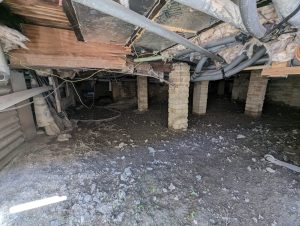
Will ecology slow down your Wakefield development?
An Environmental Impact Assessment (EIA) in Wakefield, maintains project control before planning pressure builds.
Calls answered in 2 rings, emails replied to within the hour.
Clear guidance before you commit.
Working in partnership with clients to ensure planning approval first time
Industry Leading Standard
We stay with you from first call through to submission.
If your development could significantly affect land, wildlife, water, or landscapes, the council will expect formal ecological evidence in Wakefield before it can be approved. Environmental Impact Assessments (EIA) in Wakefield span to major housing, infrastructure, commercial and mixed-use developments.
Where an EIA applies, a planning application in Wakefield cannot progress without a legally compliant ecology assessment in place.
Wakefield’s landscape contains several features that frequently elevate EIA risk:
These conditions regularly underpin EIA screening and scoping decisions.
Our Environmental Impact Assessment services support all Wakefield Local Planning Authorities, delivering precise ecological data to ensure seamless application processing and regulatory compliance.
Wakefield local planning authorities (LPA) are obligated to consider the Wildlife & Countryside Act 1981, the Habitats Regulations, and the NERC Act 2006 in their decision-making process. LPAs use an Environmental Impact Assessment (EIA) to provide a comprehensive evaluation of all potential environmental impacts. These include ecological risks, such as evaluating protected species in Wakefield projects, to ensure a holistic understanding of a project’s implications.
Without a detailed EIA in Wakefield, applications risk delays due to incomplete environmental assessments, seasonal survey requirements, or additional conditions pending further evidence to address ecological concerns.
Environmental Impact Assessments (EIA) in Wakefield must be precise, proportionate and defensible under challenge. We scope tightly to legal triggers, match survey effort to real risk, and structure reporting so that planning officers, consultees and inspectors can rely on it without hesitation.
Our EIA meets the evidence requirements set by Wakefield Local Planning Authorities and delivers:
All evidence is prepared for legal scrutiny, committee reporting and public consultation in Wakefield.
Review of proposal, screening opinion and environmental sensitivities to define ecology scope.
Targeted habitat and species surveys using nationwide methods consistent with CIEEM and Natural England.
Construction and operational effects evaluated with clear significance reasoning.
Policy-linked ecology chapter ready for submission within the Environmental Statement.
Need an EIA in Wakefield?
We’ll assess your site’s requirements and outline the most efficient path to compliance.
Wakefield sits within a complex landscape shaped by river corridors, former industrial land, and active regeneration pressure. Development proposals are often screened to assess whether cumulative effects linked to flood risk, traffic, habitat connectivity, or landscape change could result in significant environmental impacts.
Local screening decisions and validation requirements are set by Wakefield Council through its planning service:
https://www.wakefield.gov.uk/planning
Schemes close to Wakefield’s river corridors can affect floodplain function, water quality, and riparian habitats. Larger developments, phased delivery, or proposals that intensify land use near these corridors are commonly screened where combined effects may extend beyond the site boundary.
Wakefield contains extensive post-industrial land that has developed complex environmental baselines over time. Screening is used to test whether historic land use assumptions remain valid, particularly where sites sit within wider ecological, hydrological, or transport networks.
The M1, A-road network, and rail infrastructure create concentrated movement corridors through the district. Development near these routes is screened to assess cumulative effects related to traffic growth, noise, air quality, lighting, and constrained mitigation opportunities.
Yes. Development at settlement edges often interacts with open land, river valleys, and habitat corridors. Screening helps determine whether landscape change, ecological fragmentation, or combined pressures with nearby allocations could be significant.
Timescales depend on scheme scale, proximity to river corridors or infrastructure, survey seasonality, and consultation scope. Proposals engaging multiple topics — such as flood risk, ecology, transport, and landscape — usually require broader baseline evidence, extending programme allowances.