Uncertainty around how site vegetation may affect planning and local authority requirements?
A botanical survey removes doubt early, locking in habitat value before it becomes a planning problem.
Calls answered in 2 rings, emails replied to within the hour.
Clear guidance before you commit.
Working in partnership with clients to ensure planning approval first time
Industry Leading Standard
We stay with you from first call through to submission.
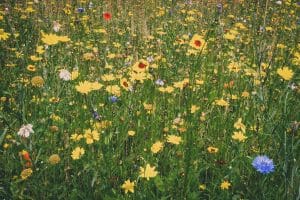
If the condition or type of vegetation on your Merseyside site affects layout, mitigation, or Biodiversity Net Gain, a botanical survey is often the point where uncertainty is removed. These surveys are most relevant where grassland, wet areas, field margins or previously unmanaged land are involved, especially if habitat value could influence what you are allowed to remove, retain or enhance.
For many projects, the issue is not whether development is possible, but whether the habitat will be classed as low value or something that reshapes the scheme. A botanical survey provides that clarity early, before assumptions are built into design or cost plans.
Across Merseyside, urban regeneration sites and estuarine landscapes frequently elevate botanical requirements.
• Mersey Estuary margins — transitional grassland and riparian habitats require assessment
• Brownfield and redevelopment land across Liverpool and Wirral — open mosaic habitats commonly need verification
• Urban fringe farmland — hedgerows and semi-improved grassland affect scoring
• Canal, dock and transport corridors — unmanaged banks and linear vegetation prompt scrutiny
• Established green spaces and pasture — grassland condition may require classification
These features are routinely considered during LPA validation.
Our Botanical Surveys provide clear, site-specific plant evidence for developments across Merseyside and the surrounding area.
Local planning authorities request Botanical Surveys in Merseyside to meet statutory duties under the Wildlife and Countryside Act 1981, the NERC Act 2006 (Section 41) and national planning policy. Where habitat condition, distinctiveness or classification could influence planning balance or Biodiversity Net Gain calculations, officers must rely on species-level evidence rather than assumption.
Without verified botanical data, Merseyside LPAs are unable to confirm baseline value, assess proportional mitigation, or sign off BNG metrics.
Our Botanical Surveys in Merseyside are built to establish habitat value with accuracy and confidence. Survey effort is focused on the vegetation present and timed to the right season, ensuring plant evidence reflects real site conditions.
Defensible habitat classification
Clear identification of habitat types using UKHab or NVC where required, removing uncertainty over distinctiveness or priority status.
Condition evidence that supports BNG scoring
Robust plant data used to justify baseline condition scores and avoid late-stage metric challenges.
Planning-ready habitat mapping
Accurate spatial plans that align with red-line boundaries and feed directly into planning and BNG documentation.
Integration with wider ecology
Botanical findings aligned with PEA outcomes, BNG assessments, and any follow-on habitat or species work to keep evidence consistent.
Plant communities and indicator species recorded.
Focused on areas influencing layout, classification, or BNG outcomes
Plans matched to red-line boundaries.
Integration with wider ecology if necessary.
Unsure how site vegetation affects next steps?
We’ll check what’s on the ground and explain what evidence is required.
Yes, where development may affect vegetation or habitats. In Merseyside, planning authorities expect ecological information where sites include grassland, scrub, brownfield vegetation, or landscaped areas that could be impacted.
Urban regeneration sites can support a mix of habitats, including disturbed ground and early successional vegetation. Botanical surveys assess these areas to determine their ecological value before development proceeds.
Typical habitats include amenity grassland, scrub, ornamental planting, and brownfield habitats. Some sites may also include semi-natural habitats that require more detailed assessment depending on their ecological value.
Yes. Providing clear ecological data helps demonstrate that biodiversity has been properly considered. This can support planning approval and reduce the likelihood of delays or requests for additional information.
They can be. Even small plots, including infill developments or garden land, can support habitats of ecological interest. A botanical survey may be required where vegetation is present and will be affected.
Surveys are carried out using recognised approaches such as UKHab classification. This ensures habitats are mapped consistently and the data is suitable for planning and biodiversity assessments.
Yes. Surveys are most effective during the growing season when plant species can be accurately identified. Surveys outside this period may be limited and could require follow-up work.
Yes. Identifying habitats early allows for retention, enhancement, or integration into the design. This helps reduce ecological impact and supports smoother planning outcomes.
Where habitats may be affected, ecological survey information is commonly required. Guidance from Liverpool City Council and other Merseyside authorities outlines validation requirements, including biodiversity considerations. Providing a botanical survey helps ensure applications meet these expectations.
Early surveys identify ecological constraints before design is finalised. This reduces planning risk, avoids delays, and ensures biodiversity is properly considered from the outset.