
Need to show biodiversity improvements in Nottinghamshire?
We prepare clear, planning-ready Biodiversity Enhancement Plans that meet local policy expectations and keep your application moving.
Calls answered in 2 rings, emails replied to within the hour.
Clear guidance before you commit.
Working in partnership with clients to ensure planning approval first time
Industry Leading Standard
We stay with you from first call through to submission.
In many cases, planning officers in Nottinghamshire request clear biodiversity improvements even where statutory Net Gain is not being applied. A Biodiversity Enhancement Plan sets out what will be delivered, where it will happen, and how it supports local planning policy — in a proportionate, approvable format.
Planning-first. Proportionate. Submission-ready.
Planning officers across Nottinghamshire most commonly seek biodiversity enhancement information where development involves:
Village infill and edge-of-settlement housing around settlements such as Newark, Bingham, Worksop and areas bordering Nottingham
Small brownfield or previously developed sites within Nottingham, Mansfield and Sutton-in-Ashfield
Rural fringe development and farm diversification where hedgerows, ditches or pasture margins are present
Land influenced by local green corridors and water features, including the Trent, Idle and Leen catchments
In Nottinghamshire, enhancement measures are often requested to support validation and demonstrate alignment with local plan policy rather than to secure formal Net Gain units.
We provide support for Biodiversity Enhancement Plan submissions across Nottingham, Mansfield, Newark-on-Trent, Worksop, Retford, Beeston and surrounding towns and rural communities throughout Nottinghamshire.
Planning authorities across Nottinghamshire require biodiversity enhancement to meet duties set out in the National Planning Policy Framework (NPPF), which expects development to protect and enhance biodiversity and deliver measurable environmental benefits. Local Plans across Nottinghamshire reflect this requirement, even where statutory Biodiversity Net Gain is not being formally applied.
In practice, Biodiversity Enhancement Plans in Nottinghamshire are used to support validation, policy compliance and decision-making, particularly on smaller, exempt or edge-case schemes. They give planning officers confidence that biodiversity has been properly addressed in line with planning policy, without triggering unnecessary statutory processes. The focus remains on clear, proportionate delivery rather than technical escalation.
Our Biodiversity Enhancement service delivers clear, planning-compliant solutions that manage ecological constraints effectively while supporting smooth and efficient project delivery.
As part of a Biodiversity Enhancement Plan for Nottinghamshire, we provide:
Clear enhancement layout plans showing where features will be delivered on site
Defined enhancement features and specifications, including integrated or retrofitted measures
Practical management requirements to ensure features remain effective once installed
Planning-ready justification aligned with local and national biodiversity policy
Review of the site and planning context to confirm level of enhancement.
Realistic biodiversity improvements are defined and aligned with layout and landscape proposals.
A concise, submission-ready Biodiversity Enhancement Plan is prepared.
We support responses to planning officer or ecology queries to assist validation or approval.
Been asked for biodiversity improvements by the council in Nottinghamshire?
We’ll confirm what’s required and deliver a proportionate Biodiversity Enhancement Plan that planning officers can approve.
A Biodiversity Enhancement Plan is a planning application document that explains how a proposed development in Nottinghamshire will improve ecological value beyond the existing baseline. It outlines habitat creation, planting strategies and green infrastructure proposals that deliver measurable biodiversity uplift in line with local policy and Biodiversity Net Gain requirements.
District councils such as Rushcliffe Borough Council, Gedling Borough Council and Newark and Sherwood District Council commonly request an Enhancement Plan at planning submission stage where development results in habitat loss or triggers Biodiversity Net Gain. Providing a clear plan alongside ecological surveys helps avoid validation issues and policy objections.
A Biodiversity Enhancement Plan focuses on the design stage strategy for improving biodiversity. A Habitat Management and Monitoring Plan deals with the long term management and monitoring of those habitats once planning permission has been granted. The two documents serve different stages of the development process.
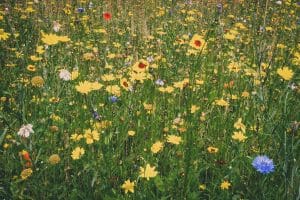
Enhancements frequently include species rich grassland creation, woodland and hedgerow planting, river corridor buffers along the River Trent and sustainable drainage features designed to provide ecological value. The plan must demonstrate that these measures are achievable within the site constraints.
Where development is located near the River Trent or associated floodplains, enhancement proposals should integrate habitat buffers, wet grassland or riparian planting where appropriate. The Enhancement Plan must consider hydrological conditions and ensure proposals are realistic and policy compliant.
Yes. Where Biodiversity Net Gain applies, the Enhancement Plan should align with Biodiversity Metric outputs submitted with the planning application. Habitat proposals must demonstrate measurable uplift rather than general environmental improvement statements.
Yes. Even smaller developments can be required to demonstrate biodiversity improvement, particularly in sensitive rural areas or where existing habitat value is moderate or higher. Early integration of enhancement measures into site layout reduces planning risk.
Common issues include generic landscaping language, lack of measurable biodiversity targets, failure to reflect local habitat character and inconsistencies between ecological reports and planning drawings. These weaknesses can delay determination.
Developers should review planning validation requirements and biodiversity guidance via the relevant district council website. For example, Rushcliffe Borough Council planning guidance is available at https://www.rushcliffe.gov.uk/planning/.
ProHort prepares technically structured Biodiversity Enhancement Plans tailored to Nottinghamshire district policy and landscape context. We ensure enhancement proposals are measurable, aligned with Biodiversity Metric calculations and embedded into the wider development design to support planning approval.