
Planning-ready BNG assessments for Yorkshire — verified baselines, Metric 4.0 scoring and proportionate uplift strategies for a predictable planning route.
Calls answered in 2 rings, emails replied to within the hour.
Clear guidance before you commit.
Working in partnership with clients to ensure planning approval first time
Industry Leading Standard
We stay with you from first call through to submission.
Most developments in Yorkshire now require a mandatory 10% biodiversity net gain under the Environment Act 2021.
Local planning authorities expect clear baseline data, a defensible Metric 4.0 calculation and a proportionate uplift strategy before your application can progress. West Yorkshire combines dense urban centres, river valleys, canal corridors, former industrial land and Pennine fringe slopes. These patterns influence how councils interpret BNG and what level of evidence they expect at validation. These factors strongly influence how LPAs interpret BNG.
Local landscape patterns affecting BNG expectations across Yorkshire include:
These wider patterns shape how uplift proposals are evaluated across the county.
We support projects across:
Leeds, Bradford, Wakefield, Huddersfield, Halifax, Castleford, Dewsbury, Keighley, Pontefract and surrounding areas.
Yorkshire LPAs request BNG evidence early because habitat condition and distinctiveness can change sharply over short distances, especially where valley systems, upland edges and regeneration land intersect. Planners want clarity before design work becomes fixed, so uplift is achievable and proportionate from the outset.
Early BNG evidence reduces redesign, prevents validation queries and keeps programme risk under control.
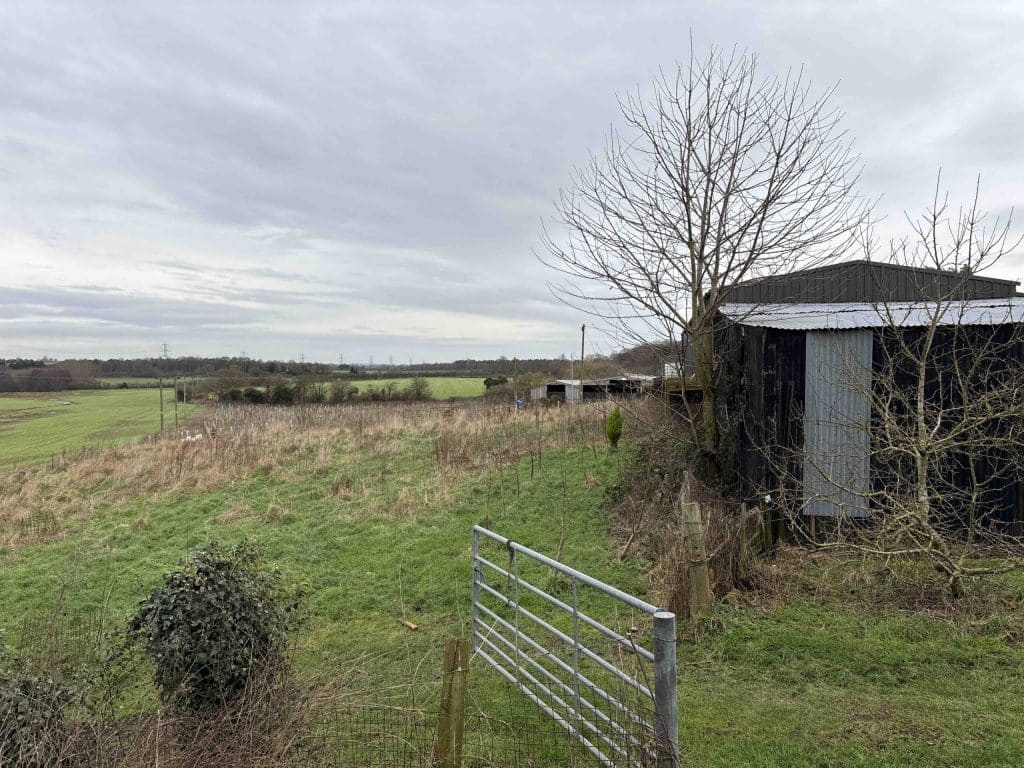
Site-level features that commonly trigger BNG requirements in Yorkshire include:
If any of these apply, early BNG assessment keeps the planning route predictable and avoids uplift recalculation later in the programme.
BNG must be practical, defensible and proportionate.
We align ecological evidence with real-world design constraints so your metric supports your planning route. We assess habitat condition, distinctiveness and connectivity to identify the most efficient uplift options, whether on-site, off-site or blended. For more detail on methodology, see our Biodiversity Net Gain Assessment service.
For schemes requiring integrated landscape design or planting plans, we work alongside our sister company Blue Iris Landscapes to keep proposals aligned with uplift feasibility and LPA expectations.
Every recommendation is shaped for validation, design iteration and planning negotiation.
We produce planning-ready BNG Assessments aligned to Staffordshire’s policy expectations.
For Yorkshire schemes, every planning-ready BNG Assessment includes:
These deliverables are structured to satisfy Yorkshire LPAs while keeping your BNG route proportionate to the scale of development.
Year-round, with optimal survey seasons
Completed once habitat data is verified.
Aligned with design progression and layout refinement.
Only if needed. PEA, EIA, and Protected Species surveys
These steps align with national requirements under NPPF Section 15 and ensure the BNG route remains defensible at planning. Early baseline clarity locks in feasible uplift routes, prevents late-stage reclassification, and keeps your planning programme on track.
Contact us and we’ll confirm exactly what your site requires and support a planning-ready, proportionate route forward.
Where a proposal falls within the scope of mandatory Biodiversity Net Gain legislation, the applicant must demonstrate at least 10 percent measurable uplift using the statutory Biodiversity Metric. The assessment forms part of the planning evidence.
Yes. Yorkshire includes urban centres, lowland farmland and moorland fringe habitats. Baseline habitat classification and condition assessment must reflect local ecological character to avoid inaccurate metric outputs.
For strategic sites, baseline habitats are mapped across the entire red line boundary and modelled against the masterplan layout. Multiple metric scenarios are often tested to optimise biodiversity performance.
Not necessarily. While rural sites may offer more land for enhancement, baseline habitat values can also be higher. Accurate early stage modelling is essential to confirm feasibility.
Sites near rivers such as the Aire, Don or Ouse may contain riparian habitats that carry higher distinctiveness values. The BNG assessment must correctly classify and quantify these features within the Biodiversity Metric.
A habitat survey using UK Habitat Classification is required to map all habitat parcels and assess condition. Without reliable field data, metric outputs cannot be considered robust.
Timescales vary depending on site scale and complexity. Large mixed use allocations may require iterative modelling alongside design teams, while smaller schemes can often be assessed more quickly.
If modelling identifies a biodiversity unit shortfall, the applicant may secure registered off site biodiversity units to meet statutory requirements.
Yorkshire contains multiple Local Planning Authorities, including Leeds City Council, Sheffield City Council, City of York Council and North Yorkshire Council. The relevant authority reviews the BNG assessment submitted with the planning application.
Planning guidance for Leeds City Council can be accessed at:
https://www.leeds.gov.uk/planning
ProHort undertakes detailed habitat surveys and comprehensive Biodiversity Metric modelling tailored to Yorkshire’s varied planning context. We support land promoters and developers with feasibility testing, layout optimisation and clear unit calculations for planning submission.