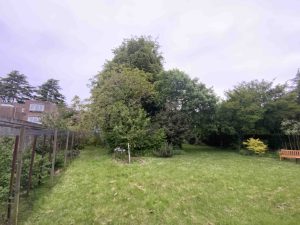
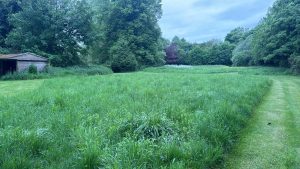
Planning-ready BNG assessments for Surrey — verified baselines, Metric 4.0 scoring and proportionate uplift strategies for a predictable planning route.
Calls answered in 2 rings, emails replied to within the hour.
Clear guidance before you commit.
Working in partnership with clients to ensure planning approval first time
Industry Leading Standard
We stay with you from first call through to submission.
Most developments in Surrey now require a mandatory 10% biodiversity net gain under the Environment Act 2021.
Local planning authorities expect clear baseline data, a defensible Metric 4.0 calculation and a proportionate uplift strategy before your application can progress. Surrey’s landscape includes extensive woodland, lowland heath, chalk slopes, river corridors and dense commuter settlements, all influencing how LPAs interpret BNG requirements. These factors strongly influence how LPAs interpret BNG.
Local landscape patterns affecting BNG expectations across Surrey include:
These broader patterns shape how uplift opportunities and constraints are evaluated during planning.
We support projects across:
Guildford, Woking, Reigate, Redhill, Epsom, Ewell, Farnham, Godalming, Dorking, Camberley, Horley and all surrounding villages.
Surrey LPAs request BNG evidence at an early stage because habitat distinctiveness and condition shift significantly in woodland-edge, heathland, chalk grassland and green belt transition zones. Even small design adjustments can alter metric outcomes or uplift feasibility.
Getting BNG right early prevents validation delays, redesign loops and late-stage uplift recalculation.
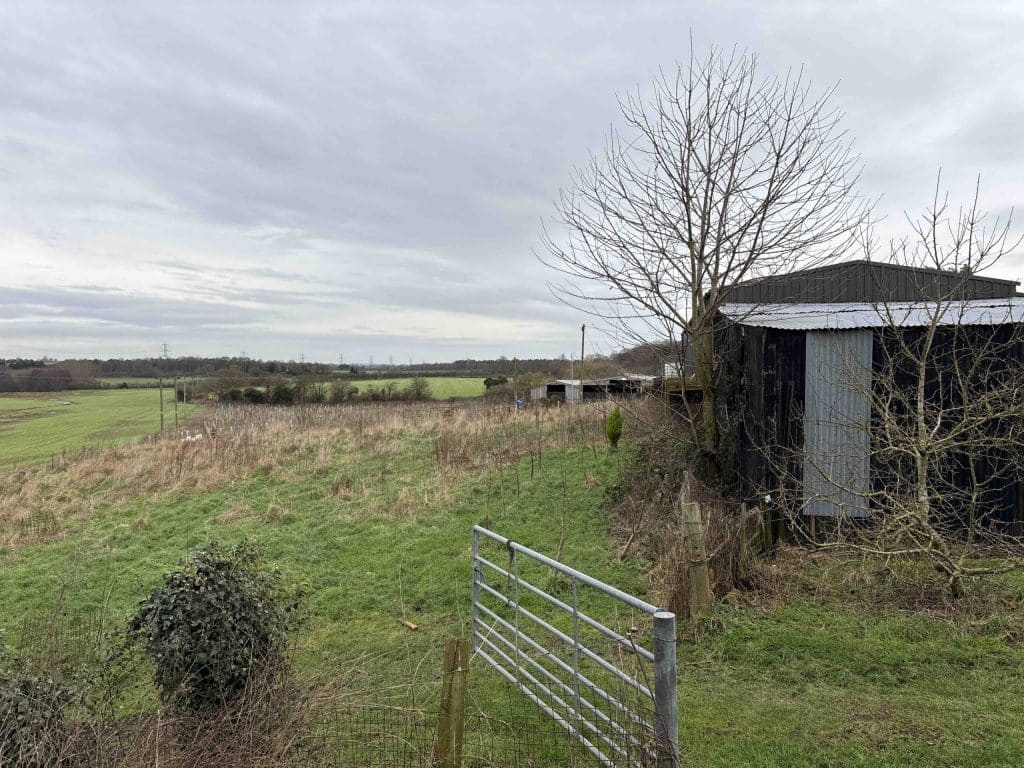
Common site-level triggers for BNG assessment in Surrey include:
If these apply, early metric work keeps the planning route predictable and reduces programme risk.
BNG must be practical, defensible and proportionate.
We align ecological evidence with real-world design constraints so your metric supports your planning route. We assess habitat condition, distinctiveness and connectivity to identify the most efficient uplift options, whether on-site, off-site or blended. For more detail on methodology, see our Biodiversity Net Gain Assessment service.
For schemes requiring integrated landscape design or planting plans, we work alongside our sister company Blue Iris Landscapes to keep proposals aligned with uplift feasibility and LPA expectations.
Every recommendation is shaped for validation, design iteration and planning negotiation.
We produce planning-ready BNG Assessments aligned to Surrey’s policy expectations.
For Surrey’s schemes, every planning-ready BNG Assessment includes:
These deliverables are structured to satisfy Surrey’s LPAs while keeping your BNG route proportionate to the scale of development.
Year-round, with optimal survey seasons
Completed once habitat data is verified.
Aligned with design progression and layout refinement.
Only if needed. PEA, EIA, and Protected Species surveys
These steps align with national requirements under NPPF Section 15 and ensure the BNG route remains defensible at planning. Early baseline clarity locks in feasible uplift routes, prevents late-stage reclassification, and keeps your planning programme on track.
Contact us and we’ll confirm exactly what your site requires and support a planning-ready, proportionate route forward.
Yes. Where a proposal falls within the statutory scope of Biodiversity Net Gain legislation, the applicant must demonstrate at least 10 percent measurable uplift using the statutory Biodiversity Metric as part of the planning submission.
Sites within or near the Thames Basin Heaths SPA may face additional ecological constraints. While the SPA relates to protected bird species, the Biodiversity Net Gain assessment must still accurately calculate baseline habitat units and demonstrate compliant uplift.
No. Green Belt designation does not remove the statutory requirement for Biodiversity Net Gain. Any permitted development must still demonstrate measurable uplift in biodiversity units.
Woodland and heathland habitats often carry higher distinctiveness values within the Biodiversity Metric. Accurate classification and condition assessment are essential to avoid underestimating baseline habitat value.
Yes, but feasibility depends on site constraints. On smaller plots, space for enhancement may be limited, making early stage modelling critical to confirm whether on site measures are sufficient.
Sites adjacent to rivers may include riparian habitats that must be properly classified and quantified. The assessment must ensure development proposals do not reduce ecological connectivity.
Timescales vary depending on site size and habitat complexity. High value residential sites may require iterative modelling alongside design revisions to achieve compliant uplift.
If the Biodiversity Metric identifies a shortfall in habitat units, the applicant may secure registered off site biodiversity units to meet the statutory 10 percent requirement.
Biodiversity Net Gain assessments are reviewed by the relevant Local Planning Authority, such as Guildford Borough Council, Woking Borough Council, Elmbridge Borough Council or Reigate and Banstead Borough Council depending on site location.
Planning guidance for Guildford Borough Council can be accessed at:
https://www.guildford.gov.uk/planning
ProHort undertakes detailed habitat surveys and robust Biodiversity Metric modelling tailored to Surrey’s Green Belt and heathland context. We provide early feasibility advice, accurate unit calculations and clear planning documentation to minimise biodiversity compliance risk.