
Planning-ready BNG assessments for London — clear metrics, proportionate uplift strategies and predictable progress through planning.
Calls answered in 2 rings, emails replied to within the hour.
Clear guidance before you commit.
Working in partnership with clients to ensure planning approval first time
Industry Leading Standard
We stay with you from first call through to submission.
Most developments in London now require a mandatory 10% biodiversity net gain under the Environment Act 2021.
Local planning authorities expect clear baseline data, a defensible Metric 4.0 calculation and a proportionate uplift strategy before your application can progress.
Across London, planners regularly tailor evidence expectations to the capital’s complex urban landscape:
river corridors along the Thames and its tributaries
redevelopment of brownfield and intensification sites
interconnected green spaces and urban habitats
historic parkland and mature boundary planting
rail, road and canal corridors with ecological value
outer-London growth and redevelopment zones
Early clarity on baseline conditions and achievable enhancement is key to maintaining a defensible application.
We support schemes across Greater London, working in inner and outer boroughs as well as adjoining neighbourhoods.
London LPAs request BNG evidence early because many developments sit close to watercourses, settlement edges or regeneration land, where small layout changes can noticeably affect habitat value and connectivity.
Officers want verified baseline habitats and clear Metric 4.0 scoring before designs progress, so uplift options can be understood without late-stage compromise. The county’s focus on canal corridors, historic field patterns and woodland-edge mosaics also means uplift feasibility needs to be established upfront.

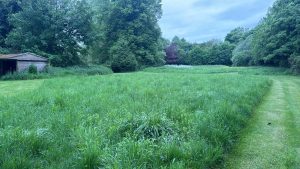
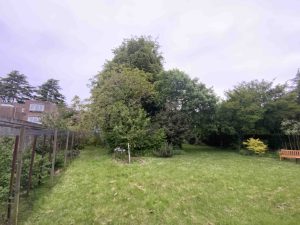
On the ground, site-level features signal when BNG evidence will be needed:
Providing this clarity early prevents validation queries, redesign instructions and delays during casework.
We produce planning-ready BNG Assessments aligned to London’s policy expectations.
Every report includes:
verified UKHab habitat mapping
defensible condition and distinctiveness scoring
full DEFRA Metric 4.0 calculation
uplift strategy shaped around LPA priorities
integration with layout, drainage and protected species
clear, structured reporting for validation and negotiation
Year-round, with botanical elements best May–September.
Completed once habitat data is verified.
Aligned with design progression and layout refinement.
Used where additional clarity is needed around baseline or constraints.
Our approach keeps evidence proportionate, technically robust and predictable through the full planning sequence.
Contact us and we’ll confirm exactly what your site requires and support a planning-ready, proportionate route forward.
Yes. Where development falls within the statutory scope of Biodiversity Net Gain legislation, applicants must demonstrate at least 10 percent measurable uplift using the statutory Biodiversity Metric as part of the planning submission.
The statutory requirement is national, but borough level validation requirements and planning expectations can vary. The BNG assessment must align with the relevant borough’s planning documentation and submission standards.
Baseline habitats are mapped and assessed using the Biodiversity Metric. The post development layout is then modelled to confirm whether measures such as green roofs, podium planting and tree strategies achieve the required uplift in habitat units.
Urban Greening Factor requirements are separate planning policy tools. While some features may contribute to both, the BNG assessment must independently demonstrate measurable uplift using the Biodiversity Metric.
Yes. Redevelopment of housing estates must quantify existing habitat value, including grassed areas and trees, before modelling new layouts to ensure the 10 percent requirement is met.
Achieving uplift on constrained vertical sites can be challenging. Roof habitats, terraces and tree planting may contribute, but careful metric modelling is required to avoid unit shortfalls.
Sites adjacent to the River Thames may include riparian habitats or contribute to ecological connectivity. The baseline must accurately classify any associated habitats and reflect their value within the assessment.
Shortfalls often arise where baseline habitat value is underestimated or where roof and podium habitats are over specified without meeting Biodiversity Metric criteria. Early stage modelling reduces this risk.
Biodiversity Net Gain assessments are reviewed by the relevant London borough council, such as Camden Council, Southwark Council, Tower Hamlets Council or the Royal Borough of Greenwich depending on site location.
Planning guidance for Camden Council can be accessed at:
https://www.camden.gov.uk/planning
ProHort undertakes detailed habitat surveys and robust Biodiversity Metric modelling tailored to London’s high density planning context. We work with architects and planning consultants to optimise layouts, reduce biodiversity unit deficits and provide clear, defensible calculations for submission.