
Planning-ready BNG Assessments and Biodiversity Gain Plans in Nottinghamshire, providing clear biodiversity calculations, habitat delivery strategies and ecological support for development projects throughout the county.
Calls answered in 2 rings, emails replied to within the hour.
Clear guidance before you commit.
Working in partnership with clients to ensure planning approval first time
Industry Leading Standard
We stay with you from first call through to submission.
Biodiversity Net Gain (BNG) is an important consideration for many development projects across Nottinghamshire. Where the statutory requirements apply, developers must demonstrate how the required biodiversity gain will be achieved and secured through the planning process.
Nottinghamshire contains a diverse range of landscapes, from urban and industrial areas to agricultural land, river corridors, ancient woodland, heathland and established green infrastructure. These differences can have a significant influence on a development site’s existing biodiversity value and the options available for delivering biodiversity gain.
Areas such as Sherwood Forest and the Trent Valley are important parts of the county’s ecological landscape. Nottinghamshire also contains ancient woodland, veteran trees and other habitats that may require particular consideration when assessing development proposals.
Nottinghamshire County Council adopted a Biodiversity Net Gain Supplementary Planning Document in September 2025. Its application relates to the planning functions covered by the document, including materials and waste planning. For other development proposals, the relevant district, borough or city planning authority and its applicable policies should be identified at the outset.
The county’s Local Nature Recovery Strategy also provides a wider framework for identifying important existing habitats and opportunities for nature recovery. Considering these priorities alongside the statutory biodiversity metric can help inform site-specific habitat proposals.
Early BNG advice can help developers understand the ecological baseline, idenitfy potential constraints and explore practical opportunities to retain, enhance or create habitats before the development design is finished.
We work throughout Nottinghamshire, including Nottingham, Newark, Mansfield, Worksop and nearby towns and villages.
A BNG Assessment establishes the existing biodiversity value of a development site and calculates how the proposed development is expected to change that value.
Our ecologists assess the habitats present and use the statutory biodiversity metric to calculate biodiversity units for the existing and proposed site. This provides a consistent method of measuring biodiversity value and assessing the anticipated effects of development.
The metric considers factors including habitat type, size, condition and strategic significance. It also accounts for relevant factors associated with habitat creation and enhancement, including the difficulty of achieving the target condition and the time required for habitats to develop.
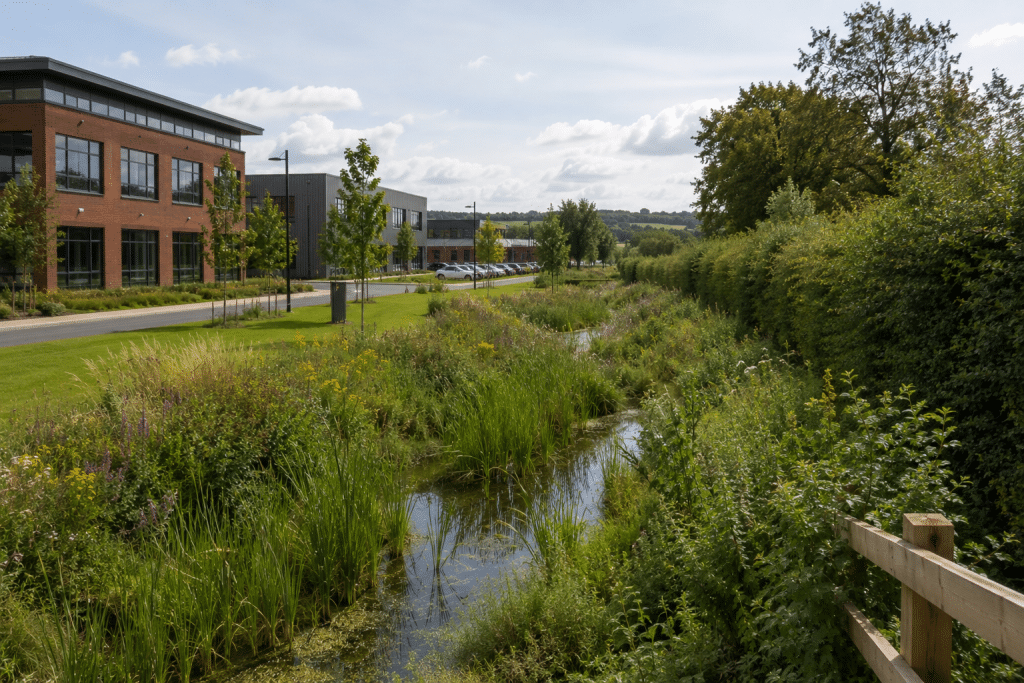
A Nottinghamshire BNG Assessment can include:
The findings provide a measurable biodiversity baseline and help the project team understand the implications of different design decisions. This can be particularly valuable where a site contains several habitat types or where existing ecological features could influence the development layout.
A BNG Assessment helps establish the ecological information needed to develop an appropriate biodiversity strategy.
Depending on the site and the scope of the assessment, this can include:
The statutory biodiversity metric can be used iteratively as development proposals evolve. Comparing different approaches at an early stage can help the design team understand how changes to the layout, landscaping or habitat proposals may affect the final biodiversity calculation.
The assessment is therefore more than a calculation prepared at the end of the design process. When commissioned at the appropriate stage, it can inform decisions about the site layout and the practical delivery of biodiversity gain.
A Biodiversity Gain Plan is a separate document that explains how the required biodiversity gain will be delivered.
Where statutory BNG applies, the plan is submitted to the relevant Local Planning Authority following planning permission and must be approved before development can commence. It brings together the relevant biodiversity calculations, habitat proposals and delivery arrangements for the development.
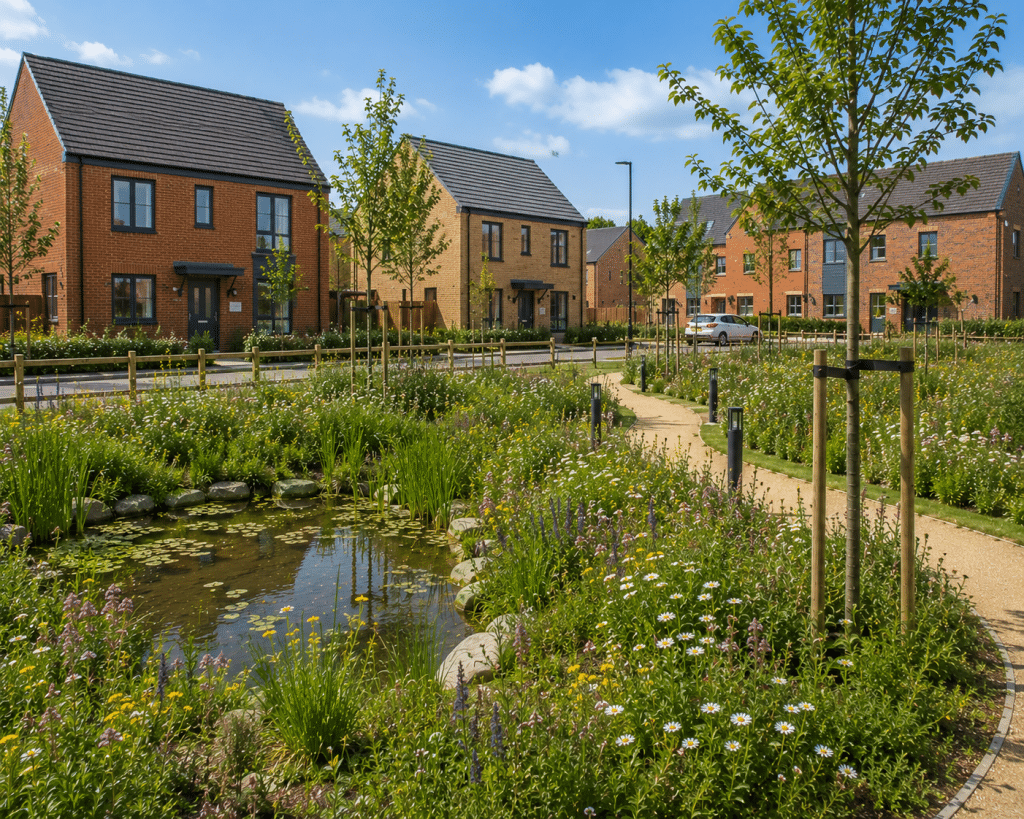
A Nottinghamshire Biodiversity Gain Plan can include:
The content and delivery strategy will depend on the development proposals, the site’s biodiversity baseline and the route being used to achieve the required gain.
The plan must also reflect the applicable statutory requirements and biodiversity gain hierarchy, including any provisions relevant to the type of development and the date of the planning application.
The BNG Assessment provides the baseline information and calculations that inform the Biodiversity Gain Plan.
The assessment establishes the site’s existing biodiversity value and models how the proposed development is expected to affect that value. The results can then inform decisions about habitat retention, enhancement, creation and other permitted routes for delivering the required gain.
The relationship between the two services can be summarised as:
Habitat assessment → Biodiversity metric → Gain strategy → Biodiversity Gain Plan
For example, a development site might contain grassland, hedgerows, mature trees or woodland edges. The assessment can help identify which habitats could be retained, which areas may offer opportunities for enhancement and where new habitats could be incorporated into the proposals.
In Nottinghamshire, local habitat priorities may also be relevant when considering suitable opportunities for nature recovery. However, the most appropriate strategy must be based on the site’s characteristics, the development’s effects and the applicable planning requirements.
Where the required gain cannot be delivered through the proposed on-site measures, other permitted options may need to be considered in accordance with the relevant statutory rules.
Although the two services are closely connected, they are not the same document.
Clear information to support project planning and decision-making.
Assessment of habitat value using the applicable statutory biodiversity metric.
Support in identifying suitable habitat measures and preparing the relevant documentation.
Advice that considers the relationship between ecological requirements and proposed development.
Assistance with understanding the next steps from initial assessment to Biodiversity Gain Plan preparation.
We discuss your development proposals, site location and current planning stage to understand the support you may need.
Where required, our ecologists assess the site’s habitats and gather the information needed to establish its biodiversity baseline.
We use the applicable statutory biodiversity metric to calculate the relevant biodiversity units and assess anticipated changes arising from the proposed development.
We consider opportunities to retain and enhance existing habitats, create new habitats and identify other suitable approaches to achieving the required biodiversity gain.
The BNG information can be incorporated into the wider development and landscape proposals, helping the project team understand the biodiversity implications of design changes.
Where required, the agreed biodiversity position, metric information and delivery strategy can be used to prepare the Biodiversity Gain Plan following planning permission.
Our approach keeps evidence proportionate, technically robust and predictable through the full planning sequence.
Contact us and we’ll confirm exactly what your site requires and support a planning-ready, proportionate route forward.
Yes. Nottinghamshire County Council adopted a Biodiversity Net Gain Supplementary Planning Document in September 2025. Its application relates to the planning functions covered by the document, including minerals and waste planning. For other developments, the relevant Local Planning Authority’s policies and guidance should also be checked.
The statutory minimum for qualifying developments is generally 10%, subject to the applicable legislation and requirements. Nottinghamshire County Council’s adopted BNG guidance reflects a wider aspiration for 20% gain where feasible, but this should not be interpreted as a universal 20% statutory requirement for every development in the county.
The Local Nature Recovery Strategy identifies existing areas of biodiversity importance and locations where habitat creation or restoration could support nature recovery. Where relevant to a development, this information can help inform habitat proposals alongside the statutory biodiversity metric and the site’s ecological assessment.
Ancient woodland and ancient or veteran trees are examples of irreplaceable habitats for BNG purposes. They require particular consideration because their biodiversity value cannot be treated as interchangeable with ordinary habitat creation or enhancement. Their presence may influence site layout, impact assessment and the wider planning process.
Yes. The statutory biodiversity metric can be used during design development to compare the anticipated biodiversity outcomes of different proposals. This can help the project team understand the implications of habitat retention, loss, enhancement and creation before the layout is finalised.
Not necessarily. A BNG Assessment focuses on habitat biodiversity value and the calculations needed to assess biodiversity change. Protected species surveys and other ecological assessments may be required separately, depending on the site’s habitats, the species potentially present and the development proposals.
Where statutory BNG applies, a BNG Assessment does not replace the Biodiversity Gain Plan. The assessment establishes the biodiversity baseline and anticipated change, while the Gain Plan sets out how the required biodiversity gain will be delivered and must be approved before development commences.
It is generally beneficial to consider BNG before the development design is finalised. Early ecological input can identify habitat constraints, help compare design options and provide more opportunity to integrate suitable biodiversity measures into the proposals.