Telephone: 0800 494 7479

Part 35 Compliant Expert Witness Report

PART 35 COMPLIANT EXPERT WITNESS REPORTS

Independent expert evidence that meets court standards, supports clear decisions, and keeps your case moving with proportionate precision — delivered nationwide by qualified specialists. 

Do you need a Part 35 Compliant Expert Witness Report?

You may need a Part 35 Compliant Expert Witness Report if a court, solicitor or insurer requires an independent professional opinion on a technical matter within our field of expertise. 

Failure to meet Part 35 standards can result in inadmissible evidence, delayed hearings, or increased legal costs — which is why early instruction keeps cases efficient and predictable. 

What is a Part 35 Compliant Expert Witness Report?

A Part 35 Compliant Report (also known as a CPR 35 Expert Witness Report) provides an independent opinion to assist the court in making decisions on technical issues outside its own expertise. 
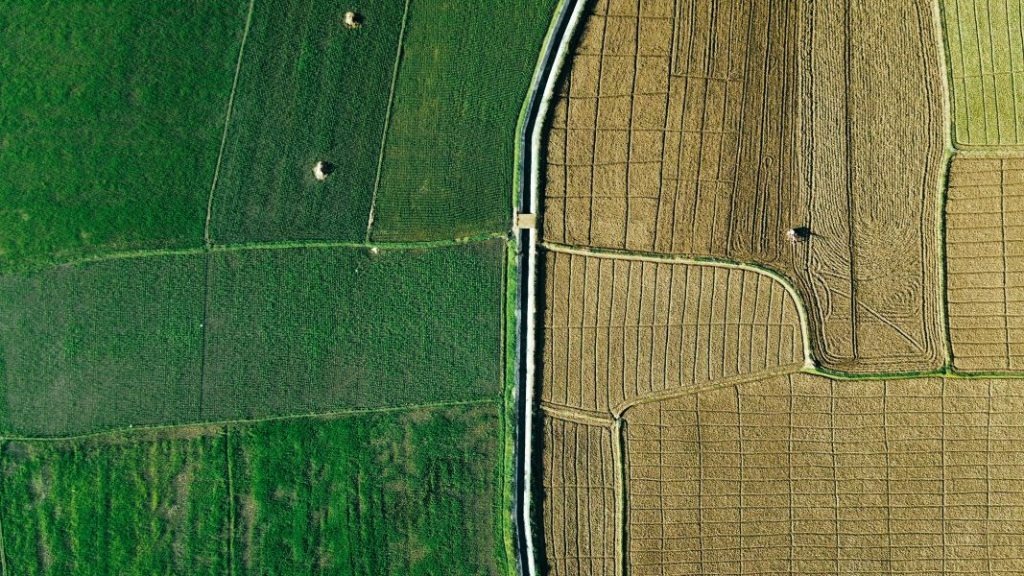
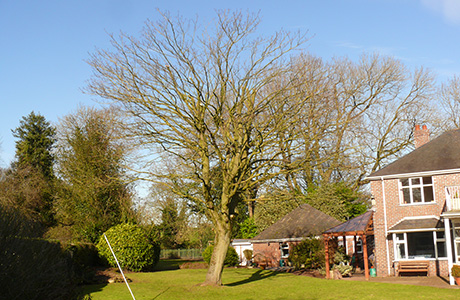
Aerial view of boundary lines which could trigger a PEA

Who uses our expert witness services? 

Early expert involvement clarifies facts, reduces costs and prevents escalation. 

Clients include:

  • Solicitors and legal firms requiring independent evidence for court 
  • Insurers and loss adjusters evaluating cause, liability and remediation 
  • Developers and contractors involved in planning or damage disputes 
  • Local authorities managing compliance or enforcement cases 
  • Private clients and property owners seeking impartial clarity in complex matters 

Send a short description of your case or issue for a clear, fast recommendation. 

What We Deliver

A structured, proportionate, legally defensible service. 

Service Purpose Outcome
Initial Instruction Review Confirm scope, relevance and compliance with Part 35. Transparent engagement and defined remit.
On-Site Inspection Collect photographic, observational and factual evidence. Independent factual baseline.
Technical Assessment & Analysis Interpret findings using accepted professional standards. Clear, balanced, evidence-led reasoning.
Part 35 Compliant Expert Report Present findings and professional opinion in court-ready format. Structured, impartial report suitable for submission.
Expert Testimony (if required) Provide oral or written evidence in proceedings. Defensible professional opinion under oath.

A structured, proportionate, legally defensible service. 

How it Works

Our process is designed to remove friction and keep decisions moving. 

Instruction & Scoping

Provide a short summary of the dispute, location and relevant documents. We confirm the correct instruction type and quote.

Inspection & Evidence Gathering

A qualified expert carries out an on-site inspection (if required), capturing photographic and factual evidence.

Reporting & Declaration

We deliver a compliant, independent Part 35 report with full declaration, methodology and conclusions.

Timing & Delivery

Each week gained here prevents procedural drift and strengthens evidential readiness. 

Inspection Availability

Year-round

Turnaround

Typically within 10 working days of inspection

Location

Nationwide coverage across England and Wales

Compliance & professional standards

Each report carries a declaration of independence, ensuring it remains impartial, accurate and defensible in any forum. 

Reports are prepared strictly in line with: 

  • Civil Procedure Rules (CPR) Part 35 
  • RICS and Expert Witness Institute (EWI) guidance 
  • Environment Act 2021 and related environmental provisions 
  • NPPF Section 15 (environmental and land-use compliance) 
  • ProHort Quality Assurance and peer review protocols 

Failure to meet Part 35 requirements can result in: 

  • inadmissible or rejected evidence 
  • delayed hearings or adjournments 
  • increased legal costs or procedural disputes 
  • weakened credibility of evidence before the court 

Early alignment with Part 35 standards ensures the court receives clear, compliant evidence from the outset — no re-issue or second-round instruction required. 

Our Approach

Each report is structured to meet the evidential standards of the Civil Procedure Rules (CPR) Part 35, the RICS and Expert Witness Institute (EWI) codes of practice, and relevant environmental legislation under the Environment Act 2021 and NPPF Section 15. 

What you receive 

  • Independent expert inspection and analysis 
  • Structured, impartial Part 35 report, prepared under CPR Part 35 and RICS / EWI codes of practice
  • Full declaration and methodology 
  • Coordination with legal teams and insurers (if required) 
  • Nationwide coverage and predictable turnaround
Moreover, reports are:
  • Written and signed by qualified experts  
  • Reviewed through Quality Assurance and peer review protocols 
  • Formatted for transparency, traceability and evidential clarity 

Evidence courts respect. 

Reasoning your legal team can rely on. 

How this supports your project

As part of our nationwide Legal Reports suite, this service supports solicitors, insurers, developers and private clients with independent expert evidence for disputes, claims and compliance. 

Your project will be supported by:

  • Decades of combined experience in horticultural, ecological and environmental evidence 
  • Reports trusted by courts, insurers and planning authorities 
  • Independence, clarity and technical confidence 
  • Seamless communication from instruction to testimony 
  • Transparent process 

Each report includes: 

  • a clear statement of the expert’s qualifications and experience 
  • factual background, methodology, and evidence summary 
  • analysis and conclusions presented in plain, unbiased language 
  • a formal declaration of independence and duty to the court  

This ensures impartial, transparent and defensible reasoning that stands up in court and supports proportionate resolution. 

Case Insight

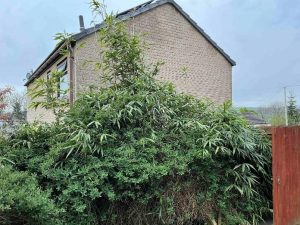
A dispute arose between neighbouring landowners over boundary damage attributed to vegetation growth. An independent Part 35 report clarified the likely cause and apportionment of responsibility. The matter was settled pre-hearing, avoiding litigation and unnecessary legal costs.

Your Next Step

With a short description of your case or issue, we can give you a clear, fast recommendation. Don’t wait. Get legal clarity today.

Phone: 0800 494 7479

Email: [email protected]

FAQ — Part 35 Compliant Expert Witness Reports

What does “Part 35 compliant” mean?

It refers to Civil Procedure Rules (CPR) Part 35, which govern how expert evidence is prepared and presented in court. A Part 35 compliant report follows strict rules on impartiality, transparency, and independence, and includes a signed declaration confirming the expert’s duty is to the court — not the instructing party.

Typically, solicitors, insurers, local authorities, or private individuals involved in litigation or formal dispute resolution. Before accepting instruction, we confirm the expert’s competence, scope, and potential conflicts of interest.

We support cases involving property damage, vegetation-related disputes, invasive species, planning enforcement, or land valuation issues where specialist technical interpretation is required.

Fully independent. Our experts are bound by CPR Part 35 to always remain impartial. Reports are written solely by ProHort specialists and reviewed internally under our Quality Assurance and peer review protocols to ensure factual accuracy and neutrality.

We request a summary of the dispute, any previous reports or correspondence, photographs, and relevant drawings or documents. This allows us to define the instruction precisely and avoid duplication of work.

How long does the process take?

Reports are typically completed within 10 working days from inspection or confirmation of instruction. Expedited cases can often be delivered sooner where evidence is complete and access is immediate.

In most cases, yes. Site inspection ensures the evidence is first-hand and defensible. Occasionally, a desktop review may be suitable if all verified data is already available.

Yes. Our experts can provide written or oral testimony as part of formal proceedings, mediation, or arbitration. Attendance is scheduled in advance to maintain case continuity.

Yes. Our format and methodology meet UK court and insurer standards, and our experts regularly prepare evidence accepted in both civil and planning proceedings.

No. Once appointed as an independent expert witness under Part 35, we cannot act as an advocate or partisan adviser in the same case. This separation preserves integrity and admissibility.

Always. A written quotation and scope confirmation are issued before work begins, detailing likely costs for inspection, reporting, and any future court attendance.
Related Services

Can Tree Roots Affect Development?

In short – yes, tree roots can affect development.

How do tree roots affect development?

Tree roots affect development by causing disturbance in the soil, which can cause the soil to become structurally unsound. Any building work or development which takes place within the influence of a tree’s roots can cause damage to the tree or can lead to the development being structurally unsound.

Landscape and Visual Impact Assessments

How can I check for tree roots prior to development?

The influence of the tree’s roots can be calculated as part of a tree survey. This is done by examining the height of the tree and the crown spread which can then be used to calculate a Root Protection Area. The examination will show where the roots are most prevalent, and most likely to cause damage to buildings.

Veteran or ancient trees may have a larger than expected Root Protection Area, given their increased age and the increased complexity of their root systems.

What’s a tree survey?

Tree Surveys are a specialised survey that assess the size, age, health and life expectancy of a tree that has a diameter of over 75mm. They then provide recommendations on the further treatment of the tree and whether it should be retained or removed from a site. As part of our tree surveys, ProHort will map the Root Protection Area of any tree, as well as providing a recommendation for protective fencing. Do you have ancient trees, on your property? We can also identify them in your survey report. If we are surveying a group of trees, we will show the root protection zone and fencing in the clearest possible way, to ensure that you have the best plans possible in order to go ahead.

When looking to proceed with any development work, it is crucial that you ensure no roots lie under the proposed site. The safety of the site, and safety of your team depend on it.

Find out more about tree surveys here.


Tree Roots Affect Development

Contact Us:

Do you require a tree survey showing the root protection area? Then contact us today on 01782 479 479 or email [email protected].

The Do’s and Don’ts of Trimming with a TPO

A TPO (Tree Preservation Order) is an order made by your local council or planning authority to protect specific trees, groups of trees or areas of woodland. The trees or areas are assessed on individual merit, so there are no set or defined criteria for assessing the trees. Here are The Do’s and Don’ts of Trimming with a TPO…

If you suspect your tree has a TPO, please do contact your council ahead of any work taking place on the tree.


A Tree With A TPO

If you do have a tree or a garden that is subject to a TPO, then you are unable to cut down the tree. Topping the tree (the removal of a large amount of growth from the top of the tree), lopping the tree (the removal of a large amount of growth from the side of the tree) or uprooting the tree. Every effort must be made by the landowner to ensure that the tree remains healthy and well looked after.

Especial care should be taken of any trees that are growing in hedgerows. These trees may appear to be part of the hedge, but should not be excessively trimmed, lopped or topped.


The tree, however, can be trimmed, if it is for the purpose of keeping the tree healthy or the trimming will have no impact on growth. For example, if a small branch was obscuring a window, you would be able to trim this back. Likewise, if a branch of the tree became diseased, you would be able to remove this branch. This is because doing so will ensure the tree’s health and public safety.


Still Unsure?

If you have any doubts about tree work taking place on TPO trees. We recommend that you contact an arboricultural specialist or tree surgeon, to complete a tree survey. This survey can then be submitted to your local planning authority. Once received the local authority will advise if any work on the tree has been authorised.

Click for further information on arboricultural impact assessments.


Contact Us Today!

To find out more about how ProHort can help you, get in touch with us by calling 01782 479 479 or email us at [email protected].

What is Ground Heave and How Can I Remedy it?

Have you wondered what is ground heave? Ground Heave can have a long-term effect on any building work taking place, make sure you know how to remedy it.

What is Ground Heave?

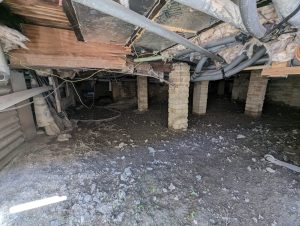
Ground heave is the upward movement of soils which can occur at any stage of the building or development process. Ground heave is usually associated with clay soil which swells when wet. This then rises upwards – the effect is almost exactly the opposite of subsidence. Despite the actual ‘heave’ often being relatively small (less than 150mm), this can have a long-term effect on any building work taking place.

How do you know it is there?

Signs of ground heave can include vertical cracking to brickwork and windows (if the cracking is diagonal, this may be subsidence). It may also be evident through door frames warping so they are ‘not square’ and paths and patios lifting from their originally laid level.

What causes Ground Heave?

Ground heave is most commonly caused by the removal of established trees. As the roots die away and no longer draw water from the soil, the soil retains more water and will swell when wet. A soil analysis (to analyse the consistency of soil) or a tree survey (to identify the root protection areas of any established trees) can stop the problem developing before it begins.

Other causes of ground heave include soil being removed during excavation, a change in the level of the water table or broken drains. Nearby building works impacting ground drainage, extreme weather conditions or trapped water in the soil freezing and causing the soil to expand can also cause ground heave.

How can Ground Heave be Stopped?

As mentioned above, potential issues with ground heave can often be identified via a soil analysis or tree survey (including an arboricultural method statement if extensive building work is taking place). To stop ground heave, the root cause first needs to be identified and remedied. Once this has been done, depending on the severity of the heave, foundation work will need to take place – reaching down to sub soils that have not been affected by the heave. This can often be costly, as well as causing delays to projects. Advice should only be taken in consultation with a surveyor, who can fully assess the site in question.


Contact Us Today!

Here at ProHort, we offer Soil Analysis and Tree Surveys. If you are having issues with Ground Heave, visit our services page to find out what we can do to help. For more information, give us a call on 01782 479 479 or get in touch.

What is a Landscape Strategy?

A landscape strategy is one of many technical documents that ProHort can produce to aid you throughout your planning application and subsequent development. It includes a detailed plan of the site, often specifying the hard and soft landscaping elements that will be included in the project. You may get multiple plans; typically one that covers the planting elements (and will identify where individual trees and plants are to be placed) and another that may highlight the areas of hard landscaping. The plans will also identify any existing features on the site that will be retained.


Landscape StrategyA clear landscape strategy will incorporate aspects of the property’s history and the surrounding area to ensure that your design seamlessly blends into the environment. You may also get additional details of the type, size and colour of the plants incorporated into the strategy, or specifications regarding compensating for any loss of biodiversity.


They can also be tailored to meet your requirements – if you have a particular plant, style of paving or additional touch that you would like incorporated then your landscape architect should be able to arrange this. Please be aware that a landscape strategy will exclude pricing of items, as it is purely a strategic document.


Please get in touch if you would like more information about our landscape strategy documents

Technical Documents and Planning Permission

At various stages throughout your development, you may be asked to supply landscape based technical documentation to your local planning office. This may either be in support of an application (i.e., not required, but it provides the council with valuable information to make an informed decision) or mandatory. Find out more about Technical Documents and Planning Permission here…

So, what is the best practice you can follow to ensure the council get exactly what they require from you?

Firstly, we would always recommend that you check with your planning officer exactly what it is that they require. Some technical documents can be similar in nature, but you will find that there are many small differences that mean that one type of report is suitable, whereas another isn’t. For example, a Stage 1 tree survey will just report on the health of the trees on site, whereas a Stage 2 tree survey will consider potential development issues. Both reports have different purposes at different stages throughout a project, so you will need to ensure that you are not wasting time and money on the wrong document.

Secondly, where possible please consider liaising with both your planning officer and your landscape architect at the same time, ensuring they receive correspondence from each other. Often documents may contain the required information, but this can be hard to find, or not as clear as the council require it. If the council can liaise directly with your landscape architect, then the information can be identified as early and easily as possible.

Contact Us To Find Out More About Technical Documents and Planning Permission

Being mindful of these two steps will help your planning application to proceed seamlessly, providing all the parties with the information they need. Every council is different, so please do ensure you are meeting your specific council’s requirements. If you have any questions about the reports that you need, feel free to contact us for further assistance!

Why not stay up to date with our Facebook Page!


Other Articles You Might Like:

https://prohort.co.uk/planning-services/

https://prohort.co.uk/biodiversity-and-planning-permission-update/

Understanding Landscaping Plans & Planning Applications

For more articles like this, click here.

How Often Should I Have My Trees Surveyed?

Do I Need My Trees Surveyed?

ProHort recommends that you have your trees surveyed at least once every two years. Most insurers and governing bodies recommend that trees are surveyed ‘regularly’ but often fail to provide more exact guidance. Claims can be made against a property on behalf of any individual.

There have been several occasions where organisations have been liable. One example of this is an incident in Birmingham where a 92-year-old woman was killed by a 60ft tree. An investigation took place and it was found that the tree had not been surveyed for over two years. Therefore, there was no relevant documentation on the overall health of the tree. This led to a fine of £150,000 being brought against the proprietor along with the possibility of civil proceedings against the landowner by the family of the deceased.

Similarly, in 2012, a woman who visited Kew Gardens was killed by a falling tree branch. However, Kew Gardens were not found to be liable. They were protected because the tree in question had been inspected 12 months before the incident. Due to the recent tree survey and completed tree risk assessment, the jury found “no identifiable cause of branch failure from this tree that caused this tragic accident.” This shows how important it is to get your trees surveyed regularly!

Surveying Damaged Trees:

We also recommend that any damaged trees are surveyed as and when you notice the damage. Most commonly, damage is caused by storms or freak weather but may also be caused by animals or insects.

Finally, we advise that a tree survey is conducted before any construction or landscaping work is carried out on your site, to see whether the proposed work may affect your trees. A survey may also need to be carried out after the work, if you suspect any trees may have been affected during the project.


Contact Us Today

If any of the above applies to you, find out more about our tree surveys on our services page, or contact us to arrange a survey!


Reference – https://www.theguardian.com/uk-news/2014/jun/16/woman-killed-falling-branch-kew-gardens-coroners-court-accidental-death

Native Newts In The UK

Native Newts in the UK are typically found in ponds and their surrounding boggy areas. They’re most commonly discovered in the spring and summer- will you be on the look out for them this season? Here’s what to seek for:


  • Great Crested Newt

This specific species is protected by law in the UK. This means you cannot own or sell them and cannot disturb them or their habitat. Great crested newts have a rough, dark brown appearance with bright orange blotches on their underside. Males of this species have crests along their back with a white tip whereas females have a yellow tip.


  • Smooth Newt

A smooth newt is also a protected species but is the most commonly found newt in the UK. Typically, smooth newts are brown in colour and can grow to a length of 10cm. Both sexes of this newt have orange under belly’s and possess small black spots.


  • Palmate Newt

The final native newt in the UK is the Palmate newt which are most frequently found in shallow ponds on acid-rich soils. The appearance of this species is immensely similar to that of the smooth newt; however, the most identifiable difference is that the spots on the Palmate do not continue under their throat. Instead, this feature comprises of either a plain pink or a yellow colour.


Contact Us Today:

If you are looking to apply for planning and are unsure if you are situated in a protected area, then you may require an ecological survey! In this case, get in contact with us today where we can discuss all of your options.

If your proposed development includes ponds or is near aquatic habitats, Great Crested Newt (GCN) surveys may be a requirement. We offer eDNA (environmental DNA) testing, a non-invasive and efficient method to detect the presence of GCNs in a waterbody. This test is often required as part of planning applications to comply with local authority and Natural England guidelines. The eDNA sampling season typically runs from mid-April to the end of June—so don’t delay if you think you might need one!

To find out more about how ProHort can help you, get in touch with us by calling 01782 479 479 or email us at [email protected]. Alternatively you can message us on Facebook.

Best Flowers to Plant this Spring?

Bring on Spring! Now that the colder and duller days of winter have surpassed and the time for warmer and brighter days has arrived, it is time to start planting. Spring is perfect time of year to bring your garden to life. Keep on reading to find out more about the best flowers to plant this Spring.

Listed below are some of the best flowers to plant in Spring:

  1. Primroses – Planting primroses will get your garden looking fantastic during the Spring as they are an early Spring bloom. Primroses appreciate the spring sun, but they don’t thrive in heat that is above 27c, so spring is the perfect time to get planting these beautiful flowers.
  2. Bleeding hearts – These Unique flowers bloom in the early Spring. Bleeding hearts grow very quickly, they are easy to care for and they love the shade.
  3. Tulips – Tulips can bloom anywhere from early to late Spring. When planting these stunning flowers, it is best to loosen the soil after digging the area about a foot deep.
  4. Sweet Peas – Spring is the perfect time for sweet peas to bloom. Planting sweet peas in well-draining soil will help them to grow at a quicker rate.
  5. Hellebores – Hellebores bloom in early spring and will last until around the end of May. Soil that is rich with organic matter will help your hellebores to grow at their best potential.
  6. Iris reticulata – Iris reticulata bloom at the start of the Spring season. These flowers thrive when in full sunshine.
  7. Sanguinaria Canadensis – Sanguinaria Canadensis grows best in nutritious, moist soil. This beautiful flower blooms early Spring and doesn’t bloom for very long so don’t miss out.
  8. Pansies – Spring is the perfect time to plant pansies as they like a cool climate. Pansies need regular watering to keep the soil moist and from drying out.
  9. Hydrangea – Most hydrangea bloom during early spring. This flower loves full sun exposure and needs to be watered around three times a week. Deeply watering them will encourage root growth.
  10. Forget me nots – Forget me nots bloom in spring and can last as long as three months. For the best growth, they need to be planted in rich and well-drained soil.

For advise on planting plans this Spring, contact us today!

We Are Social!

Why not check out our Facebook page and connect with us on Linked in?

Related Articles:

https://prohort.co.uk/spring-plant-protection/

https://prohort.co.uk/neighbour-been-killing-your-plants/

What Soil Is Best For Your Garden?

What Soil is Best for My Garden?

Knowing the health and pH of your soil is vital to achieve successful planting schemes. You can contact a horticultural and arboricultural specialist like ourselves for a soil test today.

Below is our step-by-step guide to maintaining the best soil for your garden:


STEP 1: Determine which soil test you require?

  • Agricultural or Horticultural Soil Tests.

In an agricultural or horticultural setting, a soil test is used to estimate the concentration of the nutrients in the ground. The composition and characteristics of the soil (such as its pH) and the fertility of the soil – which is the expected potential for growth.

  • Construction Related Soil Tests.

A soil test can be used on a construction site to determine whether the soil can accommodate the construction project being undertaken.

  • Waste Removal Soil Tests

Before waste soil can be taken to a landfill site, a number of tests must be carried out. These include the Waste Classification test, which identifies whether the soil is hazardous or non-hazardous. Following the completion of the Waste Classification test, the Waste Acceptance Criteria test must also be completed.

STEP 2: Perform a Soil Test

Here at ProHort, we can provide a range of soil tests that analyse the organic compounds found within the soil. These include:

  • Benzene, Toluene, Ethyl, Benzene and Xylene (BTEX.)
  • Soil Pathogens & PCN’s.
  • Polyaromatic Hydrocarbons (PAHs) Pesticides & Herbicides.
  • Polychlorinated Biphenyls (PCBs.)
  • Volatile & Semi Volatile Organic Compounds (VOCs.)
  • Total Petroleum Hydrocarbons (TPH including CWG.)

STEP 3: Determine which nutrients your soil needs

Soil requires a major source of nutrients.Once your soil test has been complete and you have received your report, you will be able to identify which nutrients your soil needs. Three of the most important nutrients for soil are Phosphorus, Nitrogen and Potassium. A healthy soil will have all the essential and balanced nutrients to support healthy tree growth.

Contact us to book in for your soil test today!