How To Encourage Wildlife To Your Garden?

Gardens are valuable spaces, not only for us but for a whole host of wildlife too! Encouraging more wildlife into your garden will help to contribute to the wellbeing of a thriving ecosystem. Birds, butterflies, and bees provide a fascinating sight. However, they also help to improve the production of your garden. Hedgehogs, toads, frogs, etc. act as a great pest control which reduces expenditure for pesticides. 

Furthermore, it has been estimated that the UK has lost 97% of its flower-rich grassland since 1930. Therefore, resulting in a reduction of habitats and nesting sites for wildlife! Opening up your garden to wildlife provides additional green space to help protect the species. 

Some Ways To Encourage Wildlife

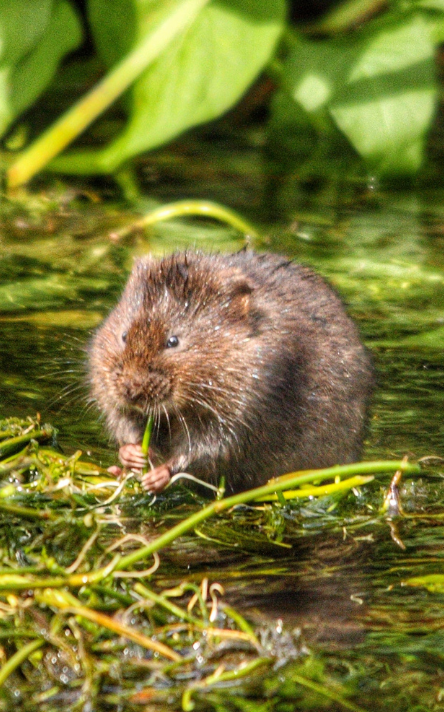
water vole

4. Ready-Made Homes

If you’re looking to attract a particular type of species. A ready-made home is a great way to attract them! Whether this be a bee hotel, hedgehog house, butterfly house, or even a general hotel for all things bugs! You can buy these products from shops, but why not have a go at making your own? Creating your own is a great way to recycle the odds and ends you have lying around at home. Items such as bricks, woods, hollow bamboo canes, sticks, leaves, etc. can all be useful resources to create the perfect home!

5. Serve Up An Extra Meal

A really easy way of attracting wildlife into your home is by putting out some nuts and seeds. Placing out some feed will entice common birds, including goldfinch, blue tits, sparrows, blackbirds, robins, etc. Putting out additional food for wildlife can be a massive help to wildlife, especially during the winter periods. You could also try leaving food out for other species. Fruit for foxes, mealworms for badgers, cat food also makes a tasty meal for hedgehogs! 

1. Plant Flowers

Flowers are a great way to provide pollen and
nectar to bees, butterflies, and other insects. Ideally, chose flowers that
provide pollen and nectar for as long as possible in a season. Crocus and
Mahonia are excellent choices for spring, alongside Asters, Sedum Spectabile, and Ivy in autumn. Additionally, these autumn flowers are particularly late to bloom – meaning they may provide food into early winter!

2. Plant Other Types of Plants

In addition to flowers, trees, shrubs, climbers, and hedges, etc are a fantastic way to provide food and shelter for wildlife. Larger plants, such as trees, support more wildlife as well as providing food in the form of flowers, fruits and seeds. Moreover, trees provide a strong area for cover and nesting sites for garden animals, insects, and other species such as birds. Smaller trees/shrubs including rowan, crab apple, elder, and blackthorn are good for blossom and berries. 

3. Water

The most effective way to add water into your garden is by installing a pond – which will add great wildlife value! You can build a pond at any time, however if you start building in autumn/late winter, it will become established quicker! If you haven’t got a big enough space in your garden, nor do you wish to dig a big hole in it, then additionally you could create a mini pond. 

Mini ponds should be created with a watertight container, whether this be a plant pot, dustbin lid, bucket, etc. If the container isn’t watertight then add some pond liner. Then add a layer of gravel and rocks. After adding these, you then want to fill your pond with rainwater – due to tap water containing chemicals! Lastly, start planting, you will only need two or three plants. 


How We Can Help

At ProHort Ltd, we have a wealth of experience in horticultural, arboricultural, ecological and landscape development. We provide landscape plansarboricultural surveysecological surveys and soil testing and analysis. We also provide a range of other reports detailed on our Services


Why not take a look at how our sister company can also help! The Oak Pot Company specialises in bespoke oak designs. All our products are handmade using high-quality hardwood. Specialising in Garden Furniture, Garden Accessories and Garden Structures. Some of the products include, bird houses/tables, wildlife picnic benches, etc.  


We Are Social!

Why not check out our Facebook page and connect with us on Linked in?

Why Should I get a Tree Survey?

Specialised tree surveys assess certain characteristics of a tree. To assess, the tree must have a diameter of over 75mm. A tree survey will provide recommendations on any treatment required by the tree. Additionally stating whether the tree requires retaining on the site. The survey will also issue recommendations on requirements for any remedial work.

A tree survey can be a requirement as part of a planning application for a development project. This is particularly the case if the development will affect the surrounding landscape and trees situated within the landscape. Carried out for insurance purposes, tree surveys can be for both commercial and domestic clients.

What Information is Revealed from a Tree Survey?

To be suitable for planning applications, tree surveys should be conducted in line with British Standard 5837-2012. This will ensure that the survey carried out will be to the highest standard. Furthermore it must comply with relevant regulations.

The British Standard BS5837 defines whether certain trees should remain on the property and which ones need removing. The survey assesses information such as:

  • Life expectancy for the trees
  • Species of the trees
  • Ages of the trees
  • Measurements
  • Health

Tree Preservation Orders (TPO)

In some areas, obliged by law, you have to have a tree survey carried out. This is because the area might have a certain species of tree that needs protecting.

Made by the local planning authority, Tree Preservation Orders (TPO) protect trees or groups of trees. Due to factors such as location, amenity value or the fact they are a rare or good specimen.

If a tree is subject to a TPO, all works are prohibited without the planning authority’s written consent. These works include removal, topping, lopping, uprooting or any wilful damage.

On occasions, a TPO has been applied to a tree that does not fit the criteria. Therefore, an argument for the removal of the tree may present itself. Any written consent to complete works on a tree may be subject to conditions.

How We Can Help

At ProHort Ltd, we have a wealth of experience in horticultural, arboricultural, ecological and landscape development. We provide landscape plansarboricultural surveysecological surveys and soil testing and analysis. We also provide a range of other reports detailed on our Services


ProHort Ltd recommends that you should carry out a tree survey at least once every two years. If any damages were to occur (for example, a tree branch falling on your car) as well as possible injured individuals, claims against property may occur.

 If you require a tree survey, then get in contact with us today to find out more information.

We Are Social!

Why not check out our Facebook page and connect with us on Linked in?

Health of Your Trees, How To Check… Dead or Dormant?

Firstly, it is important to always check the health of your trees. Brown leaves, brittle branches, failing to produce fruit and wounds in the trunk are just a few of the signs that your tree may be suffering in silence. Additionally there are more extreme issues can include but are not limited to; smell of rotten wood and fallen branches or branches that are coming away from the tree. Therefore, early intervention is key to ensuring the survival of the trees in your garden.

Ways To Check The Health of Your Trees

The way to check the health of your tree firstly is to scratch the bark on the tree. If it is showing green growth underneath, this is evidence that the tree is still alive and may just be in a dormant state. This can be a particularly useful technique in long Winters and cold Springs for checking the health of the tree/trees if they are late blooming. Alternatively, if the bark is brown and brittle, there is a high chance that the tree, or at least that part of the tree, is dead.


If your tree is dormant, one way to improve its health and growth is to apply a tree specific feed. This can help your tree to grow to its full size and to live longer.


How We Can Help!

Furthermore, if you are particularly concerned about your trees’ health and would like to have your trees assessed, ProHort Limited can provide you a tree survey. Designed to assess the general health of the trees, a tree survey is conducted by a qualified arboricultural surveyor. Upon completion of the survey, you will be provided with a detailed report stating the trees’ identity (common and Latin name), health, approximate age and estimated remaining contribution (i.e., how long the tree is likely to remain healthy). You can find out more about tree surveys on our service page!

If you would like to arrange for a feed to be applied to your tree, or for some expert advice from our arboricultural experts, why not get in contact? We look forward to hearing from you!

We Are Social!

Why not check out our Facebook page and connect with us on Linked in?

Related Articles:

For more articles, visit our news page.

Excavating Around Trees

When digging or excavating around trees there is an absolute need to be mindful of the roots as if these are damaged it can cause significant harm to the tree and even kill it. 

In an ideal world no excavation will occur in what is called the root zone of a tree. The root zone is calculated by measuring the diameter of the trunk. This is then used to calculate the area that should not be dug in as there is a high risk to causing damage to the roots of the tree. 

However, it is often necessary to dig around them and sometimes near them when building foundations or inserting utilities. So how can we help?

IMG-20230630-WA0011.jpg


What happens when you need to dig near a tree?

If you need to dig near a tree to put in a foundation or utilities, we will follow the following process:

  1. We would come out and conduct a survey of the tree and area. This allows us to look at multiple factors that will influence our recommendations and enables us to advise not only what is best for the health of the tree but also from a commercial perspective.
  2. We would then put together a detailed report and method statement; all our reports are to BS5837:2012 standard.
  3. The report would contain detailed recommendations that would normally enable the work to be carried out whilst also protecting the health of the tree and meeting the requirements of the council’s Arboriculture officer.

How close can you excavate next to a tree?

Typically, the “rootzone” area has a radius of 12x the diameter of the trunk. Outside this area you can carry out ground works unhindered. However, within this area you will require a tree survey carried out by a qualified arboriculturist and a report with recommendations along with a detailed method statement.

How do you protect tree roots during excavation?

If we need to excavate within the rootzone of a tree we can use an “air-spade”. This is the recommended way of excavating in an area that is likely to have roots. This does take significantly longer than simply digging with a digger, but it enables us to dig without damaging the roots. If there are small roots that are less than 30mm in diameter these can be carefully cut with a pruning saw or secateurs. However, any larger roots will need to be looked at on an individual basis as these may need to be excavated around. 

Can you dig around tree roots?

Yes, you can dig around roots, however this needs to be done very carefully. We would use an air-spade or soil pick. This selective excavator breaks up porous and semi-porous soils, whilst leaving non-porous objects unaffected. This is achieved by firing an airstream that is supersonic travelling at Mach 2, leaving both utilities and tree roots unaffected.

How deep do you need to dig around a tree?

It is quite possible to dig under a tree as it is rare that tree roots are deeper than 1m. However, when digging under a tree you still need to be very careful to ensure that there are no roots. By careful moling and use of cameras this can be achieved successfully especially when digging at 1m or greater below the majority of trees. As with anything there is always the exception to the rule and some trees have substantial tap roots. In these cases, these need to be avoided and dug around.

Trees on construction sites:

This is where most of our work takes place and with 20+ years of experience there is not much we have not previously encountered.

We aim to be commercially minded, with the aim of supporting the architect or builder to achieve the construction of property or wall with the minimum disruption to the site, whilst keeping the cost down for the needed works to enable the build to proceed smoothly.

If you need any advice on excavating or digging around trees or through their rootzone, please do phone or email. We aim to answer all calls within three rings and emails within the hour.

We Are Social!

Why not check out our Facebook page and connect with us on Linked in?

Tree Surveys in the Peak District

We have been completing a number of tree surveys and tree health checks in the beautiful Peak District specifically near Buxton.

What do Tree Surveys in the Peak District Include?

A tree survey involves us working to the BS5837:2012 standard. This means that our surveys are compliant, and they are covered by our £5million Professional Indemnity Insurance for further peace of mind. They typically include a detailed plan identifying where the tree is located, tree measurements including canopy, trunk and root zone. They also include a plan and details on where to situate a tree protection fence to ensure the protection of the roots.

These tree surveys are often used in planning applications as the council often request them when an extension or new build is planned to take place. Their objective to make sure that no damage will occur to the tree canopy or its root zone. As such we can advise on different methods to achieve the desired build whilst protecting the tree(s) and appeasing the Arboricultural Officer with regards planning constraints.

What is a Tree Condition Survey?

Tree condition surveys are based on a standard tree survey; however, they are bias toward the health of the tree and identifying any potential issues. This is done with the objective to firstly make sure the tree is safe and secondly to ensure the ongoing health of the tree. Tree condition surveys are particularly useful if the tree overhangs a pedestrian walkway or a playground as the Health and Safety executive can, and has, taken a number of people to court when a branch has come off a tree and injured a person.

How much should Tree Surveys in the Peak District cost?

The price varies but typically the price will be between £500 and £250. However, this will increase depending on the number of trees, accessibility, and what type of survey you require. For example, many people will need an Arboricultural Impact Assessment as well as the initial tree survey and this can add to the price. For a detailed quote please do ring our Head office on 01782 479479


For tree surveys and tree condition surveys, especially in the Peak District, please do get in touch by phone on 01782 479479 or email: [email protected] and we will be happy to help with any of your questions!


We Are Social!

Why not check out our Facebook page and connect with us on Linked in?

Ecologically Valuable Trees

Ecologically valuable trees contribute significantly to the aesthetics and value of the landscape. They can also contribute positively to surrounding wildlife and environment.


Here are some of our favourite ecologically valuable trees:

Oak:

Oak forests support more life than any other native forest, they host hundreds of insects and supply many birds and mammals with an important food source. In Autumn, their leaves break down and form a rich mould beneath the tree, supporting fungi and invertebrates. Crevices in the bark make perfect nesting spots for birds such as the pied flycatcher and marsh tit. Oak trees are also home to bats which roost in old woodpecker holes or underneath loose bark.

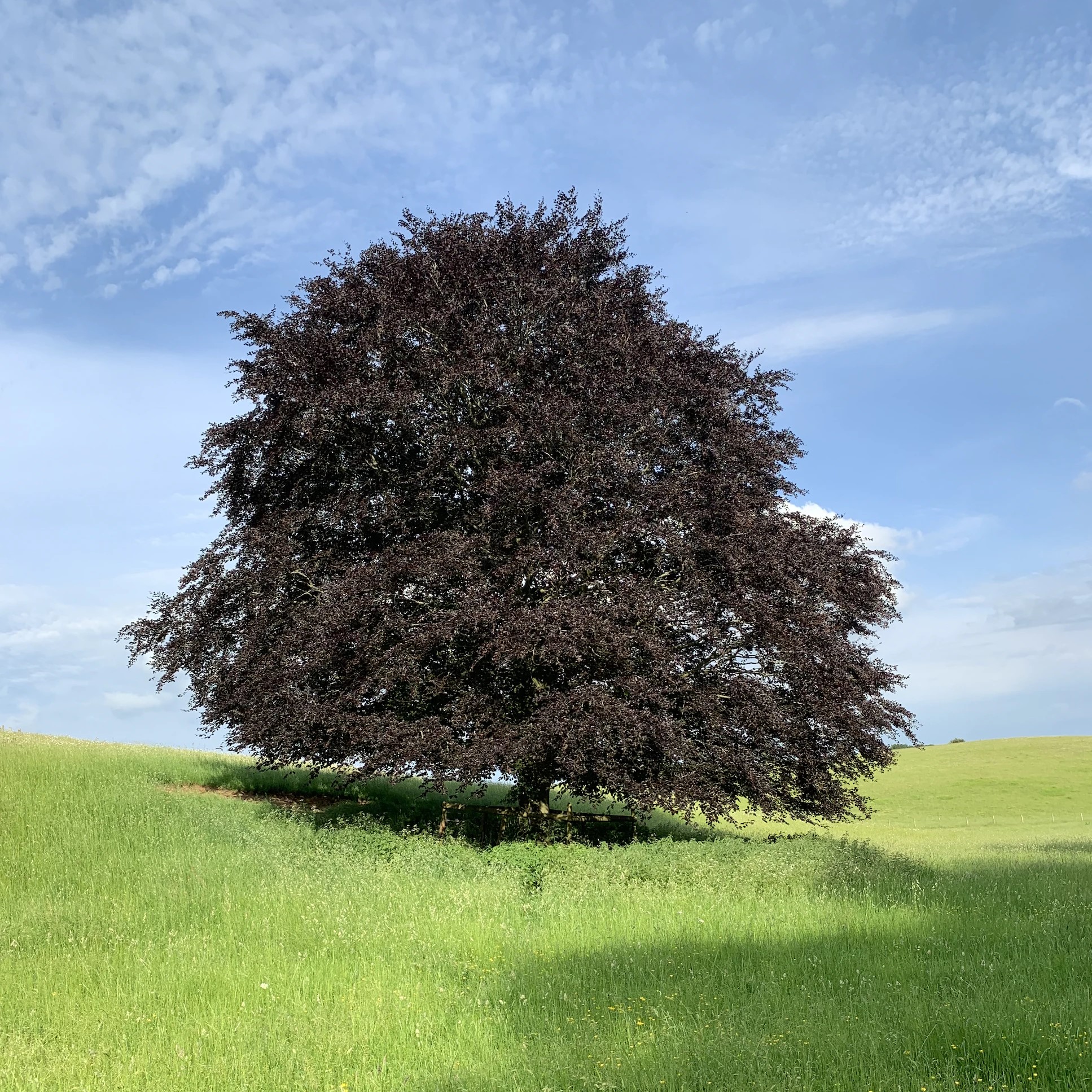
Copper Beech:

Copper (Purple) Beech are cultivated from common beech trees. They can grow to heights of more than 40m. Their bark is smooth, thin and grey, often with slight horizontal etchings. Their twigs are slender and resemble a zig-zag shape. In fact, their name comes from their copper-coloured leaf buds, they are torpedo-shaped and grow up to 2cm long with a distinctive criss-cross pattern.

Hazel:

Hazel is monoecious, meaning both male and female flowers are found on the same tree. However, they do not self-pollinate; Hazel flowers must be pollinated by pollen from other hazel trees. The yellow male catkins appear before the leaves and hang in clusters from mid-February. The female flowers are tiny and bud-like with red styles; once pollinated, they develop into oval fruits that mature into a nut with a woody shell.

Yew:

The common Yew (Taxus Baccata), is one of the longest-lived native species in Europe. However, unlike many conifers, it does not bear its seeds in a cone. Instead, each seed is enclosed in a red, fleshy, berry-like structure known as an aril which is open at the tip. This berry is eaten by birds and small mammals and the leaves are eaten by caterpillars of the satin beauty moth.

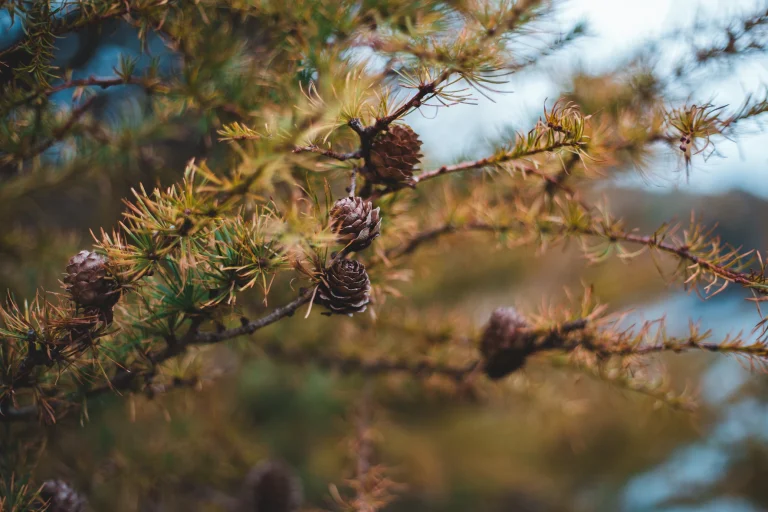
Larch:

This fast-growing tree is also a favourite of squirrels, birds and moths. The European Larch (Larix Decidua) was introduced over 400 years ago. Therefore, it was one of the first trees brought to the UK in the 17th century for its timber. It has pale creamy-brown sapwood and red-brown heartwood that is hard and rot-resistant. Mature Larch trees can grow to 30m and live for 250 years. It is fast-growing tree that is cone-shaped when young and becomes broader with age.

Sycamore:

The Sycamore’s winged seeds are often known as ‘helicopters’ and are used in flying competitions by children on the playground. These broadleaf trees can live for 400 years and grow to 35m. The bark is dark pink-grey and smooth when young, but as the tree matures, it becomes cracked and develops small plates. Sycamores are a great source of food and shelter for wildlife. They are particularly loved by aphids and, therefore, a variety of their predators, such as ladybirds and hoverflies. Caterpillars eat the leaves, and the flowers provide a good source of pollen and nectar for bees and other insects, and birds and small mammals eat the seeds.

Silver Birch:

Silver Birch is a common medium-sized deciduous tree with silver-white bark, making it striking. They can reach up to 30m in height, forming a light canopy with elegant, drooping branches. The white bark sheds tissue-paper-like layers and becomes black and rugged at the base. As the trees age and mature, the bark develops dark diamond-shaped fissures.

Contact Us for mor Information on Ecologically Valuable Trees:

ProHort’s arboricultural team can provide you with detailed tree or ecological surveys. You can find out more about the services we offer here.

Why not check out our Facebook page and connect with us on Linked in?

BACK

What do we Look for When Surveying Trees?

Surveying Trees

Case Study: 

This tree survey was carried out in Stoke-On-Trent. We surveyed a number of trees on this property, one in particular was a lime tree. It was approximately 60-70 years old and was really nice, good healthy tree, aside from a little bit of dead, however that is quite common in limes. One of the types of things that people ask us is what do you look at when you’re surveying a tree?


Firstly, we survey to British standards, therefore all of our reports are covered by our £5,000,000 professional indemnity insurance. The report itself covers things like the diameter of the trunk, age of the tree, the spread of the canopy etc… However, we also look at other things such the root system. In this case the roots could easily extend towards the house, as part of the survey we plot, what we expect to be the root zone of the tree to be. This gives the client valuable information, enabling them to see if the tree is likely to have any effect on the foundations and the structure of their property. 


If you need a tree survey not only to identify the tree, but from a health and safety point of view or to see if it’s going to have any effect on your house. Then please do get in touch.

Surveying Trees

We Are Social!

Why not check out our Facebook page and connect with us on Linked in?

Has your neighbour been killing your plants?

Surveying Trees

Case Study: 

Our client in Stoke-On-Trent believed their gardener had spilled or sprayed something onto the grass. When we arrived at the property, there was a dog. In some cases the high levels of ammonia in the dogs urine can cause the die back of the lawn. However, on further inspection, that was not the case. 

As seen on the video the damage to the grass either side of the path is quite bad. It looks as if there has been a glyphosate spillage, indicating the gardener may of had a bit of an accident with a knapsack sprayer when they were spraying the path for weeds.

We will be taking some blades of grass and soil samples for testing. The test will tell us if there are any additional chemicals in the soil. If you’ve got a problem where maybe you are worried for example your neighbour has sprayed something, because we get a lot of these now where neighbours spray people’s plants and trees and hedges for all sorts of reasons. But if you have those kinds of issues then we can come and have a look at that and give you our expert opinion. Jason Harker, ProHort.

Surveying Trees

We Are Social!

Why not check out our Facebook page and connect with us on Linked in?

Related Articles:

https://prohort.co.uk/spring-plant-protection/

Best Flowers to Plant this Spring?

Ecology Survey

What is an Ecology Survey?

An ecology survey is a study of the plants and animals in a specific area. This includes their interactions with each other and their habitat. An ecology survey is carried out by qualified professionals, such as ourselves, to create an inventory of the living organisms and ecological features in a particular area. The purpose of an ecology survey is to understand the dynamics of the ecosystem and to identify any potential impacts, risks or constraints of a development on the landscape and species living within it. This is to assist developers and the local planning authority in establishing what the next steps are to mitigate the impact on the environment.

What type of Ecology Survey do I need?

There are a range of surveys available, each is suited to a different scenario. They assess the impact that a development project may have on the surrounding environment and go into varying depths of detail depending upon the type of survey that you have.

Ecology surveys and assessments that ProHort Ltd can provide include but are not exclusive to the following:

  • Preliminary Ecological Assessment (previously called the Phase 1 Habitat).
  • Phase 1 Ecology Survey.
  • Phase 1 Extended Survey including Protected Species – Bats, Birds and Mammals.
  • NVC Vegetation Surveys (National Vegetation Classification)
  • UK Habitat Classification.
  • Habitat Regulation Assessments.
  • Ecology Mitigation Plans.
  • Biodiversity Net Gain Assessments including DEFRA.

ecology survey hedgehog

How do I book my Ecology Survey?

Firstly, contact ProHort, we can provide you with a written quote for the survey or assessment you require. Upon the confirmation that you would like to proceed, our specialist ecology consultant will visit the site, as required, to carry out the survey or assessment.

Once the survey has been completed, the consultant will put together your documentation. This will clearly show the results from the survey. This documentation will be sent in the form of a PDF or a physical copy of the report, if required.


Contact Us Today!

To find out more about how ProHort Ltd can help you, get in touch with us by calling 01782 479 479 or email us at [email protected].

Bat Surveys – What They Are & Why You Need Them

Bats – The Facts:

There are 18 species of bat that live and breed in the UK, and each of these species if fully protected by law. This means that anybody that is completing development on land or a property that houses bats will need to acquire a European Protected Species Licence. Without this licence you are liable to prosecution if you kill, capture, harm or disperse the bats.

Bats can be found in a range of different places depending upon the species of bat. These can include trees, buildings, mines, caves and other structures. Again, depending upon the species, they can either be found in easily identifiable locations, such as the apex of a roof, or can be more difficult to locate due to roosting in cracks and crevices. Most species of bats roost in groups, and therefore anything that impacts the land or property they are roosting in can affect the entire colony.

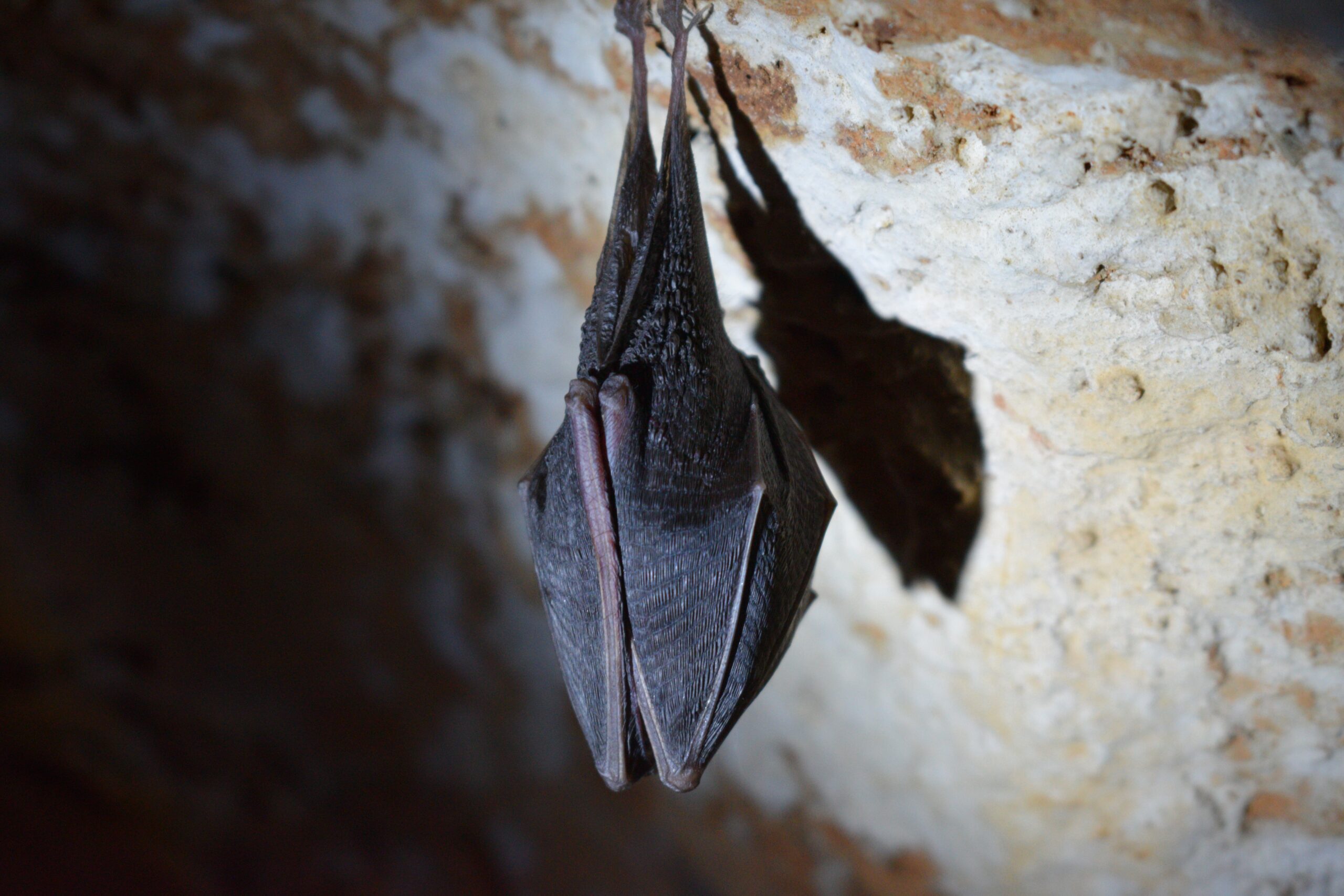
Between November and February, bats go into hibernation to conserve energy, due to the reduction in the number of insects during these months. Bats are therefore very vulnerable to disturbance at this time of year.

In addition to the roosts, bats also choose a foraging habitat, which is where they find food resources, and routes they use to travel between the roost and the foraging habitat. The distance of the routes varies depending upon the species of bat, with the range varying from 1km to 22km. The routes to the foraging habitats tend to follow linear features, such as hedgerows. Therefore, it is important that any gaps or lighting is minimized within these routes to avoid disrupting any commuting bats.

bat surveys uk

What Are Bat Surveys?

Bat surveys are often requested by the local planning authority and are designed to determine whether bats are present or not on a development site. Although there are a number of different types of bat survey, the two most common are:


An Initial Assessment (Phase One Survey):

Also called a Bat Roost Potential Assessment or a Preliminary Roost Assessment, this survey is used to identify and collect physical evidence of bat activity. If no evidence is found, then the ecologist will make an assessment based on any roosting features that present high potential. The Initial Assessment can be conducted throughout the year.


A Nocturnal/Bat Activity Survey:

This survey is also commonly called a Bat Emergence and Re-Entry Survey and can be conducted once it has been confirmed that bats are occupying the site. The survey is designed to identify the types of bat roosting in the area, the size of the population and the entry and exit points of the bats. Conducted outside of daylight hours, this survey usually involves two or more surveyors and can only be undertaken between May and September, due to these months being outside of the bat hibernation period.

Contact Us Today!

ProHort Ltd can provide you with the bat survey that you need to help you satisfy planning conditions and move forward with your development plans. For more information, give us a call on 01782 479 479 or get in touch.