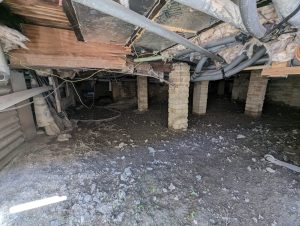
Unsure whether bats could delay your planning application in Essex?
Our expert-led PRAs provide early clarity on constraints and protect your programme from avoidable setbacks.
Calls answered in 2 rings, emails replied to within the hour.
Clear guidance before you commit.
Working in partnership with clients to ensure planning approval first time
Industry Leading Standard
We stay with you from first call through to submission.
If you’re a homeowner, a PRA is typically required where loft conversions, roof replacements, barn conversions or structural alterations affect buildings with any potential bat roost features. Essex councils will usually seek confirmation that bats are not using the structure before works proceed.
For developers, PRAs are required where existing buildings, trees or structures form part of a planning submission and planners need early, defensible evidence of bat risk before determining whether further surveys are necessary. This commonly affects housing schemes, conversions, infrastructure upgrades and regeneration sites.
Early confirmation at PRA stage prevents seasonal bottlenecks, redesign and unexpected licensing risk.
Across Essex, Preliminary Roost Assessments are most frequently requested where development interacts with:
Historic residential and commercial buildings in towns such as Chelmsford, Colchester, and Southend-on-Sea, where lofts, ridge tiles, and cavity walls provide potential bat access
Agricultural buildings and farmsteads in rural areas of Braintree, Tendring, and Maldon, particularly older barns and redundant outbuildings
Brownfield and regeneration sites in Harlow, Basildon, and Clacton-on-Sea, where older structures are incorporated into redevelopment layouts
Linear and natural habitats including the River Chelmer, Blackwater, and Crouch, woodland patches, and hedgerow networks that intersect urban and rural development zones
PRA requirements are routinely tested at validation wherever bat roost potential exists.
Our Bat Dusk Emergence Survey services cover the whole of Essex, from urban centres to rural landscapes.
Essex planning authorities require PRAs wherever buildings, trees or structures present any credible roost potential to ensure compliance with the Wildlife & Countryside Act 1981, the Conservation of Habitats and Species Regulations 2017, and national planning policy. Without a PRA, planners cannot lawfully determine whether emergence surveys or licensing will be required. Where early evidence is missing, applications commonly face validation blocks, additional ecological conditions or forced seasonal delay.
If an Essex project involves demolition, conversion or structural alteration, PRA evidence should be confirmed before the application reaches validation.
Our Preliminary Roost Assessments in Essex provide fully compliant reports accepted by local planning authorities. It prevents avoidable emergence delays, stabilises planning submissions and ensures that any further survey requirements are proportionate and justified.
Where bat scoping is required to unlock planning in Essex, a PRA provides:
a legally defensible preliminary roost assessment report
confirmed classification of roost potential
identification of whether emergence surveys are required
early determination of licensing likelihood
documentation structured for Staffordshire LPA review
The outcome is certainty, not escalation.
Proposed works, construction sequence and planning feedback are reviewed to define PRA scope.
Inspection of buildings, structures or trees for roost features and bat evidence in line with lawful survey guidance.
Roost potential classification and planning implications interpreted against LPA validation requirements.
Evidence is reported for planning submissions and coordinated with Bat Emergence Surveys or PEAs where required.
Need to confirm whether a Essex property or development requires a Preliminary Roost Assessment?
Submit the site details and confirmation is provided before your application reaches validation.
A Preliminary Roost Assessment is a daytime bat survey undertaken by a qualified ecologist to determine whether a building has potential to support roosting bats. It is commonly required to support planning applications involving roof alteration, demolition or conversion.
Often yes. Coastal and estuarine areas support high levels of bat activity, and buildings within these landscapes frequently require assessment where structural works are proposed.
Planning guidance for Chelmsford City Council can be accessed at:
https://www.chelmsford.gov.uk/planning-and-building-control/
In many cases, yes. Agricultural buildings often contain roof voids and crevices suitable for bats and usually require a Preliminary Roost Assessment before planning approval.
It can be. Executive or detached homes with pitched roofs and loft spaces may require assessment where gable ends, dormers or roof structures are altered.
Yes. Green Belt designation does not remove protected species obligations. Structural works to buildings in these areas often require ecological review.
Yes. Detached garages, workshops and ancillary buildings are inspected where demolition or alteration is proposed.
Yes. A PRA is a daytime inspection and can be undertaken year round. If moderate or high roost potential is identified, further surveys may be seasonally restricted.
If evidence of bat activity is recorded, dusk emergence or dawn re entry surveys may be recommended before works proceed.
Carrying out the survey early reduces delay risk. Submitting a compliant report with the initial planning application helps avoid additional ecological conditions later.
ProHort provides professional Preliminary Roost Assessments across Essex for homeowners and developers. Our reports are proportionate, clearly structured and aligned with local planning expectations to support efficient project progression.