
Developing or submitting a planning application in Long Eaton and require Biodiversity Net Gain?
BNG is now a mandatory requirement – we specialise in providing compliant reports to achieve planning consent.
Calls answered in 2 rings, emails replied to within the hour.
Clear guidance before you commit.
Working in partnership with clients to ensure planning approval first time
Industry Leading Standard
We stay with you from first call through to submission.
Biodiversity Net Gain is now a mandatory part of the planning system for most developments in Long Eaton. The principle is straightforward: a project must demonstrate that the site will deliver an overall improvement in biodiversity compared with its starting condition. Planning authorities will not validate many applications without clear and correctly presented BNG evidence, and missing information often leads to further delays later in the process.
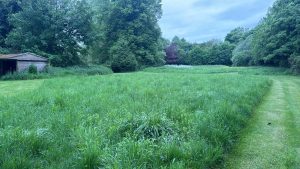
Planning officers in Long Eaton often request BNG evidence where development interacts with local wetland-edge systems and linear habitat corridors. Typical examples include:
Riparian zones and wetland margins associated with the River Trent, Erewash Canal and the Trent Valley floodplain
Grassland, scrub and unmanaged edges along drainage channels and former industrial boundaries
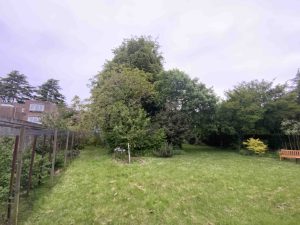
Tree belts and hedgerows that form wildlife corridors between the town’s urban fabric and open land to the south and east
Rail-adjacent and canal-side land parcels where unmanaged vegetation supports invertebrates, birds and amphibians
Disused or partially active brownfield plots that have developed heterogeneous early-successional habitat
These features often hold higher biodiversity value than initially assumed, so early habitat mapping ensures accurate metric scoring and reduces the risk of late-stage redesign.
We support projects across Long Eaton, covering all neighbourhoods including the town centre, Sawley, Wilsthorpe, Sandiacre, Breaston, Fields Farm, Toton, Chilwell Green, and the wider surrounding areas within the Erewash local authority boundary.
Councils in Long Eaton look for BNG information at an early stage so they can be confident that your scheme will achieve the required ten percent increase in biodiversity before the layout is finalised. To satisfy this, they need a verified baseline, a completed Metric that shows the change in biodiversity units, and a clear approach for how the gain will be delivered and secured. These steps follow the expectations of NPPF Section 15 and ensure your BNG position is robust during planning.
Having the baseline confirmed early removes the risk of later reclassification and helps protect your programme from avoidable delays.
We produce planning-ready BNG Assessments aligned to Long Eaton’s policy expectations.
For developments in Long Eaton, our BNG assessments provide the core information planning officers expect. Each assessment includes:
• a verified UKHab baseline
• a clearly justified Metric
• a practical uplift strategy suited to the site
• planning ready reporting for validation
• optional long term management and gain plan material
This structure supports Long Eaton’s Council’s requirements and offers a proportionate route to demonstrating BNG across a wide range of development types.
Year-round, with optimal survey seasons
Completed once habitat data is verified.
Aligned with design progression and layout refinement.
Only if needed. PEA, EIA, and Protected Species surveys
Contact us, and we’ll confirm exactly what your Long Eaton site requires. We provide a planning-ready, proportionate route forward.
Erewash Borough Council generally requires BNG information for developments that may alter habitats, watercourses or green-infrastructure features. The Local Validation List normally expects a baseline habitat map, metric calculations and clear evidence of deliverable uplift.
Riparian and canal adjacent development often receives more detailed review due to the importance of the Erewash Canal and Trent Valley corridor for species movement and wetland-edge habitat.
Well-planned schemes can often achieve net gain entirely within the red-line boundary by retaining key vegetation blocks and adding structured native planting
Developments near the floodplain typically need robust ecological baselines reflecting wetland-edge habitats, connectivity routes and potential seasonal species usage.
All drainage channels, wet margins and informal ditches should be mapped and assigned the correct habitat type within the statutory biodiversity metric, as these features frequently carry higher unit values than assumed.
National BNG legislation, guidance notes and the statutory biodiversity metric can be found on the UK Government site: https://www.gov.uk/guidance/understanding-biodiversity-net-gain