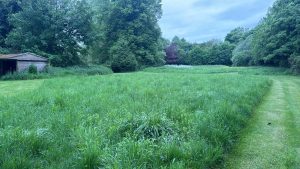
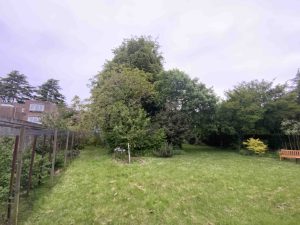
Developing or submitting a planning application in Salford and require Biodiversity Net Gain?
BNG is now a mandatory requirement – we specialise in providing compliant reports to achieve planning consent.
Calls answered in 2 rings, emails replied to within the hour.
Clear guidance before you commit.
Working in partnership with clients to ensure planning approval first time
Industry Leading Standard
We stay with you from first call through to submission.
Biodiversity Net Gain forms a required element of the planning process for most development proposals. In practice, this means a scheme must show how it will increase biodiversity relative to what is currently present on the site. Planning teams expect this information to be set out clearly, and applications are often held up or left unvalidated when BNG evidence is incomplete or unclear.
Planning officers in Salford often request BNG information where development may affect key habitat networks, such as:
• Canal and riverside corridors along the Manchester Ship Canal and River Irwell
• Regeneration sites and former industrial land that now support early stage habitat
• Urban parks, greenspace and small woodland areas used for wildlife movement
• The Irwell Valley and transport routes that act as continuous habitat links
Clear and well presented BNG evidence helps avoid validation issues and delays in Salford.
We support projects across the city of Salford, working in neighbourhoods such as Salford Quays, Ordsall, Eccles, Pendleton, Weaste, Seedley, Swinton, Walkden, Little Hulton and the wider areas within the Salford local authority boundary.
Salford City Council encourages applicants to address BNG at the outset of a project so the planning team can understand how the required uplift will be achieved. This normally involves a confirmed UKHab baseline, a completed Metric that clearly sets out the change in biodiversity units, and a realistic plan for securing and managing the proposed gains. These expectations reflect national policy under NPPF Section 15 and help ensure BNG proposals are sound when reviewed.
Establishing the baseline early in the process reduces the chance of later amendments and supports a smoother route through planning.
We produce planning-ready BNG Assessments aligned to Salford’s policy expectations.
For developments in Salford, our BNG assessments provide the essential information required by the planning team. Each assessment includes:
• a verified UKHab baseline
• a clear and defensible Metric
• a workable uplift approach suited to the site
• planning ready reporting for validation
• optional long term management and gain plan material
This structure meets Salford City Council expectations and offers a straightforward route to demonstrating BNG.
Year-round, with optimal survey seasons
Completed once habitat data is verified.
Aligned with design progression and layout refinement.
Only if needed. PEA, EIA, and Protected Species surveys
Contact us and we’ll confirm exactly what your site requires and support a planning-ready, proportionate route forward.
Most developments in Salford require BNG evidence to validate a planning application. Salford City Council expects a clear baseline and a measurable uplift.
You can review local planning guidance here:
Sites close to canals, the River Irwell, former industrial land, urban greenspace and transport corridors often require a full BNG assessment.
Early in the design process. Starting early avoids layout changes later and supports smooth validation.
It includes a UKHab baseline, a completed Metric, habitat mapping, and a plan showing how the uplift will be delivered and maintained.
Only in limited cases defined by national rules. Many small urban plots in Salford still need BNG evidence.
Off site biodiversity units within Greater Manchester may be used. Statutory credits are a last resort.