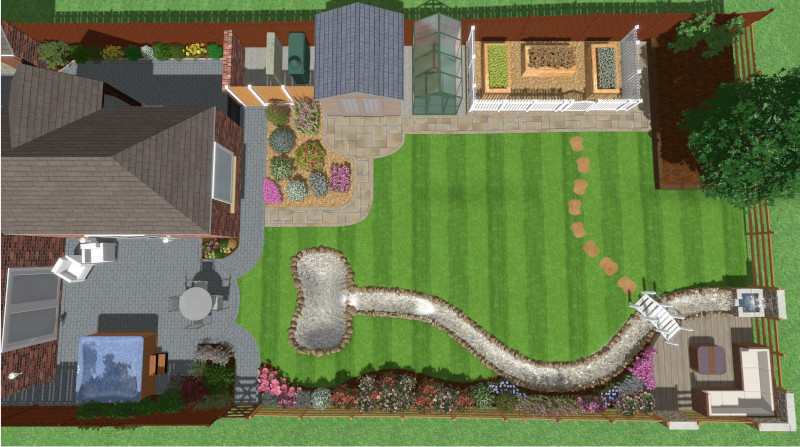


Planning-ready landscape schemes that clarify external works, strengthen applications, and keep design decisions predictable.
If your project involves external works, planting, boundaries, levels, drainage, visual impact or coordination with trees, your LPA will normally require a landscaping scheme.
It’s the document set that shows how the external environment fits together — materials, planting, levels, structure, and how the site responds to local policy. A clear scheme prevents avoidable planning queries, late-stage design changes and condition-related delays.
A landscaping scheme is the full package of drawings, planting plans, materials, levels and detailing that define how external spaces function, look and integrate with trees, drainage and built form.
In practical terms: it shows what goes where, how it fits, and how it will be managed.
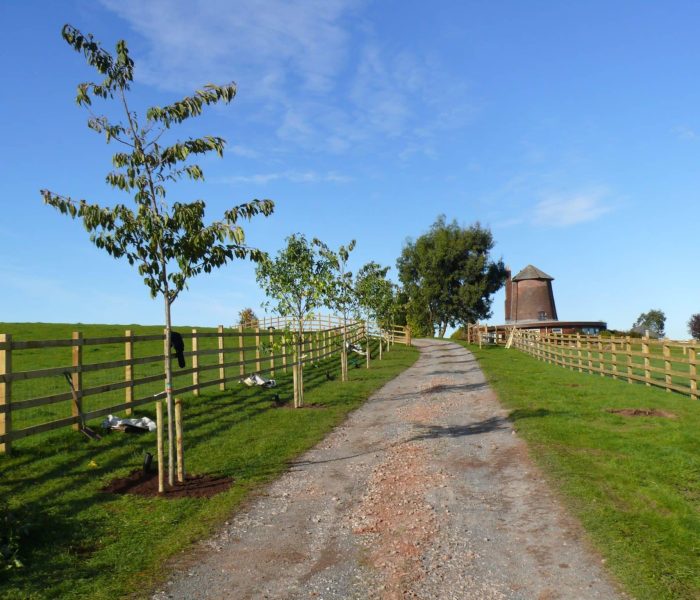
Common triggers include:
Landscape required at validation
LPA requests planting or mitigation detail
LVIA requires visual strengthening
Trees or RPAs influence layout or levels
BNG requirements need planting structure
External design is entering tender or condition-discharge stages
These triggers frequently lead to delays when landscape is introduced too late. We make the process predictable.
We keep guidance clear and planning-ready — supporting predictable project delivery.
| Service | Purpose | Outcome |
|---|---|---|
| Landscape Plans | Define hard/soft layout, materials, surfaces and boundaries | Clear external logic aligned to architectural drawings |
| Planting Plans | Species structure, habitat logic, BNG alignment | Policy-aligned, manageable and visually coherent planting |
| Landscape Strategy | Higher-level direction for phased schemes or pre-application | Early clarity that keeps design conversations predictable |
| Mitigation & Visual Logic | Structure to support LVIA / character integration | Proportionate planting and layout refinement |
| Root & Tree Integration | Resolve RPA, canopy and levels conflict | Clear, defensible detailing that avoids redesign |
| Planning-Ready Documentation | Full package aligned with LPA expectations | Smooth validation, condition discharge and programme stability |
Our process is designed to remove friction and keep decisions moving.

Context, levels, trees, drainage, materials, constraints and planning requirements.

Landscape plans, planting plans, material logic, mitigation and coordination with other disciplines.

Planning-ready files, LPA responses, condition discharge and design-team coordination.
Landscape schemes can be produced year-round, with three key timing considerations:
Many LPAs require landscape detail upfront when external works or visual character form part of the proposal.
Planting plans, mitigation and material detail often form pre-commencement or pre-occupation conditions.
Landscape must align with survey outputs — sequencing matters when RPAs, BNG uplift or visual mitigation influence design logic.
Local planning authorities rely on landscaping schemes to judge whether a development will sit comfortably within its setting and meet policy expectations.
LPAs typically expect landscaping schemes to demonstrate:
Visual Integration — how the proposal responds to local character, views and neighbouring properties.
Planting Logic & Structure — appropriate, proportionate species, spacing, canopy strategy and long-term management.
Technical Coordination — clear relationships between landscape, access, drainage, levels, boundaries and retained trees (often under BS 5837 constraints).
Mitigation & Green Infrastructure — proportionate measures for screening, biodiversity, SuDS integration or BNG relevance.
Compliance With Conditions — many approvals attach landscape conditions; strong schemes reduce discharge risk and negotiation.
LPAs request landscape schemes to confirm visual integration, proportionate planting and coherent external design aligned with:
National & local planning policy
BS 5837 — trees & development
BNG guidance
GLVIA3 principles (where visual considerations apply)
Local design codes & character assessments
SuDS / drainage requirements
When these elements are missing, planners commonly issue validation queries, request resubmissions, or pause progression until a compliant scheme is supplied. Early clarity avoids the cycle of redesign.
We design with a planning-first mindset, integrating visual clarity with the technical accuracy your wider team needs.
Our approach ensures:
Policy-aligned design logic that strengthens planning outcomes and avoids unnecessary negotiation.
Buildable, realistic solutions that reflect genuine site constraints — not theoretical drawings.
Early coordination with arboriculture, ecology, drainage and engineering to prevent conflicts later in the programme.
Clear, consistent documentation that planners can read quickly and contractors can build from confidently.
Steady project momentum through defensible detail, proportionate mitigation and a reporting format shaped for planning and condition discharge.
Our role is to bring certainty, joining together technical surveys, design requirements and planning expectations so your project progresses without avoidable delays.
When landscape needs surface late, we stabilise it.
Landscape is often reviewed after architectural layouts, resulting in:
level clashes
insufficient planting detail
unclear boundary logic
tree conflicts
missing mitigation
validation queries
We deal with this scenario routinely.
Our role:
Resolve the landscape requirements quickly, proportionately and in a format planners trust — while avoiding unnecessary redesign.
Earlier involvement simply gives the design team more room to manoeuvre, but when we join late, we focus on stabilising the programme and meeting planning expectations with minimum disruption.
A strong landscape scheme:
stabilises planning conversations
clarifies intent for contractors
reduces need for layout redesign
integrates trees and drainage early
strengthens visual and character outcomes
provides long-term management clarity
Landscape is the interface between design, planning and construction — we ensure those interfaces work.
Need a planning-ready landscape scheme?
We’ll confirm requirements, stabilise your programme and deliver clear, proportionate documentation.
Phone: 0800 494 7479
Email: [email protected]
We cover many areas across England and Wales. Click below to find out more.
A landscaping scheme is a detailed plan that sets out how land will be designed, planted, and managed as part of a development. It typically includes planting plans, hard landscape features, materials, and long term management considerations to ensure the space is functional, visually appropriate, and compliant with planning requirements.
Landscaping schemes are often required as part of a planning application or as a condition of approval set by the Local Planning Authority. They help demonstrate how the development will integrate into its surroundings and may be required to support biodiversity, visual amenity, or site usability.
A landscaping scheme usually includes:
This ensures the scheme is deliverable and suitable for planning approval.
A well designed landscaping scheme helps satisfy planning requirements by demonstrating:
Local Planning Authorities often review landscaping schemes to ensure developments do not negatively impact the local environment or character.
A landscaping scheme is typically more technical and planning focused, prepared to meet Local Planning Authority requirements. A landscape design may be broader and more conceptual, focusing on aesthetics and usability, whereas a landscaping scheme provides the detail required for approval and implementation.
Yes. Landscaping schemes increasingly need to demonstrate how biodiversity is protected or enhanced. This may include:
Landscaping schemes are usually prepared by qualified landscape architects or environmental consultants. This ensures the scheme meets planning standards, is technically accurate, and aligns with ecological and arboricultural constraints where required.
The level of detail depends on the development and planning requirements. However, most Local Planning Authorities expect:
Insufficient detail can lead to delays in planning approval or discharge of conditions.
Changes may be possible, but they usually require approval from the Local Planning Authority. Any revisions must still meet planning conditions and environmental requirements, so early accuracy in the original scheme is important to avoid delays.
Landscaping schemes are often required to discharge specific planning conditions. This means the scheme must be approved before development can proceed or before occupation. Failure to submit an acceptable scheme can delay the project timeline.
Local Planning Authorities review and approve landscaping schemes to ensure they meet local policy and environmental standards. For example, guidance from authorities such as
https://www.planningportal.co.uk/
helps outline expectations for landscaping and planning compliance.
A successful landscaping scheme:
This balance ensures both approval and long term performance.
Yes. Many schemes include or link to ongoing management requirements to ensure planting establishes correctly and continues to perform over time. This is particularly important where biodiversity or planning conditions are involved.
It is best to prepare a landscaping scheme as early as possible in the planning process. Early integration allows the design to influence site layout, avoid conflicts, and reduce the risk of revisions later in the project.
These connections create a unified, planning-first approach and reduce the risk of conflicting recommendations.

