

Accredited analysis for water-industry soil-reuse compliance — keeping your installation programme stable and adoption-ready.
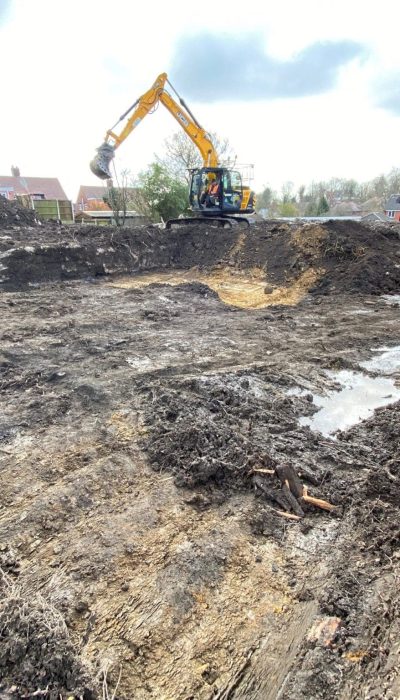
You may need WAC testing if you’re disposing of excavated soils, redevelopment spoil, or material from demolition and remediation works. WAC results confirm the correct landfill class so your project avoids cost, non-compliance, or rejected loads.
This early clarity protects you from last-minute delays and unplanned redesign.
Waste Acceptance Criteria (WAC) testing classifies soil or waste according to the leachable contaminants that could impact landfill receptors. It determines whether material must be disposed of as inert, non-hazardous, or hazardous, and ensures compliance with environmental permitting and landfill requirements.
WAC testing does not determine whether soil is contaminated for planning — it determines what type of landfill can legally accept it.
Tests typically include:
Your outputs are structured for disposal contractors, planners and environmental regulators.
Physical / Site Triggers:
Administrative / Regulatory Triggers:

A structured, proportionate, planning-ready service.
| Service | Purpose | Outcome |
|---|---|---|
| Pre-Sampling Review | Confirm required tests and disposal pathways. | Clear scope and low-risk sampling strategy. |
| Soil Sampling | Obtain representative samples with correct methodology. | Accurate data and reliable chain-of-custody. |
| Accredited Laboratory Testing | Perform full leachate analysis and classification. | Defensible WAC dataset for disposal. |
| WAC Classification Report | Assign inert / non-hazardous / hazardous class. | Structured reporting accepted by landfill operators. |
| Disposal Strategy Guidance | Outline compliant, cost-effective routes. | Predictable, controllable waste movement. |
That’s how classification stays accurate, disposal stays predictable, and your programme stays on schedule.

Send your project location, disposal volume and any previous testing. We confirm sampling needs and costs.

A qualified consultant collects representative samples and coordinates accredited laboratory analysis.

You receive a landfill-ready WAC report with clear classification and disposal guidance.
Year-round availability
within 10 working days (including lab analysis)
Expedited testing available nationwide
Each week gained here protects your adoption programme and prevents costly redesign or resubmission.
WAC testing supports compliance under:
Missing or incorrect WAC classification can result in:
Early WAC clarity keeps disposal predictable and prevents downstream disruption.
Need WAC testing? We’ll confirm your requirements and deliver clear, compliant classification — fast.
Phone: 0800 494 7479
Email: [email protected]
We cover many areas across England and Wales. Click below to find out more.
WAC stands for Waste Acceptance Criteria. It refers to a standardised set of laboratory tests used to determine how waste materials, such as soils, can be classified for disposal at landfill.
In construction, WAC testing is used to classify excavated soils or materials before they are removed from site. It ensures waste is disposed of correctly and in compliance with environmental regulations during development or remediation works.
WAC testing involves laboratory analysis of both total contaminant concentrations and leachability. Materials are tested under controlled conditions to assess how contaminants may behave when disposed of in landfill.
WAC testing is required when materials are being disposed of at landfill and cannot be classified using existing data. It is commonly needed during site clearance, remediation, or bulk earthworks.
Waste classification (WM3) determines whether a material is hazardous or non-hazardous based on its chemical composition. WAC testing goes further by assessing how that material behaves in landfill conditions, particularly its leaching potential.
WAC testing is used to determine whether materials are suitable for:
Each classification has specific acceptance criteria that must be met before disposal.
WAC testing ensures that materials are disposed of legally and safely. Without it, there is a risk of delays, rejected loads at landfill, or non-compliance with environmental regulations, all of which can impact programme and costs.
WAC testing involves collecting representative samples from site, which are then analysed in a laboratory. The testing process includes chemical analysis and leach testing to determine how contaminants may migrate under landfill conditions.
Turnaround times depend on the laboratory and scope of analysis, but results are typically provided within a standard reporting period once samples have been received. Early testing helps avoid delays during construction.
Not all soils require WAC testing. If sufficient data already exists to classify materials, additional testing may not be necessary. However, where uncertainty exists, WAC testing is required to confirm the correct disposal route.
If materials do not meet the acceptance criteria for a specific landfill type, they must be reclassified and disposed of at a more appropriate facility. In some cases, treatment or further assessment may be required.
WAC testing is governed by environmental legislation and landfill acceptance criteria to ensure safe disposal of waste materials. Guidance is typically aligned with requirements set by the Environment Agency and may vary depending on Local Planning Authority expectations.
The WAC testing process typically involves:
WAC testing assesses a range of potential contaminants, including heavy metals, hydrocarbons, sulphates, and other substances that may impact landfill acceptance or environmental risk.