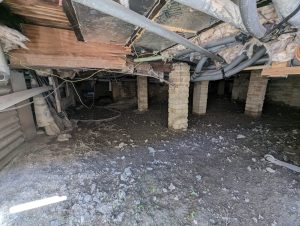

Planning-ready evidence where roost potential exists.
Clear, compliant dusk emergence surveys carried out across England & Wales — delivered with structured methodology, predictable timelines and transparent reporting.
You will usually need an emergence survey if:
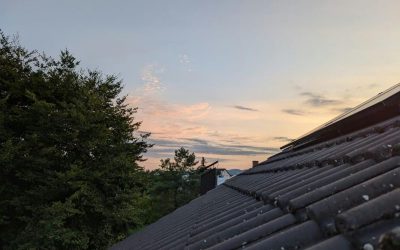
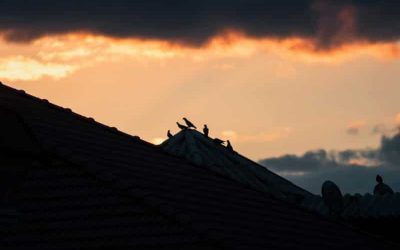
A dusk emergence survey (sometimes called a “bat emergence survey”) is a seasonal survey carried out at sunset to identify whether bats are emerging from a building, tree or structure.
It provides the definitive presence/likely absence evidence planning officers require after a Preliminary Roost Assessment (PRA) identifies bat roost potential — even at low potential.
A dusk emergence survey answers the critical question:
“Are bats using this structure as a roost?”
This determines planning risk, licensing needs, mitigation and how your project proceeds.
Before planners sign off demolition, roof works or tree works, they look for any potential roost features that could indicate bat use.
These features are often subtle and easily missed without a proper assessment; but they’re the exact cues that trigger LPA requests for emergence surveys.
These indicators almost always attract LPA scrutiny:
Before listing the triggers, we introduce the relevance. After the list, we clarify the impact.
What this means for your project:
If any apply, submitting planning without emergence evidence usually results in validation queries or a forced wait until next summer.
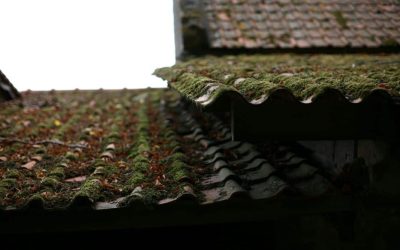
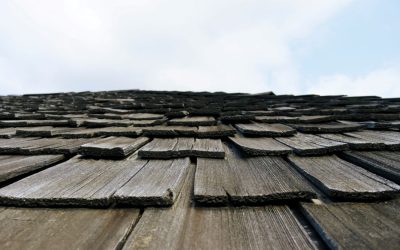
We provide a robust, planning-ready report with clear interpretation and next steps.
| Service | Purpose | Outcome |
|---|---|---|
| Dusk Emergence Survey(s) | Confirm bat presence / likely absence at a roost feature | Clear evidence for planning validation |
| Activity Level Assessment | Understand wider flight paths, foraging or commuting | Data informing design and lighting |
| Endoscope Inspection (where safe) | Direct inspection of accessible features | Rapid confirmation if possible |
| NVA / Infra Red Cameras | Improves detection of bats in low light | Increased survey accuracy |
| Anabat Recorder & Echo Meter Touch 2 Pro | Identify species by listening to calls | Accurate species identification |
| Planning-Ready Report | Structured evidence for LPAs | Clear summary, impacts, risks & next steps |
| Mitigation / Licensing Strategy | Only required if bats are confirmed | Practical, proportionate and predictable |
Every recommendation is explained in practical terms, so you know exactly what each step means for your build schedule.
Our process is designed to remove friction and keep decisions moving.

Review PRA findings and confirm survey locations.

Record emergence using detectors and visual monitoring.

Interpret activity and define proportionate next steps.
Missing the summer emergence window normally means waiting until next year.
We schedule early to secure your position and protect your programme
Year-round
Seasonal: May – August
May–August
Emergence surveys sit at the heart of UK bat legislation and planning policy.
Where roost potential exists, LPAs cannot validate or determine applications without correct seasonal evidence.
Missing or inadequate dusk emergence surveys can lead to:
Relevant legislation:
Our commitment:
We deliver PRA surveys to recognised UK standards, strict legal expectations, and planning-authority requirements.
We understand the scrutiny that comes with ecology and meet it with clarity, accuracy and planning-focused delivery.
What happens during a Dusk Emergence Survey?
A typical emergence survey includes:
We follow recognised UK protected-species survey standards and maintain meticulous data quality throughout.
Why homeowners, planners and developers choose ProHort:
Many clients, especially homeowners, are unsure what “negligible”, “low”, “moderate” or “high” means in practice.
Your report explains:
We also add summaries, so you understand exactly what the outcome means for your build, budget and schedule.
We cover many areas across England. Click below to find out more.
A dusk emergence bat survey is undertaken at sunset to confirm whether bats are roosting within a building, structure, or tree.
Ecologists observe the site as bats emerge to forage, allowing identification of species, roost location, and activity levels. This provides the evidence required by Local Planning Authorities when assessing planning applications.
Fees are determined by the level of survey effort required following the Preliminary Roost Assessment (PRA).
For most residential developments, emergence survey programmes typically range from:
£1,200 – £2,500 + VAT
This generally includes two surveyors attending site across two to three dusk survey visits during the active season.
Where higher roost potential or multiple structures are involved, additional survey visits or surveyors may be required.
Survey costs are primarily influenced by:
Survey requirements follow recognised ecological guidance and cannot be reduced without risking planning refusal.
The number of surveys depends on the level of roost suitability identified:
These surveys must be spaced appropriately across the survey season to meet planning and best practice requirements.
Additional survey visits may be required where:
The exact level of survey effort is confirmed following the Preliminary Roost Assessment.
Bats typically emerge shortly after sunset.
Surveyors begin observations at sunset and continue for approximately 1.5 to 2 hours after sunset, which is when peak bat activity usually occurs.
Each survey visit lasts approximately 2.5 to 3 hours, including set up time before sunset and observation after sunset.
Multiple visits are often required to provide robust and reliable survey data.
Bat emergence surveys are seasonally constrained and can only be undertaken between May and August, with optimal survey conditions between June and August.
Surveys outside this period are not considered valid for planning purposes.
Surveys must be undertaken in suitable weather conditions.
Heavy rain, strong winds, or low temperatures can significantly reduce bat activity and may invalidate survey results. In these cases, surveys are rescheduled to ensure reliable data is collected.
In many cases, yes.
Works such as roof replacement, loft conversions, or demolition can impact potential bat roosts. If a Preliminary Roost Assessment identifies suitability for bats, further surveys such as dusk emergence surveys may be required to support planning or lawful works.
Bat surveys are not automatically required for every project, but they are a legal requirement where bats may be affected by development.
Bats are protected under UK law, and Local Planning Authorities must ensure impacts are properly assessed before granting permission.
No. Bat surveys must be undertaken by qualified and experienced ecologists.
They must follow recognised survey methodologies to be accepted by Local Planning Authorities and to comply with wildlife legislation.
Bat emergence surveys can influence project timelines due to seasonal restrictions.
If surveys are required outside of the survey season, your application may need to be delayed or submitted with conditions attached. Early instruction is recommended to avoid delays.
If bats are confirmed, the findings will inform a mitigation strategy. This may include:
This allows development to proceed in compliance with legislation.
A planning-ready report typically includes:
This report supports planning submission and decision-making.
Bat survey requirements are guided by ecological best practice and enforced by Local Planning Authorities.
For example, guidance from authorities such as:
often requires bat surveys where development may impact protected species. Requirements vary depending on site and proposal.