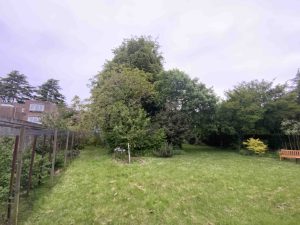

LVIA Required Before Planning in Worcestershire?
We support Worcestershire developments by providing LVIAs that assess effects on countryside views, settlement edges and heritage settings. Supplying an LVIA early helps prevent planning delays and further information requests
Calls answered in 2 rings, emails replied to within the hour.
Clear guidance before you commit.
Working in partnership with clients to ensure planning approval first time
Industry Leading Standard
We stay with you from first call through to submission.
In simple terms, you’ll need a Landscape & Visual Impact Assessment (LVIA) for your Worcestershire site if your planning application could affect the character of the landscape or the views experienced by people nearby.
An LVIA is the document that explains how your development will look, how it fits into the surrounding landscape, whether it will change key views, and what can be done to reduce visual impacts. It helps the Local Planning Authority understand the real-world effects of your proposal and decide whether it is acceptable in landscape and visual terms.
Worcestershire planning authorities frequently require LVIAs where development may be visible from sensitive landscapes, including:
Settlement edges adjoining rural farmland or river valleys
Canal-side locations along the Worcester & Birmingham Canal
Elevated sites with wider countryside views
Areas intervisible with historic buildings or parkland
Infrastructure routes where cumulative visual impacts need evaluation
LVIAs are commonly requested where design impacts are unclear.
We deliver expert Landscape and Visual Impact Assessment services across Worcestershire, supporting projects in towns, villages and rural landscapes.
In Worcestershire, an LVIA is often required where development may alter countryside views or affect heritage settings. Prepared in line with the Landscape Institute’s GLVIA3 guidance and relevant planning policy, an LVIA explains how your proposal will appear in the landscape and identifies the measures taken to minimise visual and landscape effects.
We deliver compliant, planning-ready LVIAs that meet Worcestershire policy standards and support your application with robust visual evidence.
Your Landscape Visual Impact Assessment (LVIA) is structured to meet Worcestershire’s planning requirements and typically includes:
Baseline assessment – Landscape character review, policy context and on-site survey with key viewpoints captured.
Visual outputs – Accurate photography, wireframes and ZTV mapping to show potential visibility and change.
Impact and mitigation analysis – Clear GLVIA3-aligned assessment of landscape and visual effects with proportionate mitigation.
Submission-ready report – A concise, LPA-aligned LVIA formatted for smooth planning submission.
This ensures your LVIA in Worcestershire can be submitted confidently, supporting a smoother planning process and clear decision-making.
Site is assessed to capture potential viewpoints.
Desk research of the landscape study area
Collate assessments and evaluate the key components
We respond to any LVIA queries or amendments required.
Ready to secure approval and start on site? We’ll confirm what your Worcestershire site needs and help you move forward without unnecessary delay.
Worcestershire includes rural landscapes and historic settlement patterns.
Worcestershire County Council – https://www.worcestershire.gov.uk/
Residential expansion and infrastructure schemes.
It assesses landscape and visual impacts on local character.
Yes, they contribute significantly to local character.
Yes, planting schemes are often informed by assessment.
Often, where views across open land are affected.