
Planning-ready BNG assessments for Worcestershire — clear metrics, proportionate uplift strategies and predictable progress through planning.
Calls answered in 2 rings, emails replied to within the hour.
Clear guidance before you commit.
Working in partnership with clients to ensure planning approval first time
Industry Leading Standard
We stay with you from first call through to submission.
Most developments in Worcestershire now require a mandatory 10% biodiversity net gain under the Environment Act 2021.
Local planning authorities expect clear baseline data, a defensible Metric 4.0 calculation and a proportionate uplift strategy before your application can progress.
Across Worcestershire, planners commonly look to landscape context when determining evidence needs:
river valleys and wet meadows along the Severn and Avon
brownfield and regeneration land within market towns
hedgerow-rich farmland across rural districts
woodland and pasture mosaics on settlement edges
canal networks providing linear habitat links
greenfield growth around Worcester, Redditch and Evesham
Clear early assessment of baseline value and enhancement feasibility helps reduce uncertainty at determination.
We operate across Worcestershire, supporting projects in Worcester, Redditch, Bromsgrove, Evesham and nearby villages.
Worcestershire LPAs request BNG evidence early because many developments sit close to watercourses, settlement edges or regeneration land, where small layout changes can noticeably affect habitat value and connectivity.
Officers want verified baseline habitats and clear Metric 4.0 scoring before designs progress, so uplift options can be understood without late-stage compromise. The county’s focus on canal corridors, historic field patterns and woodland-edge mosaics also means uplift feasibility needs to be established upfront.

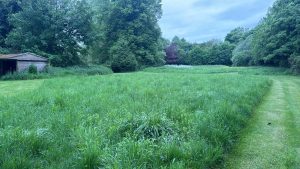
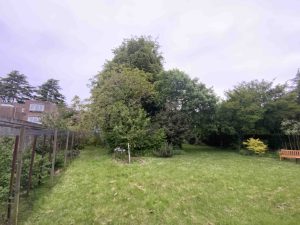
On the ground, site-level features signal when BNG evidence will be needed:
Providing this clarity early prevents validation queries, redesign instructions and delays during casework.
We produce planning-ready BNG Assessments aligned to Worcestershire’s policy expectations.
Every report includes:
verified UKHab habitat mapping
defensible condition and distinctiveness scoring
full DEFRA Metric 4.0 calculation
uplift strategy shaped around LPA priorities
integration with layout, drainage and protected species
clear, structured reporting for validation and negotiation
Year-round, with botanical elements best May–September.
Completed once habitat data is verified.
Aligned with design progression and layout refinement.
Used where additional clarity is needed around baseline or constraints.
Our approach keeps evidence proportionate, technically robust and predictable through the full planning sequence.
Contact us and we’ll confirm exactly what your site requires and support a planning-ready, proportionate route forward.
A Biodiversity Net Gain assessment establishes the ecological baseline of a site using the statutory Biodiversity Metric and models proposed development to confirm whether at least 10 percent measurable uplift can be achieved in accordance with national legislation.
Yes. Development within floodplain areas must still comply with statutory Biodiversity Net Gain requirements. Floodplain grassland, wetland and riparian habitats must be accurately classified and assessed within the Biodiversity Metric.
Sites near the River Severn may contain higher value riparian habitats. The baseline must be carefully surveyed and quantified to ensure realistic modelling of both habitat losses and enhancements.
A BNG assessment is required where development falls within the statutory scope of mandatory Biodiversity Net Gain legislation. This includes residential, commercial and mixed use proposals.
Improved grassland and arable land are mapped and assessed for condition. Although often lower distinctiveness habitats, baseline calculations must be accurate to avoid overestimating achievable uplift.
Many sites can achieve uplift through meadow creation, hedgerow strengthening, woodland planting and sustainable drainage features. However, early feasibility modelling is important to confirm compliance.
Timescales depend on site size, habitat diversity and design complexity. Larger rural sites may require more detailed mapping and modelling before final metric outputs are confirmed.
If the Biodiversity Metric identifies a shortfall in habitat units, developers may secure registered off site biodiversity units to meet statutory requirements.
Depending on site location, Biodiversity Net Gain assessments are reviewed by authorities such as Worcester City Council, Wychavon District Council, Malvern Hills District Council or Wyre Forest District Council.
Planning guidance for Malvern Hills District Council can be accessed at:
https://www.malvernhills.gov.uk/planning
ProHort delivers detailed habitat surveys and robust Biodiversity Metric modelling tailored to Worcestershire’s floodplain and rural context. We provide clear unit calculations, feasibility advice and defensible reporting to support planning applications.