Legal Reports: Plants
Planning-ready vegetation reports that protect your position and keep cases moving with clarity and control — delivered nationwide by qualified experts.
Do you need a legal report for plants?
You may need a legal vegetation report if trees, hedges or other plants are linked to property damage, encroachment, subsidence, or planning conditions.
Reports of this type are often required for land development, planning decisions and legal obligations to establish factual, independent evidence.
What is a legal report for plants?
A Legal Report: Plants provides an expert, independent assessment of vegetation-related issues such as damage, shading, encroachment, or boundary impact.
It determines the cause, extent and liability of vegetation effects and supplies CPR Part 35–compliant evidence for planning, conveyancing or legal use.

Who uses our plant reports?
- Developers managing vegetation constraints on design or planning
- Planning consultants requiring defensible submissions
- Landowners and homeowners resolving boundary disputes
- Solicitors and insurers needing independent verification
- Local authorities seeking compliant, balanced evidence
- Estate agents and surveyors during property transactions

Signs a legal report may be required:
Early expert involvement clarifies facts, reduces costs and prevents escalation. If any of the following applies to your site, you may need expert instruction.
- Vegetation causing or suspected of causing property damage or subsidence
- Root or branch encroachment across boundaries
- Disputes between neighbours or landowners over trees or hedges
- Vegetation affecting access, right-of-way or visibility
- Planning conditions citing vegetation management or preservation
- Protected species (e.g. bluebells, orchids) within the affected area
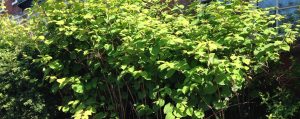
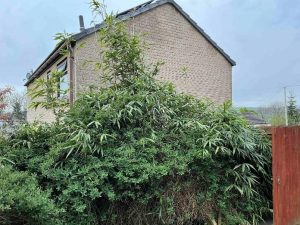
- Invasive species (e.g. Japanese Knotweed, Giant Hogweed, Bamboo) suspected on site
- Tree Preservation Orders (TPOs) or Conservation Area restrictions
Early instruction allows proportionate evidence and avoids escalation.
What We Deliver
A practical, proportionate, legally robust service.
| Service | Purpose | Outcome |
|---|---|---|
| Initial Desktop Review | Clarify report scope and evidence requirements before inspection. | Fast confirmation of need and cost. |
| On-Site Assessment | Evaluate vegetation condition, damage and contributing factors. | Independent inspection with photographic evidence. |
| Formal Legal Report (CPR Part 35 or advisory format) | Present qualified findings for legal or planning submission. | Structured, compliant report ready for disclosure. |
| Expert Witness Instruction (if required) | Provide independent opinion for litigation or mediation. | Evidence suitable for cross-examination. |
| Remediation / Management Advice | Define proportionate remedial actions. | Practical recommendations consistent with legal duties. |
That’s how evidence stays proportionate, disputes stay contained, and your programme keeps moving.
How it Works
Our process is designed to remove friction and keep decisions moving.

Scope & Confirm Instruction
Send site details, a short summary of the issue and any existing reports. We confirm the required evidence level.

Inspection & Evidence Collection
A qualified consultant conducts an on-site inspection, recording measurements, photographs and observations.

Report & Submission
We deliver a planning- or court-formatted report with clear findings, legislative context and next steps.
Timing & Delivery
Each week gained here prevents procedural drift and keeps decisions on your side of the schedule.
Inspection Availability
Year-round
Turnaround
Typically within 10 working days from site visit
Location
Nationwide coverage across England and Wales
Legal compliance & planning risk
Vegetation disputes often overlap planning and legal frameworks.
Authorities, insurers and courts rely on evidence produced by qualified experts under:
- Civil Procedure Rules (CPR) Part 35
- RICS Practice Statements and Guidance Notes
- Wildlife & Countryside Act 1981 (where protected species are involved)
- National Planning Policy Framework Section 15
- Environment Act 2021, NERC Act 2006 (S41) and local SPD requirements
- BS5837 (2012) for trees in relation to design and construction
- Quality Assurance and peer review protocols
Missing or inadequate evidence can result in:
- rejected or inadmissible submissions
- validation or legal delays
- increased legal and remediation costs
- works suspended pending verification
Early alignment with these standards ensures your authority or legal team receives clear, compliant evidence on the first submission — no second rounds required.
Our Approach
Each report is structured for transparency, traceability and proportionate reasoning.
What you receive
- Independent site inspection by a qualified expert
- Photographic and descriptive evidence
- Root-cause and liability analysis
- Recommendations proportionate to context
- Planning- or court-formatted reporting
- Rapid delivery and nationwide service
Why clients choose ProHort
- Experienced in plant ecology and legal compliance
- Trusted by planning authorities and professional consultants
- Detailed, actionable recommendations
- Fast, reliable turnaround
- Nationwide coverage
- Integration with soil and bamboo report services
Result – evidence decision-makers rely on, and reasoning both courts and planners’ trust.
How this supports your case?
As part of our nationwide Legal Reports suite, this service supports solicitors, insurers, developers and private clients with independent expert evidence for disputes, claims and compliance.
Your project will be supported by:
- Decades of combined experience in horticultural, ecological and environmental evidence
- Reports trusted by courts, insurers and planning authorities
- Independence, clarity and technical confidence
- Seamless communication
- Transparent process
This ensures impartial, transparent and defensible reasoning that stands up in court and supports proportionate resolution.
Case Insight
Your Next Step
With a short description of your case or issue, we can give you a clear, fast recommendation. Don’t wait. Get legal clarity today.
Phone: 0800 494 7479
Email: [email protected]
FAQ — Legal Reports: Plants
Do I need a legal plant report?
Yes — if vegetation may have contributed to damage, boundary encroachment or a planning enforcement issue. It provides independent evidence that insurers, solicitors and planning officers can rely on.
Are your reports court-compliant?
Yes. Reports can be formatted to CPR Part 35 standards for litigation or in an advisory format for early-stage resolution. Most cases resolve before reaching court once proportionate evidence is produced.
How quickly can the inspection and report be completed?
Typically within 10 working days from site visit or instruction confirmation. Urgent cases can be fast-tracked where evidence is time-sensitive or proceedings are active.
What information do you need to quote?
A short description of the issue, postcode or site plan, any relevant photos, and whether legal or insurance representatives are involved.
Can you liaise directly with my solicitor or insurer?
Yes. With written consent, we coordinate communication, so all parties receive consistent, factual updates and documentation.
Is the report accepted by insurers and lenders?
Yes. Reports meet professional and evidential standards used by insurers, mortgage lenders and local authorities nationwide.
Will the report include testing or sampling?
Yes. Reports meet professional and evidential standards used by insurers, mortgage lenders and local authorities nationwide.
Will the report include testing or sampling?
If soil or root conditions are relevant, testing is arranged through our Environmental & Laboratory Testing Services. This keeps the evidence chain intact and defensible.
Can multiple properties be included in one report?
Yes — joint inspections are common for boundary, encroachment or shared-asset disputes.
Does this affect planning enforcement or TPO conditions?
Yes. Reports can demonstrate compliance, support variation requests or confirm proportionality of mitigation under planning control.
What if plants involve protected or invasive species?
We integrate findings with ecological or invasive-plant specialists to ensure compliance under the Environment Act 2021 and Wildlife & Countryside Act 1981.
Are you independent?
Yes. Each consultant acts as an independent expert under the CPR Part 35 duty to the court, not to either party, ensuring impartial evidence.