
Legal and Expert Reports on Vegetation and Invasive Plants
Where vegetation, soil or invasive plants become the subject of dispute, evidence must be objective and defensible.
Allegations of encroachment, damage, contamination or invasive plant presence require structured technical assessment supported by proportionate methodology. Whether instructed by solicitors, insurers, property owners or developers, our reports are prepared with independence, defined scope and transparent reasoning.
We provide Part 35 compliant Expert Witness Reports, Japanese Knotweed identification and removal reports, legal assessments for bamboo encroachment, general vegetation liability reports and soil investigations where root or contamination issues are alleged.
Each report is structured to withstand scrutiny in negotiation, mediation or court proceedings. The result is clear, certified evidence that supports informed legal decisions and protects position.
What Legal Report Do I Need?
A Quick Guide
Report requirements vary depending on the plant involved, the nature of the allegation and whether proceedings are anticipated.
Select the report below that aligns with your instruction and evidential needs.
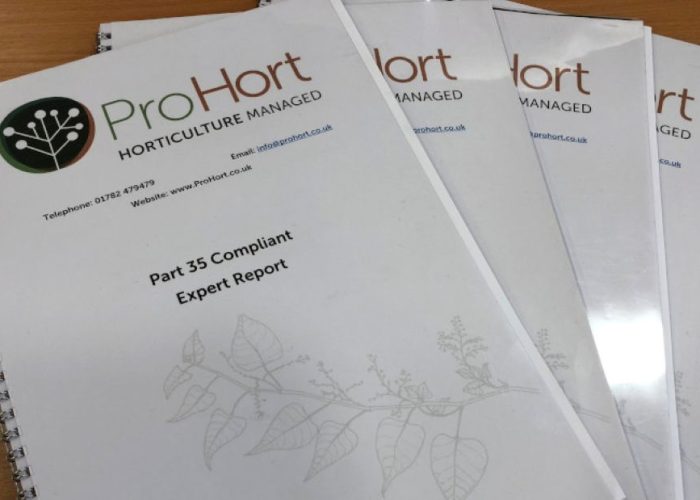
Part 35 Compliant Expert Witness Reports
When: legal proceedings demand independent expert opinion under CPR Part 35.
Purpose: provide a structured, impartial report suitable for disclosure, cross-examination and court reliance.
Timing: year-round.
Japanese Knotweed Identification and Removal Reports
When: required for property transactions, mortgage compliance or legal proceedings.
Purpose: confirm knotweed presence, extent and legal compliance under the Wildlife and Countryside Act 1981 and RICS Knotweed Guidance (2022).
Timing: year-round.


Legal Reports: Bamboo
When: bamboo encroachment or root spread causes property damage or dispute.
Purpose: confirm species, extent, spread source and remediation responsibility.
Timing: year-round.
Legal Reports: Plants (General)
When: trees, hedges or vegetation are linked to property or boundary disputes.
Purpose: provide a certified, evidence-based report identifying damage, cause and proportional remediation.
Timing: year-round.


Legal Reports: Soil
When: soil condition, contamination or movement contributes to damage or planning enforcement.
Purpose: establish soil profile, contamination, and causative role in the issue.
Timing: year-round.
Your Next Step
Provide the details of the allegation or instruction and we will confirm the appropriate evidential approach.
Legal Reports FAQs
When is a vegetation or invasive plant expert report required?
An expert report is required where vegetation, invasive plants or soil conditions are central to a boundary dispute, property transaction, insurance claim, enforcement matter or anticipated litigation.
If liability, causation, disclosure or compliance is questioned, structured technical evidence should be obtained before formal position is taken.
Early expert input reduces evidential uncertainty and strengthens legal strategy.
What makes a report Part 35 compliant?
A Part 35 expert report is prepared in accordance with the Civil Procedure Rules (CPR Part 35). It must include:
• A clear statement of instructions
• Defined methodology
• Assumptions relied upon
• Full reasoning
• A declaration confirming the expert’s overriding duty to the court
Non-compliant reports may be challenged or excluded. Procedural correctness is as important as technical accuracy.
Is Japanese Knotweed illegal on private land?
No. It is not a criminal offence simply to have Japanese Knotweed growing on private land.
However, under Section 14 of the Wildlife and Countryside Act 1981, it is an offence to plant or otherwise cause Japanese Knotweed (a Schedule 9 species) to grow in the wild. Contaminated soil containing knotweed material is classified as controlled waste under the Environmental Protection Act 1990, meaning improper disposal may result in enforcement action.
Separate from criminal law, civil liability may arise where rhizomes encroach across a boundary and interfere with neighbouring land. Claims are typically assessed under private nuisance principles.
Independent identification and root mapping establish factual extent before dispute escalates.
What evidence is needed in a Japanese Knotweed dispute?
A defensible legal assessment typically includes:
• Confirmed botanical identification
• Rhizome extent mapping
• Boundary relationship analysis
• Review of historic treatment
• Structural risk assessment (where alleged)
• Opinion on causation and spread
Evidence must be site-based and proportionate to withstand scrutiny in negotiation or court.
How are bamboo encroachment disputes assessed?
Bamboo disputes are assessed under private nuisance law. While most bamboo species are not listed under Schedule 9, liability may arise where roots or rhizomes encroach and cause measurable interference or damage.
Assessment focuses on species behaviour, root spread pattern, proximity to structures and boundary impact. Technical mapping and causation analysis are central to evidential clarity.
What legislation may apply to invasive plant disputes?
Depending on circumstances, disputes may engage:
• Wildlife and Countryside Act 1981 (Schedule 9)
• Environmental Protection Act 1990
• Anti-social Behaviour, Crime and Policing Act 2014 (Community Protection Notices)
• Private nuisance principles in civil law
Expert reports interpret how statutory and common law frameworks apply to the specific facts of the case.
What is included in a legal soil investigation report?
Legal soil reports may assess contamination status, waste classification, root influence or subsidence factors. Sampling methodology, laboratory analysis and threshold interpretation must align with recognised environmental standards.
Clear analytical reporting supports defensible conclusions where liability or regulatory compliance is contested.
Can removing invasive plants without documentation affect a legal case?
Yes. Disturbing or removing vegetation before independent inspection can compromise evidential position. Unrecorded removal may obscure rhizome extent, prevent accurate mapping and weaken causation analysis.
Early documentation preserves clarity and protects legal position.
Do I need expert evidence before sending legal correspondence?
Where liability is disputed, expert evidence should inform legal correspondence. Acting without technical assessment risks incorrect assumptions and weakened negotiation leverage.
Objective evidence strengthens structured resolution.
Who does the expert act for?
For advisory reports, the expert provides independent professional opinion to the instructing client. For Part 35 court reports, the expert’s overriding duty is to the court.
Independence, transparency and proportionality are fundamental to evidential weight.