
Landscape & Visual Impact Assessments (LVIA)
Planning-ready LVIA assessments that clarify visual effects, reduce risk and strengthen applications for complex or sensitive sites.
Do you need an LVIA?
You’re likely to need an LVIA if your proposals alter how the landscape looks, feels or functions, especially where development may be visible from public viewpoints, heritage assets or sensitive landscapes.
What is an LVIA?
An LVIA assesses how a development alters landscape character and how it changes what people see. It evaluates landscape sensitivity, visual receptors, magnitude of change and the significance of effects — alongside proportionate mitigation to shape a more acceptable scheme.
In short: it explains what changes, for whom, and how much it matters in planning terms.
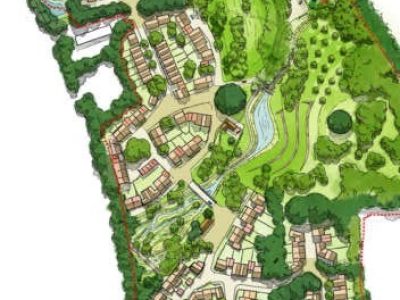
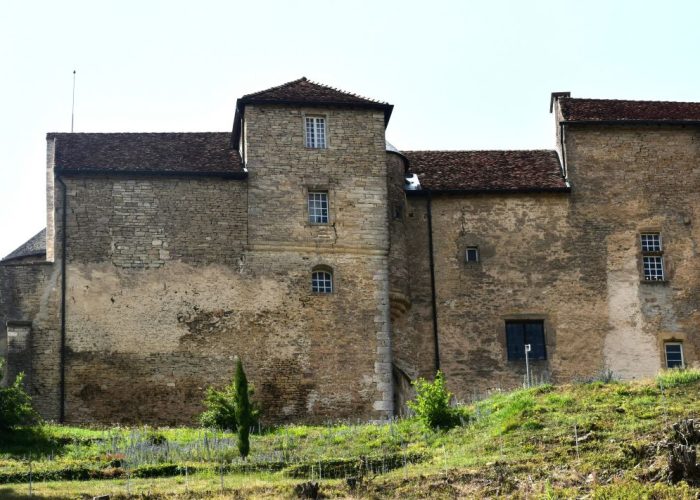
Trigger points — signs your site needs an LVIA
Common triggers include:
visible new development (housing, energy schemes, schools, commercial units)
changes to landform, levels, open space or boundary structure
works affecting rural–urban edges or valued views
infrastructure such as roads, tracks or utilities
solar, wind, mineral or forestry proposals
any proposal screened into EIA, or flagged during pre-application
If you’re unsure, share your site address — we’ll confirm the requirement within minutes.
What We Deliver
We keep guidance clear and planning-ready — supporting predictable project delivery.
| Service | Purpose | Outcome |
|---|---|---|
| LVIA Baseline Assessment | Establish landscape character, features and sensitivities | A clear, defensible baseline for planning decisions |
| Visual Impact Assessment | Evaluate changes to key views and receptors | Evidence of visual effects, significance and mitigation |
| Viewpoint Photography & Wireframes | Provide accurate visual representation | View-specific clarity supporting consultation and decision-making |
| Mitigation Strategy | Reduce or offset landscape and visual effects | Clear planting, boundary and design adjustments that planners can accept |
| LVIA Report (GLVIA3-Aligned) | Provide planning-ready documentation | A structured, defensible report for applications, committees or appeals |
| Design & Team Coordination | Align LVIA with architecture, ecology, heritage and engineering | A cohesive external works strategy that reduces redesign |
How it Works
Our process is designed to remove friction and keep decisions moving.

Baseline & Sensitivity Assessment
Landscape character study, visual receptor identification, viewpoint agreement and fieldwork.

Impact Assessment & Visualisation
Magnitude of change, significance testing, wireframes, ZTV, photoviewpoints, and proportionate mitigation logic.

Reporting & Planning Integration
Clear statement of effects, mitigation strategy, compliance references and integration with design team iterations.
Timing & Submission Windows
LVIAs can be undertaken year-round, but:
Photography / Visualisation
may require suitable weather, lighting and visibility
Viewpoint agreement
with the LPA can take 1–3 weeks depending on consultation
EIA Projects
often follow fixed programme sequencing, requiring LVIA early
Why planning officers request LVIAs
Planning officers use LVIAs to make defensible decisions where proposals might affect:
Landscape character and settlement edges
Public rights of way, villages or heritage settings
Key views, skylines or valued landscape components
Tranquillity, dark skies or rural context
Design quality, mitigation logic and proportionality
EIA and cumulative-impact requirements
Local planning authorities must comply with:
GLVIA3 (Landscape & Visual Impact Assessment guidance)
National Planning Policy Framework (NPPF) — landscape & visual amenity
Environmental Impact Assessment Regulations — where applicable
Local Landscape Character Assessments
Local design codes and settlement-edge guidance
An LVIA provides the evidence LPAs legally need to justify their decision and defend it if challenged.
Our Approach
Landscape and visual effects shape planning outcomes more than most applicants expect. Whether you’re preparing a full planning submission, responding to pre-app feedback or coordinating design with architecture, ecology, arboriculture or drainage, a clear LVIA provides the visual reasoning that planners, consultees and communities need to make informed decisions.
Our LVIA provides:
Predictable planning progress
Clear evidence for officers, consultees and committees
Proportionate mitigation (not over-escalated)
Stronger negotiation position for settlement edges
Risk reduction for design teams
Visual clarity that improves decision-maker confidence
Our role is to clarify what’s required, why, and how to deliver an evidence-led LVIA that keeps your project moving.
Clarity reduces challenge. Proportionate evidence reduces delay.
How this supports your project
Landscape and visual issues are often identified at validation or during consultation — when design teams are already deep into layout decisions. This is common, and we manage it routinely.
Instead of treating this as a setback, our role is to:
Stabilise the programme
Clarify the level of LVIA required
Provide proportionate mitigation
Support revisions only where necessary
Align landscape, ecology and arboriculture to reduce further churn
Early involvement avoids redesign — but late involvement is still manageable with a clear, proportionate plan.
How does LVIA Fit into the Wider Planning Strategy?
Landscape assessments rarely sit in isolation. LVIA interacts directly with:
Landscape design (mitigation structure, planting logic)
Arboriculture (tree retention, visibility, canopy screening)
Ecology (habitat creation, BNG-driven planting)
Planning layout (orientation, levels, boundary treatment)
A good LVIA strengthens the entire external design package and reduces negotiation with planning officers.
Case Insight
Your Next Step
Areas We Cover
We cover many areas across England and Wales. Click below to find out more.
LVIA - FAQ
When will the LPA ask for an LVIA?
When visual effects, settlement edges, height, lighting or countryside character are relevant. Requirements vary; we confirm them for your authority.
Can I submit planning without an LVIA?
Possibly — but risky. Missing LVIA evidence often causes validation delays or post-submission requests. We advise on the safest route.
Is this the same as an EIA?
No. An LVIA can stand alone or form part of an EIA. We clarify which applies.
Does landscaping reduce LVIA effects?
Yes. Planting structure, boundary treatments and visual mitigation often reduce significance.
Do you handle viewpoint agreements?
Yes — we liaise directly with the LPA to agree viewpoints before photography.
Can you meet tight deadlines?
Yes. Many LVIAs are requested late. We stabilise the programme with proportionate evidence.
Do you coordinate with architects and ecologists?
Every day. LVIA works best when aligned with layout, ecology and arboriculture.
Will I need night-time assessment?
If lighting affects dark skies, tranquillity or receptors. We identify this early.

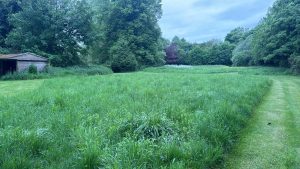
These connections create a unified, planning-first approach and reduce the risk of conflicting recommendations.