Bat Surveys – What They Are & Why You Need Them

Bats – The Facts:

There are 18 species of bat that live and breed in the UK, and each of these species if fully protected by law. This means that anybody that is completing development on land or a property that houses bats will need to acquire a European Protected Species Licence. Without this licence you are liable to prosecution if you kill, capture, harm or disperse the bats.

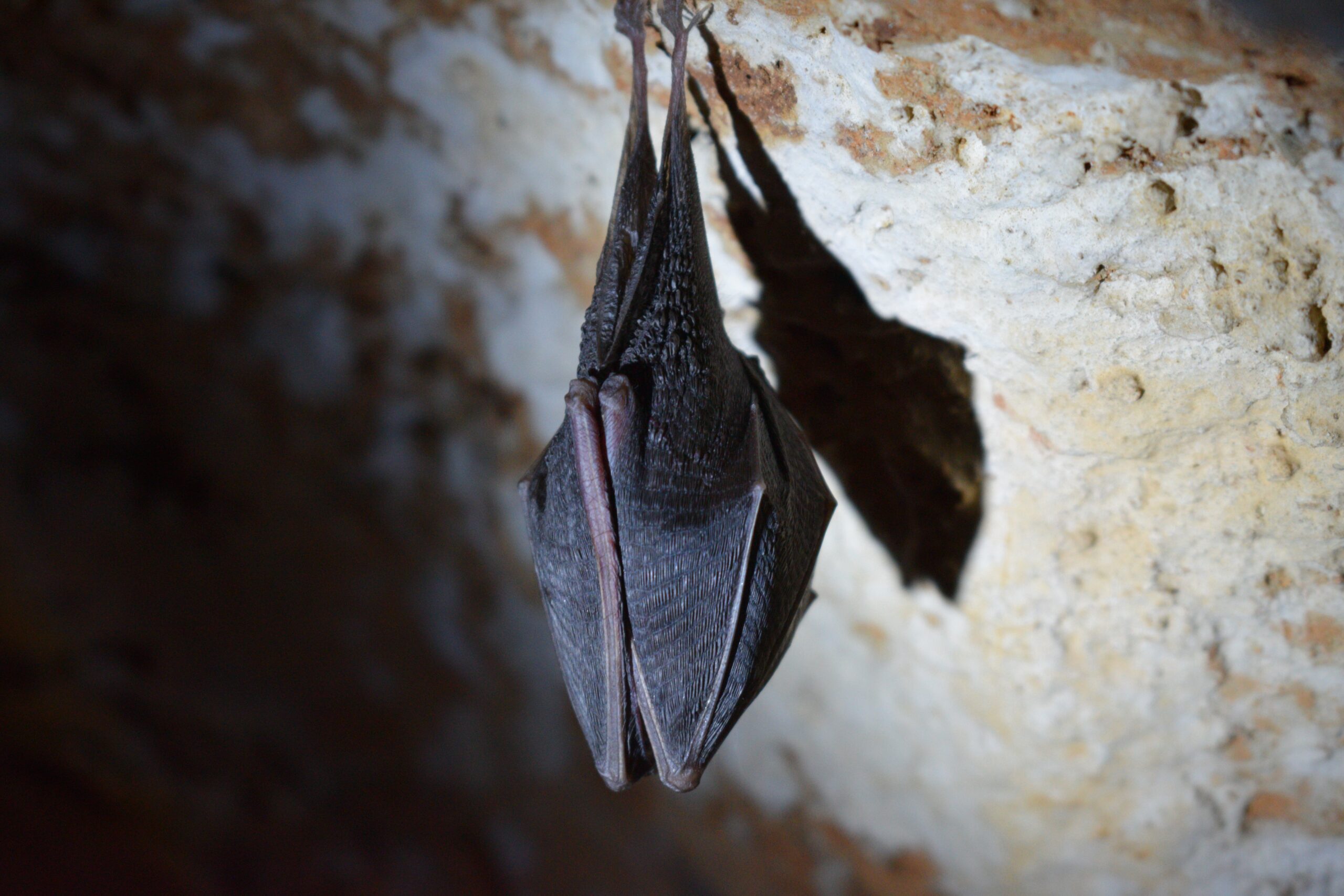
Bats can be found in a range of different places depending upon the species of bat. These can include trees, buildings, mines, caves and other structures. Again, depending upon the species, they can either be found in easily identifiable locations, such as the apex of a roof, or can be more difficult to locate due to roosting in cracks and crevices. Most species of bats roost in groups, and therefore anything that impacts the land or property they are roosting in can affect the entire colony.

Between November and February, bats go into hibernation to conserve energy, due to the reduction in the number of insects during these months. Bats are therefore very vulnerable to disturbance at this time of year.

In addition to the roosts, bats also choose a foraging habitat, which is where they find food resources, and routes they use to travel between the roost and the foraging habitat. The distance of the routes varies depending upon the species of bat, with the range varying from 1km to 22km. The routes to the foraging habitats tend to follow linear features, such as hedgerows. Therefore, it is important that any gaps or lighting is minimized within these routes to avoid disrupting any commuting bats.

bat surveys uk

What Are Bat Surveys?

Bat surveys are often requested by the local planning authority and are designed to determine whether bats are present or not on a development site. Although there are a number of different types of bat survey, the two most common are:


An Initial Assessment (Phase One Survey):

Also called a Bat Roost Potential Assessment or a Preliminary Roost Assessment, this survey is used to identify and collect physical evidence of bat activity. If no evidence is found, then the ecologist will make an assessment based on any roosting features that present high potential. The Initial Assessment can be conducted throughout the year.


A Nocturnal/Bat Activity Survey:

This survey is also commonly called a Bat Emergence and Re-Entry Survey and can be conducted once it has been confirmed that bats are occupying the site. The survey is designed to identify the types of bat roosting in the area, the size of the population and the entry and exit points of the bats. Conducted outside of daylight hours, this survey usually involves two or more surveyors and can only be undertaken between May and September, due to these months being outside of the bat hibernation period.
Contact Us Today!

ProHort Ltd can provide you with the bat survey that you need to help you satisfy planning conditions and move forward with your development plans. For more information, give us a call on 01782 479 479 or get in touch.

The Importance of a Tree Safety Survey

What is the main purpose of a Tree Safety Survey?

There are many reasons for having a tree safety survey carried out, but generally they are required to access the safety of a tree as well as monitoring the general health of a tree. This is to protect both people and property. They examine the tree closely for defects and disease. It is recommended that commercial property owners and homeowners undertake a tree health survey to ensure that any potential hazards can be identified and mitigated before any damage or harm is caused. 

Whatever the size of your site or the number of trees, we can offer you the guidance and tree safety advice you need. We work to British Standard BS 5837:2012 and our tree safety survey documents include information such as: 

  • tree species
  • measurements
  • tree age
  • overall health of the tree
  • life expectancy
  • management recommendations


Your Legal Obligations

As a property owner, landlord, landowner or a commercial tenant, you have a legal obligation and a duty of care, to all those who may be affected by trees under your management. If you’re unsure which obligations these are, they are laid out in the Occupiers Liability Act (1984) and the Health and Safety at Work Act (1974). Guidance issued by the Government, the Forestry Commission and the Arboricultural Association advises that a tree survey is regularly undertaken by a professional tree surveyor. Failure to do so may leave those responsible liable to prosecution. Monitoring the condition of a tree will help you proactively take appropriate action to reduce risks.

What kind of Tree Safety Survey do I need?

Option 1 – Hazard, Walkover or Preliminary Tree Condition Survey

This is a cost-effective way to survey a high volume of trees for potential hazards. This type of tree safety survey identifies any trees that may pose a risk to property or people. The report will also ensure you have enough guidance and information to be able to successfully instruct a contractor who will be able to complete any arboricultural works that have been recommended. If you are restricted by budget or need the tree risk to be identified quickly e.g. after extreme weather, then a walkover tree safety survey is the ideal option. This kind of survey is ideally suited to schools, universities, academies, hotels, leisure groups and parks which have a high level of public access.

Option 2 – Tree Condition Survey or Tree Risk Assessment

This survey involves examining the tree closely for defects and disease and will provide recommendations to help reduce risks. In some areas, for example near to schools or the public highway, a Tree Condition Survey needs to be carried out on a regular basis, usually annually, but preferably at different times of the year, because trees change through the seasons and different issues can become apparent at different times of the year. Monitoring the condition of a tree will help you proactively take appropriate action to reduce risks. In addition, there is an option to conduct wider analysis of soil and plant material to look for chemical imbalances or poisoning.

Book your Tree Safety Survey Today!

At ProHort Ltd, we have a wealth of experience in horticultural, arboricultural, ecological and landscape development. We provide landscape plansarboricultural surveysecological surveys and soil testing and analysis. We also provide a range of other reports detailed on our Services


ProHort Ltd recommends that you should carry out a tree health survey at least once every two years. If any damages were to occur (for example, a tree branch falling on your car) as well as possible injured individuals, claims against property may occur.

 If you require a tree health survey, then get in contact with us today to find out more information. We answer all calls within two rings – 0800 494 7479 or email [email protected]

Tree Health Survey

We Are Social!

Why not check out our Facebook page and connect with us on Linked in?

What is Phytophthora?

The name Phytophthora originates from the Greek for “plant destroyer” and it is one of the world’s most destructive plant pathogens. But what is Phytophthora? With around 120 species of Phytophthora being identified around the world, the pathogen causes a range of different symptoms, some more severe than others.

The most commonly known species of Phytophthora is Phytophthora infestans which attacks the stems and leaves of potato plants and causes Potato Blight. Infact, this was the disease that contributed to the potato famine in the 1800s.

Another two commonly known species of Phytophthora are:

Phytophthora Ramorum

Phytophthora Ramorum (P. Ramorum) is considered one of the more destructive species and is reportable to the Forestry Commission when identified within England. P.Ramorum has been identified as originally spread from Rhodedenfrom ponticum which is highly susceptible to the pathogen and produces large numbers of spores, spreading the infection to other plants.

Larch trees are also very susceptible to P.Ramorum’s algae like organisms and, similar to the Rhodedendrom, produce high amounts of spores when infected. P.Ramorum is now most commonly found in Larch trees, but can also be found affecting European Sweet Chestnut trees or Oak trees as well as others.

Phytophthora Sojae

Phytophthora Sojae (P. Sojae) is the cause of Phytophthora Root and Stem Rot. This is a soil borne disease that causes seed and stem rot of plants at various growth stages. Primarily found in heavy or waterlogged soils, P. Sojae can survive in the soil for many years without requiring a host plant.

Phytophthora Root and Stem Rot can be identified by dark discolouration of the plant stem, which extends up from the soil. As the disease progresses, the plant typically dies.

Contact Us:

At ProHort Ltd, we can carry out Phytophthora testing that identifies whether your plants are infected by Phytophthora, providing you with the option to carry out the test yourself or for one of our professional horticulturists to visit the site and complete the test for you.

For more information, get in touch with us on 01782 479 479 or email [email protected].

What Planning Services do we offer at ProHort?

Submitting a planning application can be a headache. Here at ProHort we offer a vast range of planning services therefore we can assist with all of your planning needs.

Planning Services in Addition to Tree Surveys:

Planning often request Tree Surveys with any of the following additional reports, we can provide all of these reports:

Other Planning Services: 

Furthermore, there are a range of additional reports and planning services we offer to ensure your development runs smoothly. These include but are not exclusive to the following: 


How We Can Help

ProHort provide a wide range of horticulture, arboricultural, ecological and landscape development services. The full list of our services can be found here. If you need any more information or are looking for a service not listed here, please contact us directly to discuss our services in more detail, we will be happy to help.  


We Are Social!

Why not check out our Facebook page and connect with us on Linked in?


Our Favourite Butterflies – Why Are They Beneficial To Our Gardens?

We don’t like caterpillars eating the plants in our gardens, however without them we wouldn’t have these beautiful butterflies. 

Here are some of our favourite species and ways they help the environment…

The Benefits of Butterflies in Our Garden:

1. They Pollinate the Plants in your Garden

Butterflies are great for your garden as they are attracted to bright flowers and feed on the nectar they produce. When feeding their bodies collect pollen and carry it to other plants. This helps vegetables, flowers and fruits produce new seeds. The majority of plants need pollinators like bees and butterflies to reproduce. 

2. They’re an Indicator of a Healthy Environment. 

A garden that attracts butterflies will also attract native birds and bees. Butterflies are great for the environment as they play an important role in increasing biodiversity. Unfortunately for butterflies and caterpillars they are a food source for birds, spiders, mice and other animals. Therefore, if butterfly population decreases the impact will be felt higher up the food chain and can affect the entire ecosystem. 

Some of Our Favourite Butterflies

Red Admiral:

A well-known colourful butterfly that can be found in Europe, Asia and North America. They have a wingspan of up to 2 inches. Red Admirals are quite friendly towards people, often perching on heads, arms and shoulders. Although it is not fan of farmers as their caterpillar like to feed on hops and other crops.  

Peacock Butterfly 

A regular visitor to our gardens, feeding on buddleia and other flowers. The Peacock butterfly is perhaps the most recognisable butterfly, has deep-red wings with black and blue ‘eyespots’. Its underside is dark brown, almost making their wings look like dead leaves. Their caterpillars particularly enjoy feeding on common nettles, therefore can often be found in woodland areas.

Comma Butterfly 

It has distinctive ragged wing edges, that help it to camoflague. As well as the brown and white flecks on their underwing that makes them look similar to bird droppings. The comma gets its name from the comma-shaped white spots underneath its wings. It prefers woodland edges but can be spotted feeding on fallen fruit in our gardens. 

Small Tortoiseshell Butterfly 

Common in our gardens where it feeds on buddleia and other flowers. The male butterflies are territorial, chasing other butterflies and anything else that is in their space. They court the female butterflies by drumming their antennae on the females’ hindwings. Their caterpillar mostly feed on nettles.

We Are Social!

Why not check out our Facebook page and connect with us on Linked in?

Tree Root Damage Survey

What is a Tree Root Damage Survey?

A tree root damage survey is designed to look at whether a tree has caused physical damage to either a property or other hard landscaped areas. This may include; foundations, underground pipes, walls, fences, tarmac, concrete or paved areas etc. A tree root damage investigation is particularly relevant if you are trying to identify if your tree or a neighbour’s tree has caused the damage.

We can also look at the potential damage a tree may cause in the future. This is a particularly useful survey for property management companies.

Who has a Tree Root Damage Survey?

The Tree Damage Assessment takes two different avenues, firstly the actual physical damage caused and secondly the potential damage a tree could cause in the future. As such we often have two different groups of people looking for a Tree Root Damage Survey – those who are sure a tree has already caused damage and those who are concerned a tree may cause damage in the future, (this maybe their own tree or a neighbours tree).

Our ‘Potential Tree Root Damage Survey’ is typically useful for the following three types of client:

  1. Homeowners who want to plant trees near a property.
  2. Property Management companies where they are responsible for the ongoing maintenance of a site.
  3. Landlords or homeowners that are concerned about a tree planted by a neighbour and its potential to cause damage.

For Property Management companies this type of survey can help tick your H&S box for trees especially if it is in connection to a ‘Tree Health Survey’.

What if my Neighbour Accepts No Liability?

Our reports are perfect if a neighbour’s tree has caused damage to your property fences and boundary walls. They are factual, simple to understand and clearly show where the liability is. We can also include accurate estimates for many types of remedial work.

If the neighbour fails to compensate you for the damage caused by their tree, we can write a Part 35 compliant report. This type of report is written in a way that is acceptable to the courts and will be needed by your solicitors if you decide to take the adjacent land owner to court.

Contact Us

For further advise or to book a Tree Root Damage Survey please ring us on 01782 479479 or contact us by email.

We are here to help so please do give us a ring any time as the phone will usually be answered between 7am and 9pm Monday to Friday and 8am to 8pm Saturday and Sunday.

Tree Root Damage Investigation

What is a Tree Root Damage Investigation?

A tree root damage investigation looks at whether or not a tree has caused any physical damage to either a property or other hard landscaped area. This includes; foundations, underground pipes, walls, fences, tarmac, concrete or paved areas etc. A tree root damage survey is particularly relevant if you are trying to identify if your tree or a neighbour’s tree has caused the damage.

We can also look at the potential damage a tree may cause in the future. This is a particularly useful survey for property management companies.

Who has a Tree Root Damage Investigation?

The Tree Damage Assessment takes two different avenues, firstly the actual physical damage caused and secondly the potential damage a tree could cause in the future. As such we often have two different groups of people looking for a Tree Root Damage Survey – those who are sure a tree has already caused damage and those who are concerned a tree may cause damage in the future, (this maybe their own tree or a neighbours tree).

Our ‘Potential Tree Root Damage Investigation’ is typically useful for the following three types of client:

  1. Homeowners who want to plant trees near a property.
  2. Property Management companies where they are responsible for the ongoing maintenance of a site.
  3. Landlords or homeowners that are concerned about a tree planted by a neighbour and its potential to cause damage.

For Property Management companies this type of survey can help tick health and safety boxes for trees especially when in connection to a ‘Tree Health Survey’.

What if my Neighbour Doesn't Accept Liability?

Our reports are perfect if a neighbour’s tree has caused damage to your property fences and boundary walls. They are factual, simple to understand and clearly show where the liability is. We can also include accurate estimates for many types of remedial work.

If the neighbour fails to compensate you for the damage caused by their tree, we can write a Part 35 compliant report. This type of report is written in a way that is acceptable to the courts and will be needed by your solicitors if you decide to take the adjacent land owner to court.

Contact Us

For further advise or to book a Tree Root Damage Survey please ring us on 01782 479479 or contact us by email.

We are here to help so please do give us a ring any time as the phone will usually be answered between 7am and 9pm Monday to Friday and 8am to 8pm Saturday and Sunday.

Tree Constraints Plan

What is a Tree Constraints Plan?

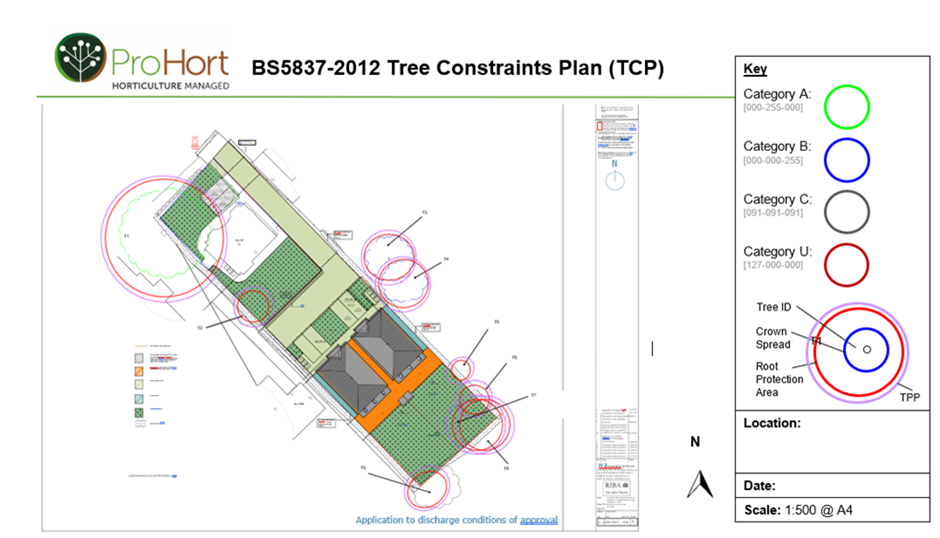
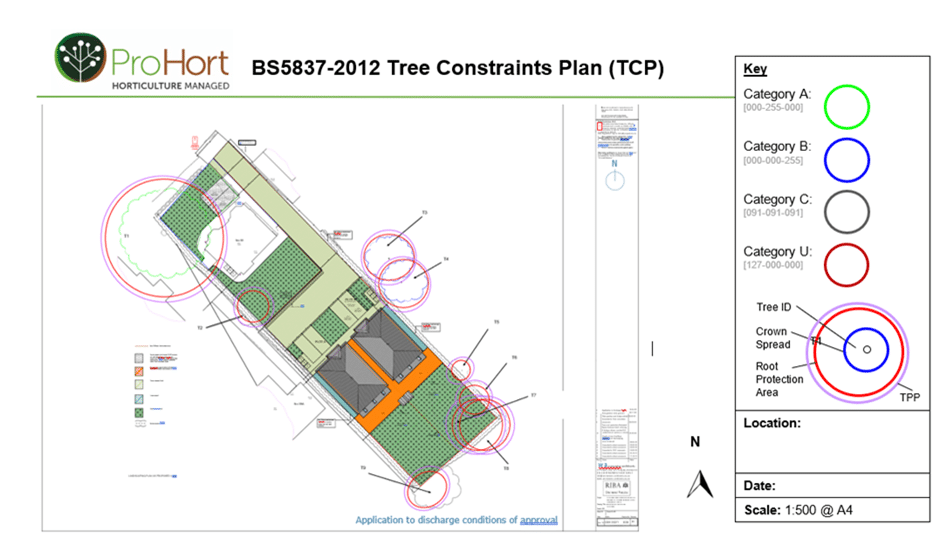
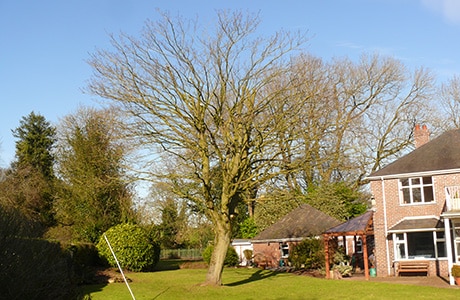
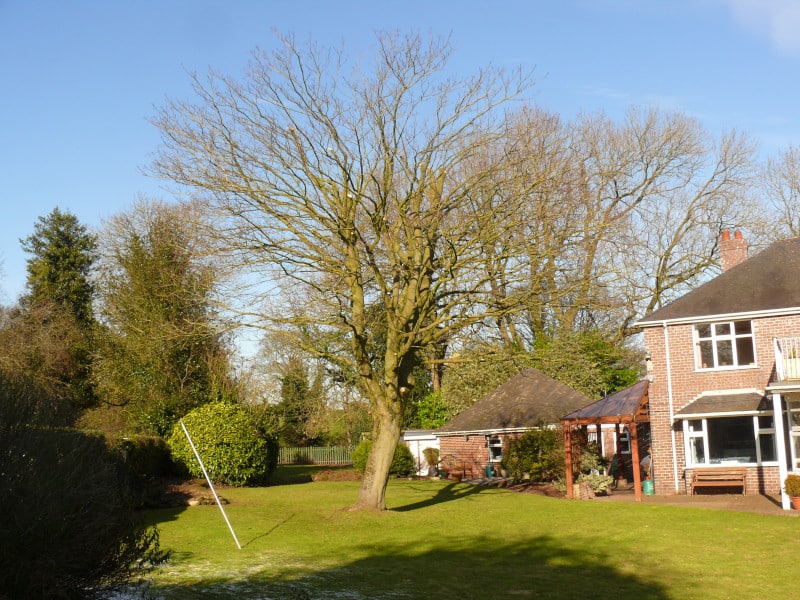
Tree constraints plans (TCP) are usually part of the Tree survey which is carried out to the BS 3857:2012 standard. The information is usually displayed upon a plan and within a chart, the plan is drawn using CAD and this is then layered directly on to a topographical site survey. It would include the; Tree locations, Root Protection Area, Crown spreads, along with pictures of the trees in relation to the site.

Why Are Tree Constraints Plans Useful?

The dimensions of all the trees are included within the chart and these are then plotted onto the plan. This enables a realistic shape of each tree to be plotted, additionally the root zone is also plotted along with a root protection area around each tree. This in turn assists the architects when setting out their building, roadways, other hard paved areas and street furniture.

As part of the Tree constraints plan we would categorise each tree from A to C and U if the tree is dead or needs to be removed immediately. Trees that are categorised as “A” are excellent specimens and add significant amenity value or are particularly rare. Category ”B” trees are those that are not quite to the same standard as a “A” tree but are nevertheless important trees within the landscape, add a good amount of amenity value and have a significant life span and as such would ideally be kept. Category “C” trees are low in value, or may have a significant defect with limited life span.


Please see below for a typical Tree Constraints Plan:

Contact Us For a Tree Constraints Plan Today!

If you need any assistance or advice with regards a Tree Constraints Plan especially if required for planning permission. Please do get in touch on 01782 479479 (Head Office) or drop us an email on: [email protected]

Other Articles You Might Like...

Root Protection Areas

What are Root Protection Areas?

These are normally in connection to tree surveys and the construction of an extension or a new build. As the name indicates the objective is to create an area where excavation does not take place or heavy construction traffic does not enter. By restricting the access of vehicles, the storage of materials and excavation within this area we are protecting the roots of the tree(s) and ensuring they are safe and free to flourish.

Root protection areas are always included in Tree surveys that are carried out to the British Standard 5837:2012. As qualified arboriculturists we have the added benefit of having years of experience dealing with Local Planning Authorities. For you this means we can ensure that everything is included in the report that your Local Planning Authority will require and that it is in a format that will satisfy their requirements. The benefit to you is that your planning permission will go through unhindered!

How Do You Calculate Root Protections Areas?

This is calculated from information gathered from the Tree survey, in particular the diameter of the trunk at 1.5m is a necessary measurement to calculate the RPA. To calculate the diameter, you measure the circumference of the tree and divide by 3.14156 (pi). This will give you the accurate diameter and you then multiply this by 12 to give you the radius of the RPA.

How We Lay Out Our RPA's:

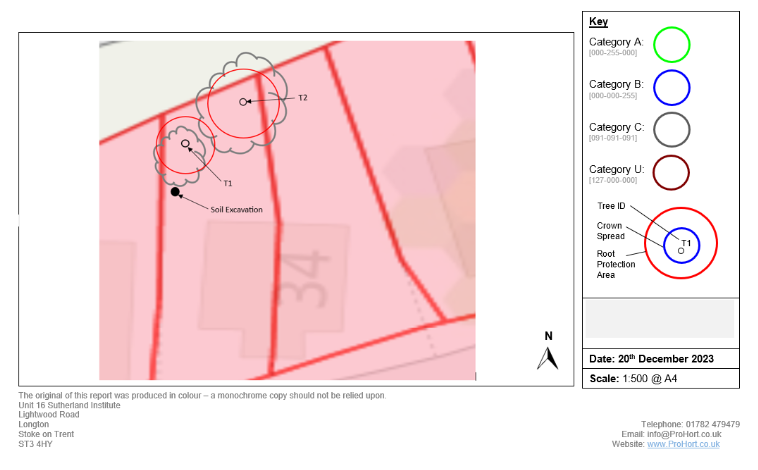
As can be seen below the trees are identified and placed on a Land registry title deed plan. We then overlap the “Crown spread” and this is colour coded to the Category of tree. The Root Protection Area is then laid on top of this. By doing this it clearly identifies the area that should not be accessed by machines, materials, or people excavating.

As this plan was for a Tree Subsidence report we have also included where we took the soil sample from.

Can I Build Over the Root Protection Zone?

There are a number of ways around this. Firstly, we could look at what the tree has been categorised as and whether it be removed. If the tree has been categorised as a C1 this means it has low value and there should be little reason as to why it cannot be removed. If the tree had been categorised as “B1” or “A1” tree it would be far more difficult to argue it should be removed.

Where the tree can not be removed and the proposed building works cannot be moved to outside the root protection area, we then need to work with the architect. There are certain types of foundation that are not recommended within the root protection area such as trench foundations. However other types of foundation such as pile foundations can work well. If digging is required to take place within the root protection area, we can use an air spade to ensure no damage to the root system occurs.

Contact Us for More Information on Root Protection Areas:

If you need a Tree survey or a report identifying the Root Protection Area then please do get in touch on 01782 479479 or email us email us on: [email protected].

Tree Protection Plan

What is a Tree Protection Plan?

You need a Tree Protection Plan when applying for planning permission as this will always be required by the town planners. 

The purpose of the Tree Protection Plan (TPP) is to illustrate all the trees that are to be retained. This would include accurately showing the spread of the trees to the four cardinal points (North, East, South & West). It would also include showing where the protective fencing would be erected so as to protect the trees roots and canopy.


See below example of a TPP as part of a tree survey to the B5837:2012 standard:

How do I Know if a Tree Has a TPO (Tree Protection Order)?

The first way is to take a look at the actual tree, often they have a silver metal tag attached to the tree to identify them with a number. As this is not always the case, you can then check the council website as some councils will have a web page with all trees that have a TPO on them identified on a virtual map. The final way is to make direct contact and request the information in writing.

How Close Can I Dig to a Tree That Has a TPO?

On the TPP you can see a black line outlining the Tree Protection Fencing. The objective of that fencing is to stop any digging within the area called the “Root zone.” The root zone is calculated, the figures are put into the Tree survey and that information is then laid out visually on the Tree Protection Plan. If a tree has a TPO this will influence the design of the building and where it is situated. Typically, the Town planners would not allow the removal of a tree with a TPO.

What happens if I Cut Down a Tree With a TPO?

We have known developers cut down trees with a TPO as they felt impacted significantly with their development. We would not recommend this course of action as by felling a TPO tree this can mean you are fined up to £20,000. If you carry out some work or damage a tree with a TPO without permission then this can result in a fine of £2,500. 

If work needs to be carried out on any tree but especially one with a TPO on it we can assist by applying on your behalf,, filling out all the necessary applications and giving well thought out reasons that the work is required so as to ensure a successful application.


Contact Us:

If you have any questions with regards Tree Protection Plans and Preservation Orders please give us a ring on: 01782 479479 (Head office) or contact us.


Why not follow us on Facebook to stay up to date with our latest news.

Other Articles You Might Like...