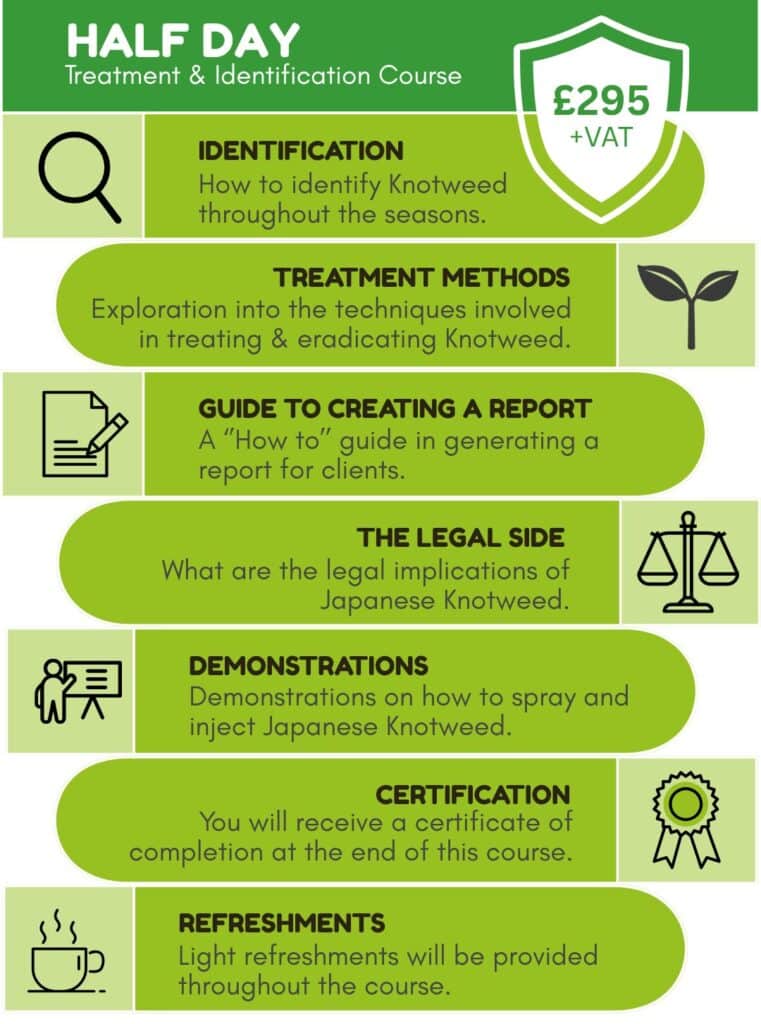
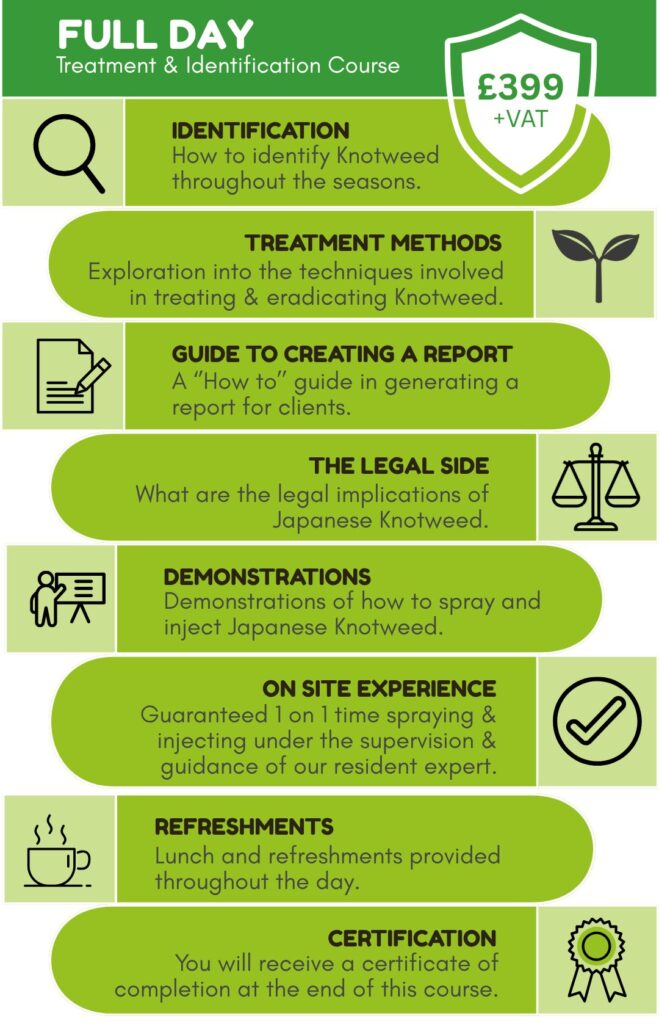
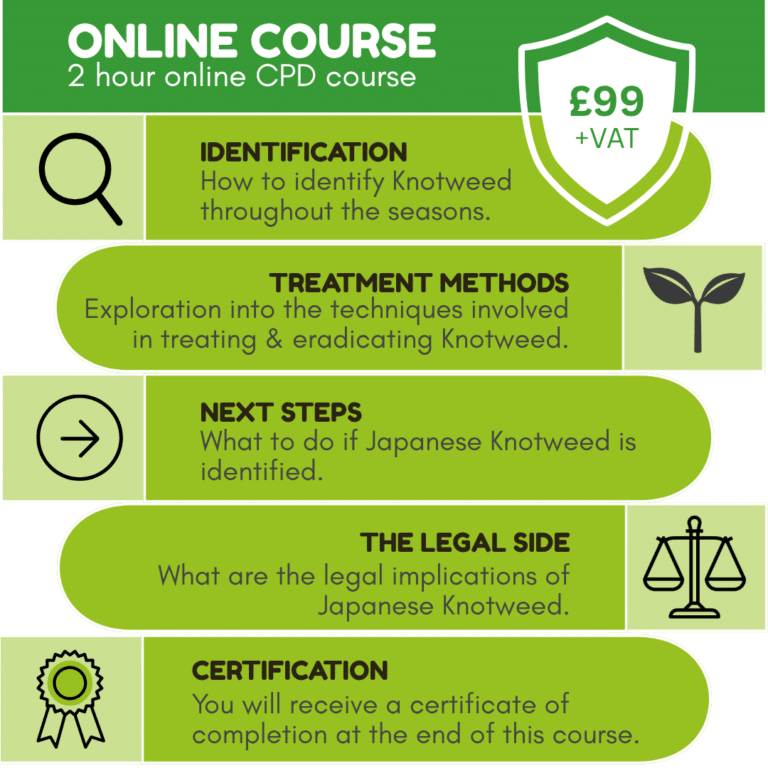


CPD-accredited Japanese knotweed training for surveyors, property professionals and contractors – delivered by the team behind Japanese Knotweed Expert.
If you’re ready to organise training for your team, contact us today!
Phone: 0800 494 7479
Email: [email protected]
A Japanese knotweed training course provides structured guidance on how to identify, manage, and understand the legal responsibilities associated with this invasive plant. It is designed for professionals such as contractors, surveyors, developers, and land managers who may encounter knotweed as part of their work.
Japanese knotweed training is suitable for anyone responsible for land, property, or vegetation management. This includes site managers, landscapers, ecological consultants, property developers, housing associations, and local authority teams who need to recognise risks and respond appropriately.
Training typically covers accurate identification, common misidentifications, growth patterns, how the plant spreads, and the risks it poses to structures and land. It also includes legal responsibilities, waste handling requirements, and best practice approaches to management and control.
Japanese knotweed can impact planning decisions and site viability. Understanding how it is identified and managed helps ensure that risks are addressed early, avoiding delays during planning validation or later stages of development. Training supports informed decision making before surveys or treatment strategies are required.
There is no direct legal requirement to complete training. However, there are legal responsibilities around preventing the spread of Japanese knotweed and managing it correctly. Training helps demonstrate due diligence and reduces the risk of non compliance with environmental legislation.
Training provides clarity on responsibilities under environmental law, including the risks of allowing knotweed to spread onto neighbouring land. It also explains how improper handling or disposal can lead to enforcement action, helping organisations avoid costly mistakes.
The 7 metre rule refers to the potential underground spread of Japanese knotweed rhizomes, which can extend up to 7 metres horizontally from visible growth. Training explains how this influences site assessments, risk zones, and why accurate identification is essential before any works begin.
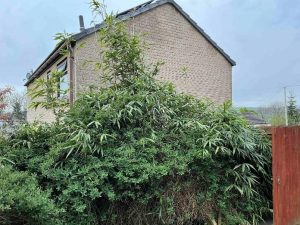
Yes, Japanese knotweed is commonly mistaken for other plants such as bindweed, Russian vine, or bamboo. Training focuses on clear identification features throughout the seasons, helping avoid incorrect assumptions that could lead to unnecessary concern or missed risk.
Landowners are responsible for preventing Japanese knotweed from spreading beyond their boundary. Training explains these responsibilities in practical terms and outlines when professional surveys or management plans are required to demonstrate control.
Yes, most courses explain when a professional Japanese knotweed survey is needed and what it involves. This includes understanding site risk, how surveys support planning applications, and how findings are used to inform management strategies.
Training helps contractors recognise knotweed early and avoid disturbing it unintentionally. This reduces the risk of spreading the plant during groundworks, landscaping, or construction activities, which can otherwise lead to delays and additional remediation.
Guidance is often set at a local level alongside national legislation. For example, local authority advice can be found through council planning and environmental pages such as
https://www.gov.uk/guidance/prevent-japanese-knotweed-from-spreading
and relevant Local Planning Authority websites, which outline expectations for managing invasive species on development sites.
Yes, training explains how Japanese knotweed spreads primarily through rhizome movement rather than seed. Understanding this is critical for preventing accidental spread during soil movement, excavation, or landscaping works.
Yes, property professionals benefit from understanding how knotweed affects mortgages, valuations, and property transactions. Training provides context around risk assessment and when specialist advice is required.
Training does not replace professional advice, but it helps you recognise when treatment is likely to be required and what the next steps should be. This ensures that decisions are made based on informed understanding rather than uncertainty.