
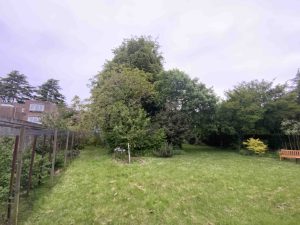

Planning-ready 3D visualisations that clarify intent, support decision-making and bring external works to life before construction begins.
Whether you’re progressing design options, strengthening a planning submission, coordinating with contractors or resolving visual impact concerns, a 3D landscape design gives your team a clear, shared understanding of how your external environment will function and look.
Our role is to provide visual clarity, technical accuracy and proportionate detail that keeps your project moving.
A 3D landscape design is typically required when your project needs clear visual confirmation of how layouts, planting, materials, levels and external features will work together.
If teams are debating interpretation, a 3D design removes the ambiguity.
A 3D landscape design is a computer-generated visual model showing the proposed external environment, including materials, planting, levels, boundaries, structures, views and sequencing.
It creates a realistic, navigable representation of your site to support planning, design coordination and construction.

You’re likely to benefit from a 3D landscape design when:
LVIA or planners require visual confirmation of mitigation
the project includes detailed hardscape, multi-level changes or complex planting
the design team needs clarity on how external works integrate with buildings
options need testing before committing to a layout
stakeholders require visualisation for review or consultation
contractors require a visual reference before build
These triggers help determine when modelling supports progression.
We keep guidance clear and planning-ready — supporting predictable project delivery.
| Service | Purpose | Outcome |
|---|---|---|
| 3D Visual Model | Show the full external environment in a realistic, navigable format. | Your team sees exactly how the scheme functions and interacts. |
| Rendered Views | Provide fixed-angle visuals for planning or internal review. | Clear, proportionate images supporting submissions and decisions. |
| Annotated Plans | Connect visuals to specifications, edges, levels and transitions. | Contractors and planners understand the design logic instantly. |
| Concept Variations (optional) | Test alternative materials, layouts or planting structures. | Faster decision-making with side-by-side comparison. |
| Planning-ready Visuals | Strengthen submissions that require visual justification. | Reduce negotiation by clarifying appearance and intent early. |
| Digital Pack (PDF + image set) | Supply deliverables in usable, consistent formats. | A complete visual record ready for planning, design or tender. |
Our process is designed to remove friction and keep decisions moving.

We take measurements, identify constraints and confirm design objectives.

We create the full 3D environment, with accurate levels, materials and planting structure.

You review the visuals; refinements are made; final files are issued for planning or design coordination.
3D landscape design can be completed year-round, but the optimal window depends on what the visuals support in your project:
Year-round. Use 3D visuals early to test materials, levels, boundaries, and planting logic before drawings are fixed.
Any Time – but best before validation. LPAs often ask for visual clarification when schemes involve complex external works, key views, or sensitive settings.
Post-Planning, Year-Round. 3D visuals help contractors interpret detail accurately, avoiding misunderstandings and reducing variation risk.
Planning officers request visuals to confirm:
visual coherence and alignment with local character
planting and mitigation logic
relationships between buildings, boundaries and levels
integration with retained trees and constraints
the accuracy of LVIA viewpoints
clarity of material finishes and transitions
3D visuals do not replace LVIA requirements but strengthen submissions by illustrating proposed mitigation clearly and accurately.
We produce 3D landscape designs with a planning-first, detail-conscious mindset.
Our approach is defined by:
realistic, proportionate visualisation
clear logic linking planting, levels and hardscape
consistent documentation planners can interpret easily
internal coordination with arboriculture and ecology
build-friendly sequencing that avoids ambiguity
predictable, defendable outputs that reduce negotiation
We design with clarity, precision and planning alignment. Visuals are realistic without exaggeration, technically consistent and formatted to support real-world design decisions.
The purpose is simple: remove doubt and accelerate agreement.
A 3D design strengthens the project by:
aligning architects, planners, engineers and ecologists around one source of truth
reducing redesign caused by unclear drawings or assumptions
clarifying interactions between trees, drainage, hardscape and planting
improving the narrative of LVIA and planning documents
helping contractors understand expectations before tender or construction
3D design integrates naturally with:
LVIA — visuals support mitigation logic and visual effects
Landscape Schemes — the model informs plant structure, surfaces and external logic
Arboriculture & Ecology — allows instant visual alignment of RPAs, SuDS, habitat zones and design intent
This alignment is significant: a strong 3D model stabilises decisions across the entire consultancy team.
It brings certainty at the stage when decisions carry weight.
3D landscape design is a digital modelling process that creates a realistic visual representation of your proposed outdoor space. It allows layouts, planting, materials, and levels to be viewed in a fully rendered environment before construction begins, helping clients and planning stakeholders clearly understand the final outcome.
3D landscape design helps communicate proposals clearly to planning officers by visually demonstrating layout, scale, and integration with the surrounding environment. This supports landscape led design, reduces ambiguity in drawings, and strengthens submissions where visual impact is a key consideration.
Yes, 3D visuals can be submitted alongside traditional plans to support planning applications. While not always mandatory, they are particularly valuable in demonstrating design intent, especially for sensitive sites or developments requiring clear visual justification.
2D design focuses on technical layouts such as plans, measurements, and specifications. 3D landscape design brings these layouts to life, allowing you to see depth, scale, materials, and spatial relationships, making it easier to understand and refine the scheme before implementation.
3D landscape designs are highly accurate when based on detailed site data, surveys, and design inputs. They reflect real dimensions and spatial relationships, although they are primarily used as a visual communication tool rather than a construction drawing.
Yes, planting schemes can be visualised within 3D designs to show structure, density, and overall character. While exact growth cannot be predicted, designs can illustrate how planting will establish and develop over time.
3D landscape design is suitable for a wide range of projects, from private gardens to large scale commercial developments. It is particularly beneficial where stakeholder engagement, planning approval, or design coordination is required.
Professional 3D landscape design uses advanced modelling and rendering software, often combining CAD based layouts with visualisation tools. This ensures designs are both technically accurate and visually clear.
Yes, one of the main advantages of 3D design is flexibility. Layouts, materials, and planting can be adjusted during the design stage, allowing the scheme to be refined before any work begins on site.
By visualising the final scheme in detail, potential issues such as space constraints, level changes, and design conflicts can be identified early. This reduces the likelihood of costly changes during construction and helps keep projects on programme.
Yes, 3D designs complement technical drawings but do not replace them. Detailed plans, specifications, and construction information are still required for contractors to accurately deliver the scheme.
Yes, 3D visuals can support submissions to Local Planning Authorities by clearly illustrating design intent and landscape integration. Requirements vary by authority, so it is advisable to review validation criteria through your Local Planning Authority or via the Planning Portal: https://www.planningportal.co.uk
No, 3D landscape design is a visualisation tool used within the wider landscape architecture process. Landscape architecture includes site analysis, planning strategy, ecological considerations, and technical design, with 3D modelling supporting communication of the final scheme.
AI tools can provide basic concepts and inspiration, but professional 3D landscape design requires site specific data, technical understanding, and planning awareness. For projects involving planning or construction, a professionally developed design is recommended.
These connections create a unified, planning-first approach and reduce the risk of conflicting recommendations.

